
 E-Paper



Review: Home in the Dark by Jayanta Dey
Translated from the Bangla by Sayari Debnath, this collection of short stories looks at how individuals find meaning A collection of short stories that looks at how individuals find meaning

 Prefer HTon Google


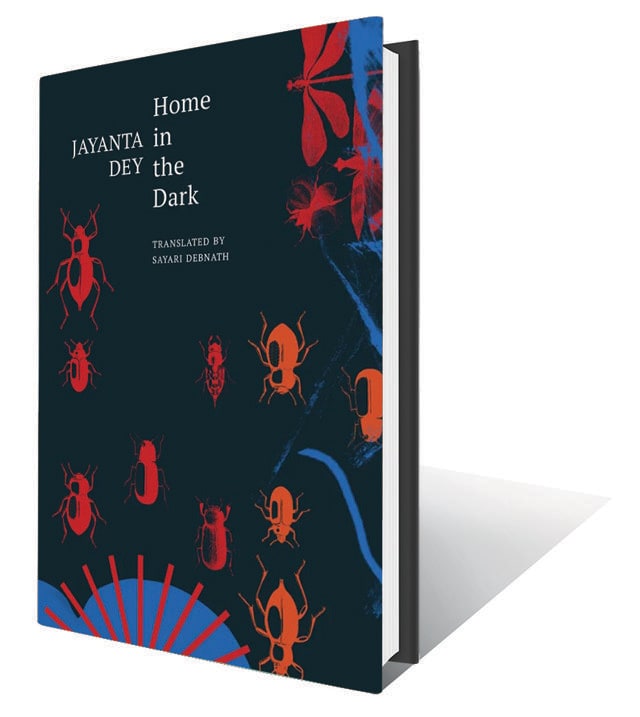
Home in the Dark, a collection of 12 haunting short stories by Jayanta Dey, translated from the Bangla by Sayari Debnath, captures the narrative styles of Bengali culture and its many twisted geographies.

The first story, Poison, sets the tone. Alone in a room, a young woman is watching a poisoned rat crawl around. She is discomfited at the sight and is waiting for the rodent to leave her in peace. But in the meantime, her insides are killing her. What should have happened to the rat is apparently taking hold of her, and she is unsure if it is time to call her mother. Already, here, Dey has laid out the themes that will be explored in the following stories. In the book’s best story, Gopal’s Widow, the narrator speaks of being close to the titular couple, of listening in on their ruminations, and taking over for Gopal when he is not around. Then Gopal dies and the narrator has to reckon with the wife who remains. This is a masterful look at male friendship and the vacuum that’s left behind by an untimely death. In Debnath’s stellar translation, the story beats like the characters’ high-strung hearts awaiting closure.
Likewise, Pendulum, does a fabulous job of using a prized clock to tell a story about communal hatred. Centered around a father and son attempting to get a clock restored, things take an unexpected turn through the son’s conversation with a school friend who runs a repair shop. A journey to restore time at home becomes a recounting of the Great Calcutta Killings of 1946, which preceded the Partition the following year. Here, through a material object, the author looks at what it means to be Hindu or Muslim in India at a perilous time.
Though they might initially seem like mundane exchanges, it is the conversations that drive the narrative forward. In Thirty-two Pages, a man meets a celebrated writer who had retreated to the rural hinterland after being identified as the author of pornographic fiction. “…Yes, I enjoyed it… But after that I turned into a machine. Still, creating something brought me joy. I know I was up to no good. Yet they were my stories,” the writer tells him. In a style reminiscent of the Hindi writer Krishna Sobti, Dey’s simple elegant sentences capture the entirety of his characters’ inner lives through the single episode that is the subject of his story.

Though each of these pieces is different, the single theme that runs through is that of travel, of people in transition: both literally and figuratively. In almost all of them, the primary character is on a journey: one is running to the Asiatic Society for research, another is visiting a sex worker, someone else is commuting endlessly in a rickshaw, and yet another one is going back home to her family after a prison term.
The young woman, Jhinuk, who returns in A Family has committed a crime and dreads the anger and wrath that awaits her. Instead, she gets tears and love. Taut and with a classic Daphne du Maurier undertone, the story conveys how the central character’s home in the heart of her family has been darkened by her crime. “I could not cry like them, so I retreated into myself. My mother gauged the change at once — she knew how desperate I was to cry,” Jhinuk says.
Perhaps, the thread that connects all these stories is the search for home within the darkness of minds in a troubled society. This is the theme of Chandan Pandey’s The Keeper of Desolation too – also translated by Sayari Debnath, albeit from the original Hindi.
While the play between restraint and ferocity works excellently in most of Dey’s stories, The Price with its multiple characters and names coming in from many directions, felt a bit scattered. Thankfully, this isn’t the case with the final piece, The Tunnel, a searing tale of a disabled teenager trying to make sense of her father’s return after years of absence. He had left to become an ascetic.

While these stories are rooted in Bengali culture, they are also universal in how they capture the rhythm of common human experiences. From longing and pain to crushing sadness, Dey’s short fiction look at how humans find meaning, and ultimately, what it means to be alive.
Rahul Singh is a novelist and an academic. He is the author of the novel, Unfolding.


