
 E-Paper



Review: Stories from a Kargili Kitchen by Yash Saxena
Yash Saxena's "Stories From A Kargili Kitchen" explores Kargil's rich cultural heritage through food, resisting its identity as a conflict zone.

 Prefer HTon Google


In Stories From A Kargili Kitchen, Yash Saxena reimagines Kargil as a land that is ever-evolving yet perennially frozen in time. It was once frequented by Silk Route traders but now lies still — movement slowly replaced by inactivity. It has evolved over the years, yet remains constricted by an identity shaped almost entirely by the conflict synonymous with its name.
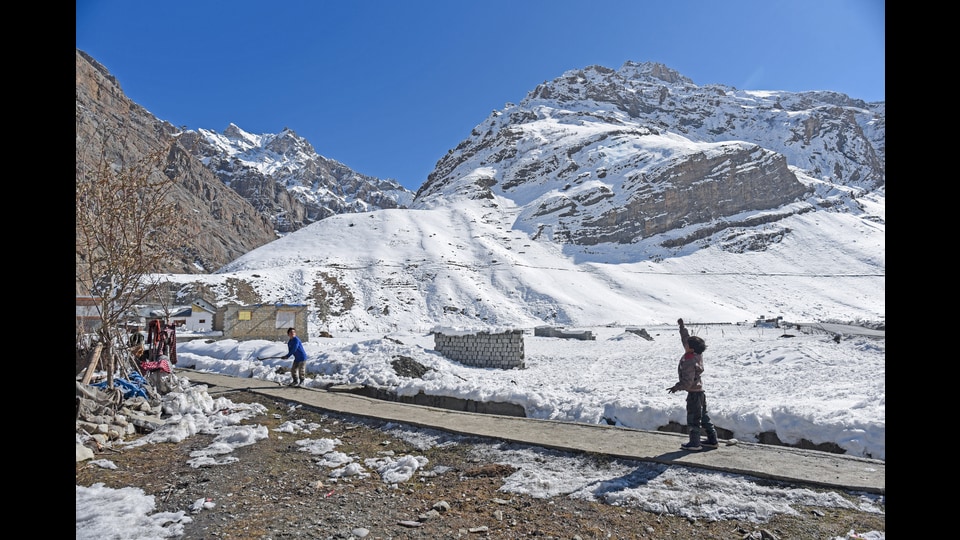

The conflict which gave Kargil visibility also distanced it from India’s cultural centre. Its geographical location created an emotional distance so vast that most Indians don’t identify with the district at all. It is a land of paradox — at once mainstream and fringe. Saxena observes: “India is a constant and Kargil brings a variable that doesn’t fit the mould.”
Consequently, Saxena laments Kargil’s erasure. He laments globalization not because he is a traditionalist but as a grief-stricken observer witnessing age-old recipes disappear as convenience and processed foods take over. He laments the drawing of the India-Pakistan border, a line that stilled the once-fluid movement of traders to which the place bore witness.
Despite its rich cultural heritage, Kargil is not Uttar Pradesh. It has no political clout, nor leaders vying to win over its people to gain constitutional power. The author is painfully aware of these ruptures and sets out not merely to course-correct, but to reclaim the narrative. By chronicling Kargili recipes, he uses food as an act of resistance; he rages against the tyranny of time by preserving history and documenting regional stories that are becoming irrelevant as the world moves forward at breakneck pace.
Saxena’s local interviewees recount tales rooted in the region’s cultural and historical milieu. Some of the figures mentioned in these accounts linger long after the book is put away. One of these is Illyas’s mother. Her maternal home once lay just 11 kilometres from her in-laws’ home. During the Partition, however, her family’s village was left on the other side of the border. In a cruel twist, she could see her childhood home from the ridgelines but never visit it. Then, there is Haji sahab — a local who wards off evil snow leopards. He swears by a pocketful of sattu and even carried the versatile food with him while on Hajj. He also sneaked in food in the dead of the night to soldiers guarding the post during the conflict. Another figure that haunts the reader is Amarjeet Kaur, a woman from a family of Sikh traders who narrowly escaped when the Pakistani army marched into Kargil in 1948.
Through these accounts, Saxena revisits Partition and the Kargil conflict not as fleeting moments in history but as events that radically altered the district’s sociocultural fabric. His interviews are a psychological excavation of the locals. The accounts are affecting, yet it is the recipes that provide texture, deepening the sense of the area’s heritage. Here, gastronomy is employed as a tool to better understand the history of the place and its people. Today, like everyone else, Kargilis are venturing into big cities for better opportunities and gorging on fast food. Their culinary heritage too risks becoming obsolete.

A fascinating piece of trivia appears in Chapter 8, titled Haramzada Cheetah, where Saxena discusses the chemical properties of chandang (raw green apricot). Apparently, chandang contains a toxin known as amygdalin, which converts to cyanide after ingestion, giving Kargilis a higher tolerance to the toxin than other demographics. While most of the dishes — Chhu Bale, Chuli, Papa, Khulaq — are understated and mellow in taste, containing mostly subdued flavours, there are some like chandang chutney that are imbued with bold, citrus-laced bursts of umami. As he takes readers through recipes, Saxena also explains key health benefits and how some of these foods provide enough energy without spiking blood sugar levels.
It is clear that the author has deep affection for the place and its people. But though he builds a strong case for exploring Kargil and for thinking of it as being more than a conflict region, he sometimes plays into the very simplifications he resists. Even as he questions its reduction to a nationally-known conflict zone, he anchors much of the book in narratives shaped by conflict. There are accounts that move beyond war but they appear only intermittently.
Kargil’s struggle to grow food despite difficult terrain and harsh winters is mirrored in Saxena’s pushback against a culture that is determined to reduce the place to a historical footnote. In preserving Kargil’s food, he preserves its memory and its identity as a living archive of resilience, flavour, and unforgotten histories.
Deepansh Duggal writes on art and culture. He tweets at Deepansh75.


