
 E-Paper



Review: The Immortal King Rao by Vauhini Vara
The Immortal King Rao is an epic narrative spread over generations and continents that includes the entire machinery of a science fiction novel

 Prefer HTon Google


A few chapters into American journalist Vauhini Vara’s debut novel The Immortal King Rao, the eponymous protagonist is taken to see a personal computer by his future wife, Margaret. It is 1975 — a year after the Altair, the first PC, was released in the US market. Even as he observes the machine, King remembers reading about PCs in a magazine: “The era of the computer in every home — a favourite topic among science fiction writers — has arrived!”
It is a prescient scene, in which Vara delightfully mixes up our presumptions about fact and fiction, and suggests that things that seem like impossible nuggets of a writer’s imagination could soon be our reality. This could include designer babies, cybernetic drugs, omniscient AI, and mind-transfer, all of which and more are embedded into this mind-bending narrative.
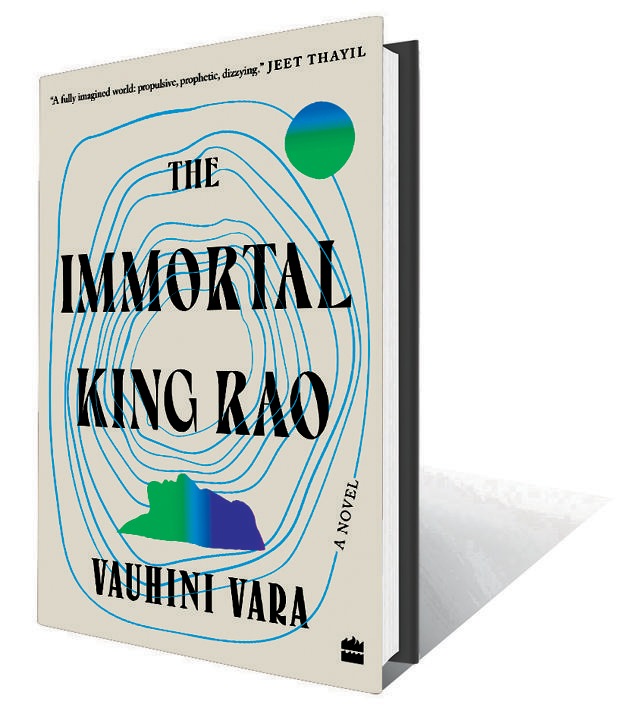
King Rao is a novel of a million ideas and feelings, and inventions pressurised into a crystal. In fact, as novelist Karan Mahajan writes in one of the endorsements for this book, “it is three great novels in one.” One might dispute the adjective “great”, but one cannot disagree with the other claims Mahajan makes.
The framing narrative of the novel is that of Athena, King’s daughter, who, through cutting-edge technology, has been provided access to all of the Internet as well as her father’s memories. She has been brought up in secret by King, like Miranda and Prospero, on an island in Puget Sound, to which he was banished after a devastating fall from the peaks of power and money. Athena is accused of murdering King, and as she awaits judgement from an omniscient AI, she narrates all of King’s memories and her own, somewhat like Oskar Matzerath of The Tin Drum.
This would have been sufficient for most writers, but not Vara, a former tech reporter for the Wall Street Journal and business editor for The New Yorker. There is more: the biography of King himself, a Dalit boy from an Andhra village whose sprawling family has gained a toehold in prosperity through investments in a coconut plantation (King’s PC is called Coconut.) King is sent to study engineering in the US, and eventually becomes a tech billionaire bigger than Bill Gates, Steve Jobs and Mark Zuckerberg all put together. He figures out a world government, where everyone is a Shareholder (with a capital “S”, of course.) But one of his experiments goes awfully wrong, resulting in human deaths.
But even this much is not enough for the ambition of King Rao. There is more. What more, you ask? Climate change, of course; and a utopian/dystopian society. The world is dying because of global warming (this is not fiction obviously). The Shareholder government can do nothing about it but keeps Shareholders working through Social Capital ratings. Outside its jurisdiction lies the Blanklands in which former Shareholders, now called Exes, have established a sort of socialist or anarchist utopia. They hope that the Shareholder global order will collapse soon because of its inherent contradictions and people will turn towards Blanklands.
So many different ideas expressed through information packed together like Wall-e’s trash compacts can overwhelm the reader like King’s memories downloading into Athena’s brain. But the novel is saved by Vara’s prose, which is robust enough to sustain it. Her linguistic skill allows her to create this epic narrative, spread over generations and continents, including the entire machinery of a science fiction novel, but also provides delicate and intimate moments.
One of these moments occurs soon after King has arrived in the US. A misunderstanding results in him losing his accommodation and he is forced to sleep in buses at night. After one such nocturnal trip, he arrives at a Seattle waterfront and observes two teenage girls feeding each fried fish. “He realized they were imitating baby sea gulls… waiting to be fed by their mother.” One of the girls offers to share their food, but her companion draws her away. Insulted and embarrassed, King walks to the bus stop agitated. “One day, he would be known. Those girls with their fish — they would know his name!”
He is a typical Rastignac, and this scene is especially satisfactory for the reader because we already know that this will come true. Somewhat like the scene with the first PC, with which this review began. With our contemporary knowledge of how far technology would progress in the late 20th and early 21st centuries, we know how the lines between science fact and science fiction will be blurred. In the world of King Rao, it is the protagonist who will drive this transformation.
However, the novel’s flaw lies in its strength — its immeasurable ambition. At times it can seem like a dish too rich — truffles and caviar and champagne. The dystopian world that Vara imagines is somewhat amateurish, when compared to say Margaret Atwood’s Oryx and Crake or Isaac Asimov’s I, Robot.
Also, Vara can err on the side of providing too much information. For instance, as the novel opens, King’s birth mother Radha, who dies at childbirth, steals a bar of Pears soap from the village grocer. The writer goes on to provide details of the Lever Brothers, the makers of the soap, and their racist advertising, as well as canny business in post-Independence India. Yes, this fits into the overall criticism the novel provides of techno-capitalism and colonization. Sure, Athena has access to all of the Internet. But does the reader need to be assaulted with such Wikipedia details?
Nevertheless, this is an important book for our times. Even as I was reading it last fortnight, news broke of Google cancelling Thenmozhi Soundararajan’s presentation on caste because of pushback within the company. It revealed, yet again, how the Indian expatriate community transports caste with them from India to the West — a fact that is being increasingly recognised globally. While many of the science fiction elements in the novel might come true sooner than later, a Dalit boy from an Indian village making it to the top job in an American tech giant might take longer.
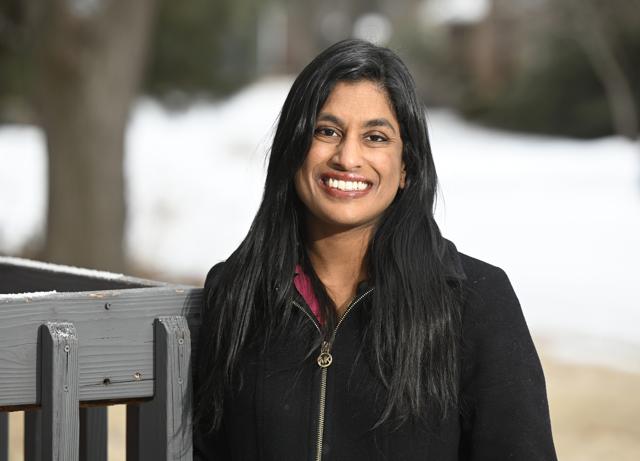
Uttaran Das Gupta is the author of the crime fiction novel Ritual (2020). He teaches journalism at OP Jindal Global University, Sonipat.


