
 E-Paper



Sophie Blackall: “We all need support and community”
The author and illustrator of award-winning books Hello Lighthouse and Finding Winnie talks about the joy of making books for children

 Prefer HTon Google


You have won the prestigious Caldecott Medal twice — for your books Hello Lighthouse and Finding Winnie. What does the medal represent to those who are on the lookout for good books for children?
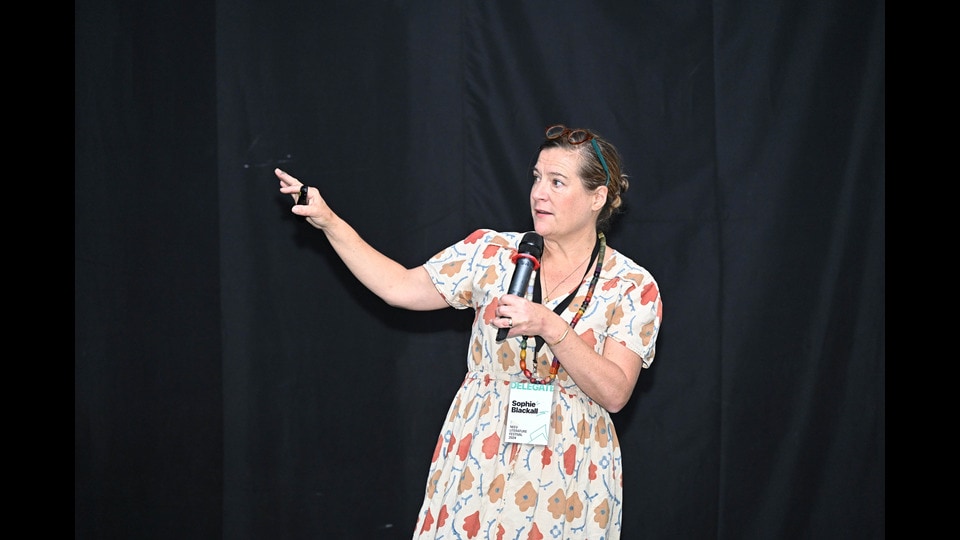
The wonderful thing about the Caldecott Medal is the big gold sticker that you get on your book. That is much more important than the actual medal. It is a sign for parents, teachers, librarians and children that the book they are holding in their hands is a good book. As a child, I used to look out for books that had those gold stickers. The medal carries a great legacy, and I am just one in a long line of other illustrators who have won it.
How do publishers respond when an award comes your way?
I feel very fortunate that I get to write and illustrate the books that I want to make. It is partly because of these honours, and partly because I have been doing this for a long time. I have made close to 60 books. It has been a long, slow buildup. I have learnt a lot of things over the years, and now I am in this position where I can tell my editor that I have a particular idea, and I know that she will almost always say, “Yes, let’s do it!” Younger people starting out would give their right arm to have that kind of creative freedom. I am grateful.
How do you look back at the process of making Hello Lighthouse?
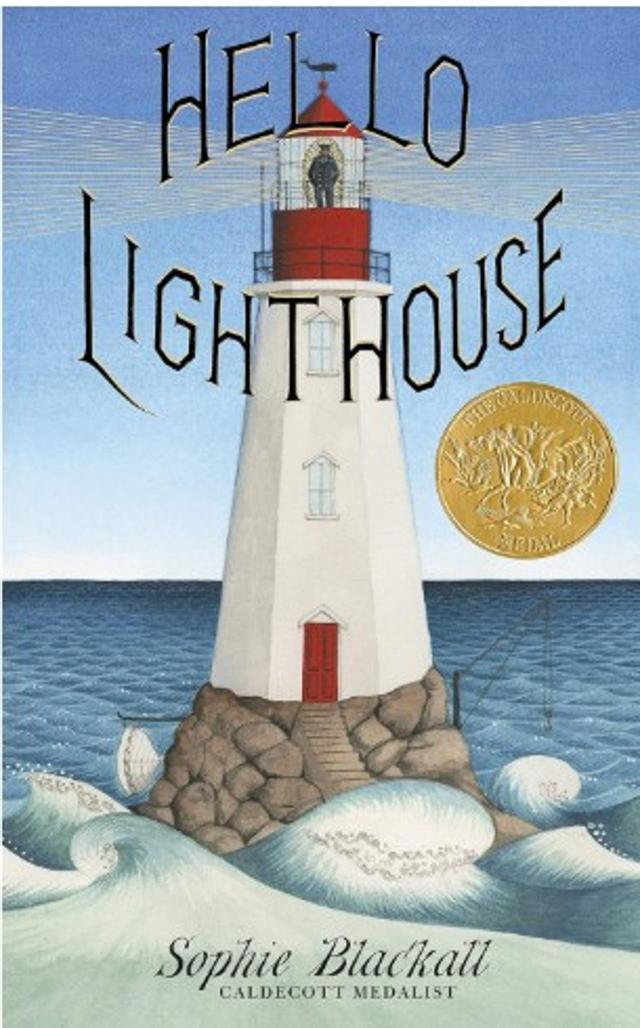
I have always been interested in lighthouses and the lives of lighthouse keepers. They are symbols for us as beacons and guideposts. They have all this history and folklore and drama and romance surrounding them. But I was curious about what it would be like to live in this tower in the middle of the ocean. You have this job to do every day of the year. It is this same, repetitive thing, and you are isolated. Sometimes lighthouse keepers would have their families living with them. The women would give birth to children out in the middle of the ocean. They would depend on the boat that would come and bring them their supplies. If there was a big storm, there was a possibility that the boat might not come. When I have something that I am curious about, I love plunging into research and finding out more.
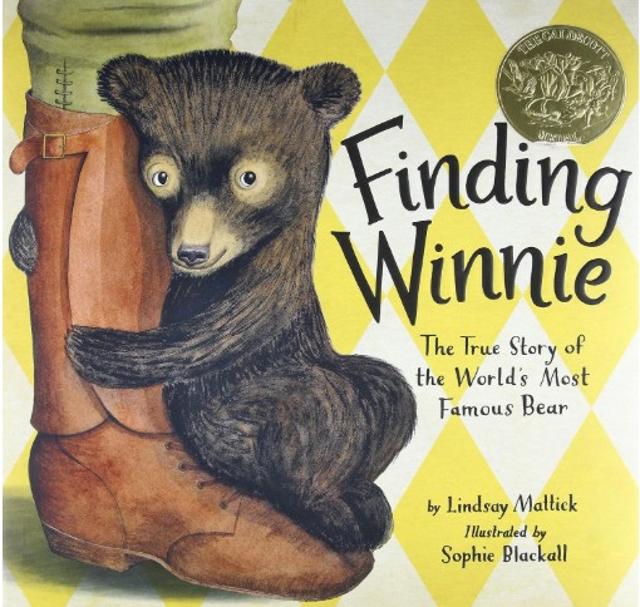
Could you tell us about the making of your book Finding Winnie: The True Story of the World’s Most Famous Bear? What was it like to work with Lindsay Mattick?
Lindsay, who wrote the book, is the great-granddaughter of Captain Harry Colebourn — the soldier who adopted an orphaned bear cub in Winnipeg and named her Winnie. This bear ended up at the London Zoo during World War I, and that is where AA Milne — the author of Winnie-the-Pooh — used to take his son Christopher Robin. The father and son met the bear. This bear became the inspiration for Winnie-the-Pooh. Lindsay had this family connection to the story, and I did a lot of research too while working on the book. I went to the London Zoo. I wanted to see it in person to make the illustrations as accurate as I possibly could. Working on this book was a wonderful ride because Winnie-the-Pooh is still one of my favourite books. It is wise, wonderful, funny and true. I loved it so much as a child. I think I must have been around seven years old when I sat up in a tree reading that book and looking at the illustrations by EH Shepard. It was then that I thought, “One day I would like to do this.” I realized that making books is a job; people do it for a living. I too could do it!
You have come a long way from wanting to create your own books to setting up a retreat space like Milkwood Farm, which supports authors, illustrators, editors, publishers, art directors, librarians, educators, agents and booksellers from the children’s book community. How did you dream this up and make it happen?
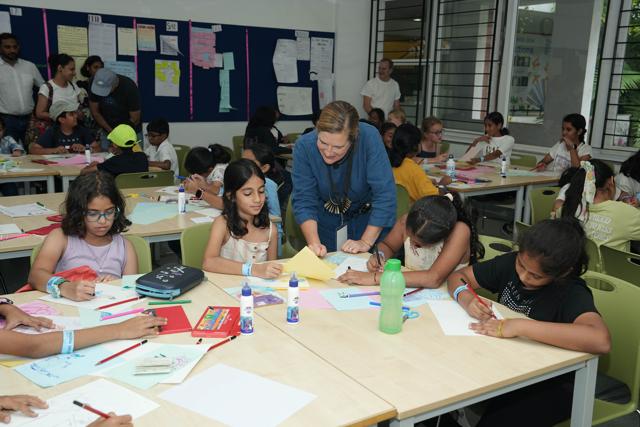
I feel like I had so much encouragement from people who came before me, so I wanted to pass that along. Wherever we are in our life journey, we all need support and community. There is a desire to share the journey with our peers and colleagues. I realised soon enough that the whole experience of running Milkwood Farm with my husband, Ed Schmidt, who is a playwright, is also quite selfish. I do it because of how happy it makes me. Giving always makes people happy but not everybody realises that until they actually do it.
Let me give you some idea of what Milkwood is like. It is 20 acres of wildflower meadows and hardwood forest in a valley in the Catskill Mountains in New York State. It is named after a play called Under Milk Wood, written by Dylan Thomas. We have an open-plan studio, vegetable gardens, fruit trees, walking paths by a stream, a farmhouse kitchen, communal tables, a library, picnic benches, a stone fireplace, a bar, a barbecue area. We have poured a lot of love and hard work into making it a comfortable and inspiring place. Before it got converted into a creative retreat, it used to be a dairy farm from the 1850s up until 2006.
I must confess that, sometimes, I feel a bit of envy when people come to Milkwood to just be taken care of and to think or write or draw and have all this time for creative exploration. We operate from mid-May to early October. I never have enough time because we work all summer at Milkwood. I have to cram in all my books in the rest of the time I have because that work is what supports Milkwood. But I also realise that if I had time, I probably would not know what to do with it. Building the space and seeing other people thrive in that atmosphere, form connections and make new work is so much more rewarding for me.
People who work in publishing often speak of their frustration with how cut-throat the industry is. How did you manage to create an oasis in this toxic environment? What led you to feel that a labour of love like Milkwood could actually come to fruition?
We took a big risk. There was a time when I lost some of my faith in the children’s book community because people were attacking each other online. The negative and aggressive interactions made me think, “What are we doing to each other? Why is there so much hate?” I don’t mean that the community has to be all love and rainbows and bunnies and flowers, but surely, we share this goal to make good books for children and to make children feel seen and to give them the confidence to do whatever they want to do and to be themselves. So why aren’t we modelling the kind of behaviour that we want to encourage in children? Fortunately, when Milkwood opened, we realised that people were hungry for something like this — hungry to be in each other’s company and open their hearts and to have the kinds of deep and meaningful conversations that they were not having on social media.
During the Covid-19 pandemic, you came up with this character called Philip, a non-binary sweet potato. Would you mind sharing Philip’s back story with us?
My oldest child is non-binary. They use they/them pronouns. At the time when I created the character, using these pronouns was still not that common. My father was struggling with that. He couldn’t wrap his head around it. Around this time, I went to the grocery store and they had just one sweet potato left. I brought it home. It seemed to have a personality, so we couldn’t eat it, but I decided to make it a dress and to call it Philip and so I sewed it a little outfit and I used they/them pronouns. I thought it might help my father and people like him who have trouble embracing gender fluid pronouns. They say that it’s not grammatically correct. I don’t buy that. They are older and change is difficult to embrace.
A lot of people wanted me to make a book about this sweet potato after it went viral on Instagram. People began to project their own emotions. They were writing to me from around the world. They wanted to send gifts to Philip. They were knitting things for Philip. People needed things to do during the pandemic, but it was getting to be a bit much, so I had to end it. I made a little film called Philip, the Last Sweet Potato. That was the end of Philip’s story.
A lot of children’s books with LGBTQ+ characters have been banned in the United States. What do you make of this moral panic among adults around what kids should read? Why are people afraid of books and not guns?
Kids have very little power or agency in decisions about what they get to read. I really wish I had an answer, especially in a country like the US where there are shootings in schools but they are really worried about their child reading about two people of the same sex who love each other and it is a safe and consensual and happy relationship that maybe has some ups and downs. Why are they afraid of this and not of somebody coming into the school with an AR-15 rifle and shooting people on campus? I really don’t understand, I’m afraid.
Chintan Girish Modi is a Mumbai-based journalist who writes about books, art and culture. He can be reached @chintanwriting on Instagram and X.


