
 E-Paper



Review: The Bee Sting by Paul Murray
This novel about an Irish family is a tapestry of interwoven stories with shifting perspectives that draw the reader into the character’s deepest secrets

 Prefer HTon Google


Once upon a time, there was a family of four. The mother was beautiful and nurturing, the father was moneyed and friendly, and the children got good grades in school. All the globally acceptable markers of success and well-being were green.

Only, this is no fairy tale.
An economic downturn happens, and business starts to decline. Dad begins to lose interest in running his car dealership-cum-garage and Mum’s past creeps up on her. The daughter Cass’s obsession with her best friend grows, and 12-year-old PJ, the younger one, wanders around in a wilderness of family neglect – ripe pickings for bullies and perverts. The mother Imelda’s nurturing slowly wanes, the father Dickie’s friendliness flickers on and off. Everyone feels hemmed in by this small Irish town with its particular flavour of provinciality. And the main villain: climate change.
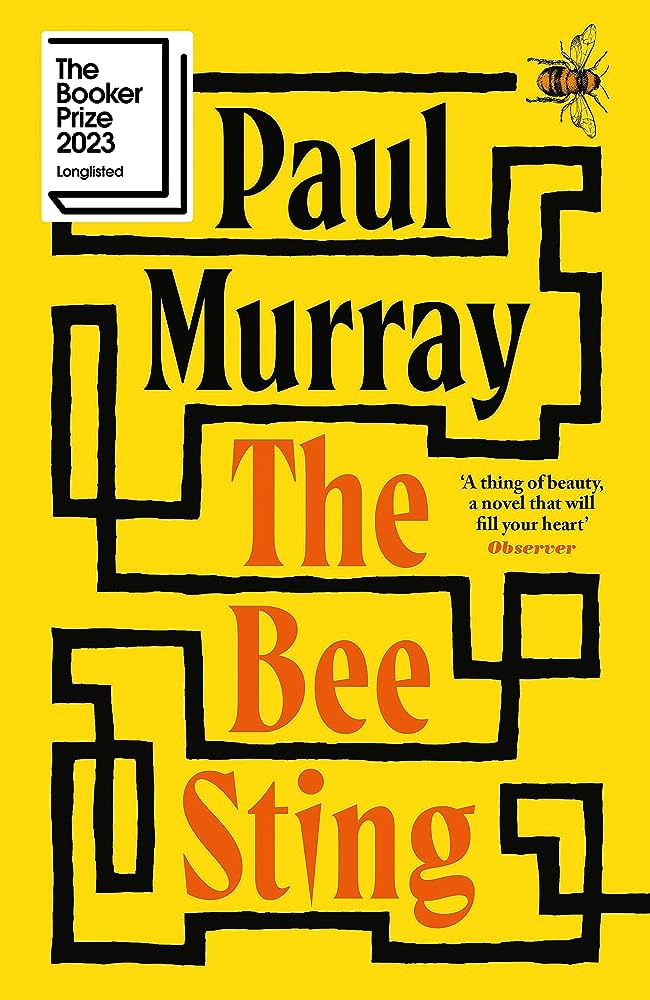
Murray’s masterful writing brings to life four complicated characters through their own dedicated chapters: Cass’s pages interspersed with text messages, Dickie’s appropriately erudite, and Imelda’s, a stream of consciousness without punctuation that brings to mind James Joyce’s Molly Bloom. PJ’s chapters reflect the obsessions of a pre-teen — the looming (but wholly imaginary) threat of being sent to boarding school or getting the latest edition of a PlayStation game. The shifting perspectives from chapter to chapter draw the reader into the character’s deepest secrets, including the unspeakable truths they carry around — the reason such labyrinthine novels have the power to hold one in thrall.
The book does best when it burrows into subcultures the author knows a lot about — debating societies at Trinity College Dublin or building your own well. It falters slightly, almost unnoticeably, on character motivations that leave a brown reader with many questions. Why is the mother noticeably under-concerned about her 12-year-old’s grievously beaten-up face, accepting his excuses at face value? How are all the characters gormless enough to traipse through a dark forest in the middle of a rainstorm? (Granted, Ireland has no snakes or scorpions, but what about nettles and midges, or even good old tripping and falling in the undergrowth?)
Such minor quibbles apart, the prose sparkles. It is a sublime treat to know that “a breeze stole in and circled speculatively through the little room, like a dog on the qui vive, sniffing about”. Or “Even that paled to nothing the sun burning through it so there was only the light like she was looking right into it” — which will not make much sense by its unpunctuated self but leaps into significance once it dawns on you that Imelda is grasping at a prophesy about sunshine as a shock reaction to getting hit in the face by her father.

Murray’s wide range as a writer at times paints a lush, impressionist likeness, at other times offering nothing more than a mere string of clues that you, the reader, must arrange in order to discover the character or What Actually Happened.
The best way, however, of approaching this 640-pager is as a tapestry of interwoven ghost stories. Indeed, the fulcrum of the novel, the parents’ wedding, takes place because a good witch has hinted to the bride that the ghost of her lover will appear at said event. Cass is, for the most part, bewitched by her best friend. PJ is chased by spectres — both online and offline. Dickie is dramatically consumed by the ghost of his sexuality, which rears its head at an inopportune time, and gets consummated in a relationship with an individual who is a mile-high red flag. And the climate itself is possessed — drought one year, floods the next, brought on by the demise of humanity’s peaceful coexistence with nature. Metaphorical, yes, but at its heart, The Bee Sting is a good old Irish ghost story — meandering, deceptively funny, and ultimately tragic.
Bidisha Fouzdar is Managing Partner, Athena Initiatives LLP.


