
 E-Paper



The Great Shamsuddin Family and the frivolity of being human
In Anusha Rizvi’s new comedy drama on JioHotstar, no one explains themselves to an invisible majority audience or tries to prove anything

 Prefer HTon Google


Indian cinema has perfected a particular moment when it comes to representing Muslims. Somewhere in the act, usually amid rising tension, a Muslim character raises his voice and announces with conviction: “Main apna desh nahin chhodunga.” I will not leave my country. It is almost always a man who says this. Women are rarely granted that line. Allegiance, after all, is a masculine burden in Hindi cinema. Muslim men must prove it, publicly and repeatedly, as though citizenship were a performance. Muslim women, meanwhile, are tasked with carrying culture, modesty, and silence.
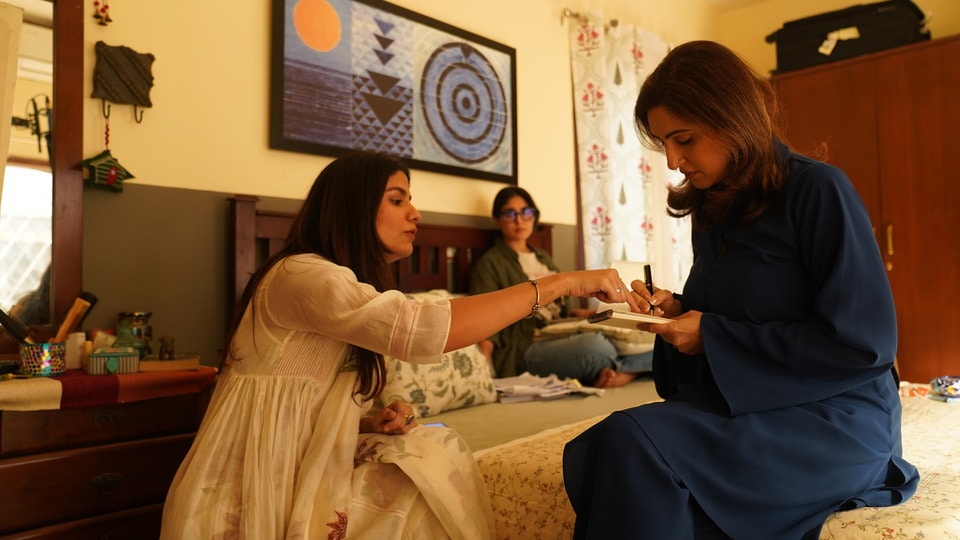
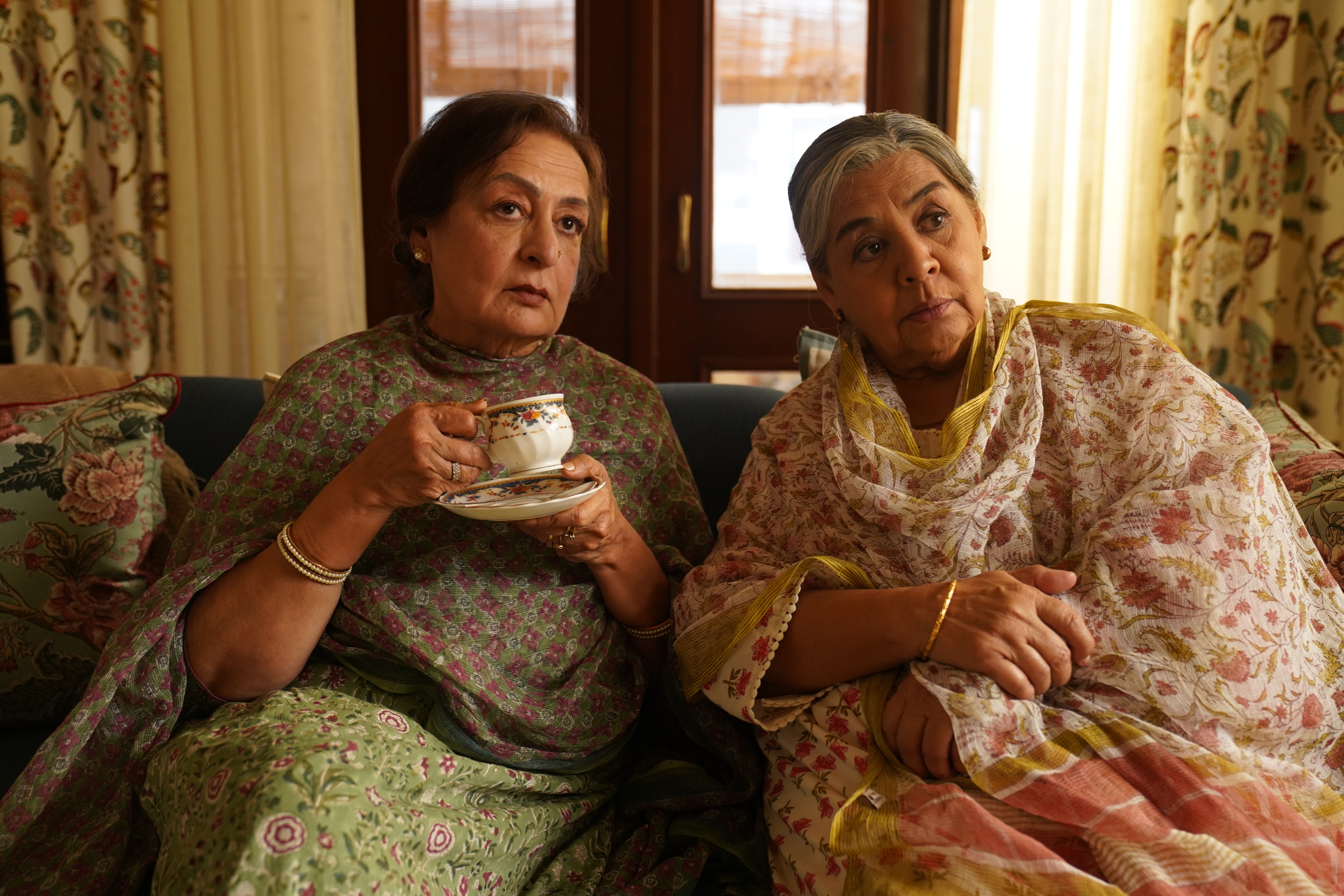
The Great Shamsuddin Family opens with Bani, a divorced Muslim woman living alone in a fairly large apartment, racing against a deadline. A montage of her room shows visuals of bookshelves filled with a range of books from The Quran, to Orwell’s 1984, to a copy of Iravati Karve’s Yuganta on her desk. The scene quickly gives us a picture of her sensibilities. We then get to know that she has 12 hours to finish a crucial application. Instead, relatives begin to arrive one by one. The doorbell keeps ringing and voices pile up. The chaos becomes relentless.
This chaos is familiar territory for Indian comedy. There are big families, cramped rooms, misunderstandings and interruptions. Yet, when Muslim characters occupy this space, comedy is rarely allowed to do its work. Hindi cinema has traditionally denied Muslims the full emotional spectrum that comedy offers. For example, comedy sometimes has grief that leaks into laughter, anger which is softened by absurdity, embarrassment without the moral consequence. Muslims are permitted tragedy or menace, occasionally melodrama, but rarely the frivolity of being human.
Instead, they are flattened into types. On one end of the spectrum, Muslim characters are reduced to biryani, namaz, hijab and Urdu words sprinkled in their dialogues. They appear briefly, often for comic relief, exaggerated and disposable. On the other extreme, they are turned into villains, terrorists, or shadowy figures. This binary has been well documented by scholars and filmmakers alike. Hindi cinema represents Muslims as a homogenous, pre-modern community while simultaneously containing them within a normative, upper-caste Hindu narrative of the nation. The Muslim, in this schema, is either the outsider or the problem to be managed.
The chaos in Bani’s apartment is familial and her irritation is born out of exhaustion. She is annoyed by her relatives’ indulgence, their lack of boundaries, their refusal to recognise her urgency. The film never asks us to see this as a civilisational flaw. It is just family. Comedy here becomes political precisely because it is not any kind of a spectacle. No one is trying to prove anything. No one is explaining themselves to an invisible majority audience.
Bani’s dilemma, however, is not confined to domestic disorder. She is considering leaving India, possibly for the United States, driven by a creeping sense of fear. It is fear shaped by circumstances, by halaat. When she tells her sister Humaira that she is afraid things will not be okay here for us, Humaira asks a simple question: “Who are ‘we’?” that she is referring to.
Bani’s desire to leave brings out the uneven reality of migration. Everyone cannot leave. Entire communities cannot uproot themselves, for an exit is also a privilege. The film doesn’t indulge in the lazy binary of loyalty as opposed to escape. For many Muslims, especially women, the question is not ideological but logistical, emotional, and economic.
The film is also acutely aware of the post-9/11 world. Bigotry does not vanish at the border. Islamophobia travels. It leaks into supposed safe spaces, casual conversations, even academic liberalism. The promise of escape is repeatedly undercut by the knowledge that Muslims carry suspicion with them, like an accent they cannot unlearn.
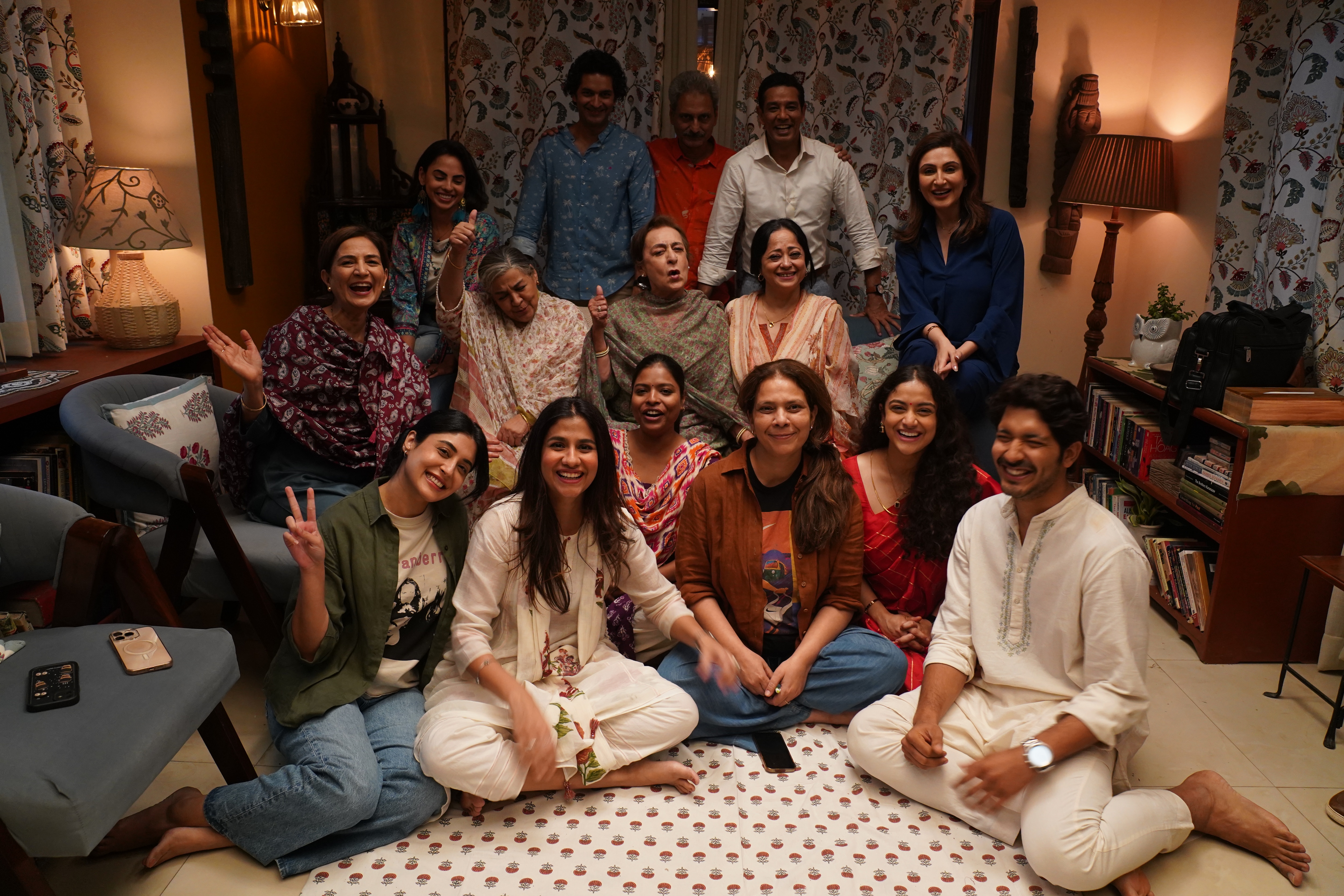
Crucially then, the film’s emotional centre is female. The Shamsuddin women do not orbit male approval. Decisions are made in men’s absence. A marriage is discussed without the men in the family ever entering the frame. The women argue, contradict, protect, and even expose one another. When men behave badly, they are named as such. They are divorced.
This matters because Muslim women in Hindi cinema have historically been denied precisely this ordinariness. For decades, their visibility was restricted to specific genres and functions. In the 1960s through the 1980s, Muslim women appeared primarily as courtesans and tawaifs, hypersexualised yet coded as pure enough for redemption. Films like Umrao Jaan showed desire in tragedy, which allows Muslim femininity to exist only as spectacle or sacrifice. Even in post-Partition narratives, the Muslim woman often appeared as a healer of Hindu male pain, never the first choice, only the consolation.
The 1980s brought a shift, but not necessarily progress. Films like Bazaar recast Muslim women as victims of patriarchal religious practices. Agency disappeared again, and was replaced by pity. The 1990s and early 2000s Muslim women became symbols of national integration, often through interfaith marriage or overt patriotism. Their visibility was conditional. They mattered insofar as they could be folded into the Hindu-majoritarian idea of the nation.
In The Great Shamsuddin Family, Muslim Bani is not a metaphor for the nation. She is not asked to save it, seduce it, or apologise to it. Her fear is very personal. Her irritation is almost petty. Her ambition too, is unfinished.
The film extends this critique to liberal Hindu characters as well, particularly Amitava and Latika, who seem to function as deliberate caricatures. This is an interesting reversal. They expose the limits of performative allyship. Their liberalism is full of academic jargon but so shallow in practice. Latika’s question to Bani about whether she had undergone triple talaq comes off as a result of consumption. When Bani reacts with visible anger, the film brings out the fact that proximity of Hindu characters as allies to Muslims doesn’t equal understanding.
Latika’s liberalism collapses entirely when it brushes against personal insecurity. Her ideological openness survives only until her romantic interest in Amitava feels threatened by Bani’s presence. Suddenly, she becomes patronising and solidarity is replaced. This is a familiar pattern. Allies often understand oppression best when it remains abstract.
There’s a telling moment when Bani is called out for not drinking alcohol in front of her parents. The accusation almost masquerades as progressive honesty but soon reveals ignorance. We know that many Indians, across religions, compartmentalise their lives this way with their parents. Bani’s response is understandably sharp. She has no desire to “turn every news cycle into a half-baked exhibition of herself” as she confesses.
At times, the film feels very ambitious. The interfaith marriage subplot involving Zoheb and Pallavi feels rushed and underdeveloped. The fear that Muslim men are perceived as predators who “take Hindu girls away” surfaces but is not explored with the depth it deserves. Given how central this anxiety is to contemporary communal politics, the film could have lingered longer here.
There is also the casting choice. Despite centering Muslim life, the cast is overwhelmingly non-muslim, with Farida Jalal as the lone prominent Muslim woman. After all, representation is not just about narrative but embodiment.
Many scholars have argued that Indian secularism often functions not as equality but as management. Muslims are included, but on terms defined by the majority. Popular cinema mirrors this logic. Edward Said had reminded us time and again that representation is never neutral. It is bound to power, to who gets to define reality and who is forced to perform it.
Pranavi Sharma writes on books and culture. She lives in New Delhi.


