
 E-Paper



Tishani Doshi: ‘Writing a poem can be a hugely optimistic act’
On her fifth poetry collection, egrets, while war, how birds are both witnesses and warnings to her, and why poetry can still help us imagine other possibilities

 Prefer HTon Google


What drew you so deeply to birds while writing this collection?
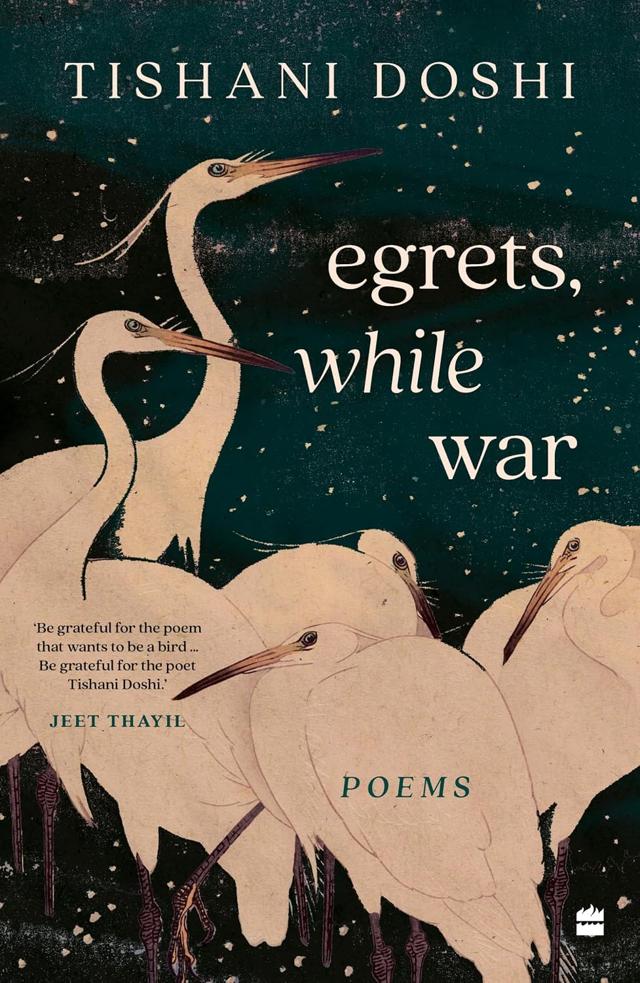
Of all the creatures we share the planet with birds seem to me utterly unknowable. Lion, beetle, bandicoot — somehow, I can imagine my way into them, perhaps because of their terrestrial nature. But with birds, there is this magical quality of flight. Most birds occupy the realm of sky, and this wingedness is a marvel. My obsession with birds has developed from mild curiosity to full-on mania over the past decade, and I’ve found they’ve increasingly made their way into my poems.
I’m always frustrated by my inability to retain information about them, and no amount of swotting up on bird guides has allowed me to be able to name and identify more than some 20 varieties; so, I am resigned to being an entry-level birder. But I guess as a poet, my interest in birds is primarily mythic and totemic. What they represent, how they can be symbols, premonitions, witness, warning. How they connect the past, the present and the future. I’m glad someone is decoding the mysteries of birdsong and trying to figure out why they fly in a V formation or murmuration. For myself, I will read these articles with awe, and then a bird will fly into my sightline, and into a poem.
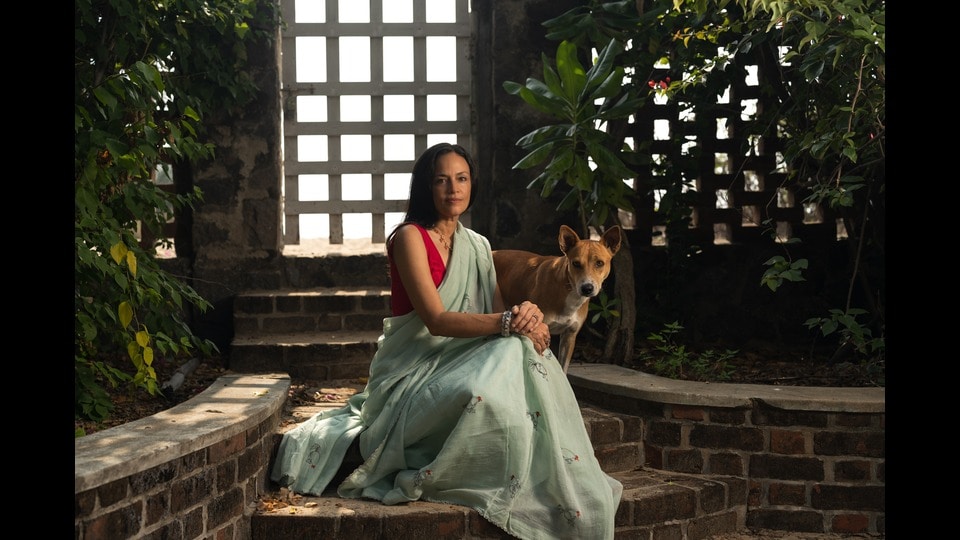
You live on a beach in Chennai with your husband and dogs. How does that shape the way you see and write about Nature, time, loss, and survival?
The sea has been a constant in all my writing. Growing up in Madras, the coast was always a lifeline into and out of the city. Port, beach, mela, sanctuary. Since moving out of the city to live by the coast though, the thing it has brought me closer to is a sense of mortality. Not necessarily in a morbid way, although there is the frequent washing up snake or strangulated turtle but the combination of the eternal nature of the waves, of the fact of this early soup of creation being on your doorstop, and it also being an extremely fragile ecological zone that has seen floods, tsunami, cyclone, threat of coal plant etc, you feel a sense of transience, of precarious beauty. The smallness and fleetingness of your life is something you’re reminded of daily. But also, while you’re here, what glory!
Poems like A Theory on the Origin of Language link violence and language from the very beginning. How do you think about the power (and limits) of words when the world seems plagued by conflict and suffering?
Evolution, transformation, metamorphoses are things I’m always thinking about in a way, and for language too — I think about how we can use language in this post-truth era, where words are either hijacked to be meaningless or deadened to be meaningless. A poem then is tasked with intervention, with interruption. Listening to the red-wattled lapwing screeching, which is how A Theory on the Origin of Language, began, was thinking about how and why language evolved in the first place, how can we extricate it from violence, or is that impossible? Yes, language is about warning, but it is also about song. And the limits on language are only there because of what we have imposed on words. So, words and language, like every living thing, are not to be thought of in a frozen, fossilized sense. They are alive and so they are evolving, and they are dying, and poets I think are always looking for ways to recover and reinvent what language is capable of.
Your work often mixes rage, tenderness, playfulness, and awe. Is that balance something you consciously chase, or does it come from moving between dancing, writing, and living in the times we are living in?
I am distinctly interested in following the subconscious or the underconsciousness rather than the conscious when I’m writing. I don’t want to uncover the great mystery of poetry, I want it to remain mystery. The fact of there being several emotional registers in my work, of the possibility of highbrow and lowbrow mashing up together, I like that. It indicates fluidity and movement. Synaptical jumps and leaps. The thing I find myself chasing most at the moment, not just as an artist but as a person who goes to art, is the feeling of awe. I want to be shifted, moved. I don’t know if it’s related to becoming older, or the technological oppression that exists in our lives, but that feeling which used to be so plentiful, has become scarce in my life. It is a fundamentally human thing, I think, to experience wonder, and I think in these times, surprise is one of the ways to achieve this. You cannot plan for it, or coax wonder. It almost has to leap out at you from around the corner and trick you.
In our fast-paced, distracted age, what have you learned about slowing down and really noticing, whether it’s an egret, a memory, or a changing body?
I’m actually someone who has been trained into slowness (primarily through my dance work with Chandralekha), and it still often evades me. By nature, I’m extremely impatient and restless. So, attention as devotion — it’s a nice idea, but I’m not sure that I’m the greatest practitioner of it. The moments of epiphany I’ve had have not been slow. They’ve been lightning quick, almost a blink and you’ll miss kind of thing. But to get to that state when you can receive epiphany there has to have been some kind of sowing the ground, which I think of always in musical terms. The vilambit time of the alaap — the great exploratory abstraction, a long, long time of moving your way through this, before something is found, reached, experienced, which was unexpected and therefore, a gift.
Some poems weave together your Welsh-Gujarati roots, family stories, and Indian landscapes. How does that mixed heritage help you explore ideas of home, belonging, and ‘in-betweenness’?
My parents moved from our family home of 33 years ago recently and that was such an intense experience, not just because of the upheaval and the actual movement from one place to another, the demolition of that home to make way for another home, the barrage of objects that were hidden away, each with its own memory ladder into the past. I think this set me down a particular path of considering ancestry in this book in a way I haven’t done before, a longing to know people and place and beginnings. And when you consider the ongoing genocide and mass displacement, all the horrors we are witnessing, the question of home takes on a very different tenor and shape.
What does ‘home’ mean to you in a world where so many people are displaced or feeling lost? Your poem Home Speaks in Many Tongues is deeply touching.
Perhaps it comes back to the body? There’s a feeling when the body is at rest, it stops seeking to be elsewhere, no longer an adulterous citizen, or exile, it’s just a feeling of being where you are meant to be. It is the land, it is people, it is language, it can be so many things to so many people. Home in the end is a particular kind of longing, and every once in a while, that longing is replaced with a feeling of belonging.
Writing about war, climate loss, and extinction feels urgent right now. What can a poem do that journalism, activism, or other forms cannot?
I’m not sure how to answer that. I think we choose the form that contains what we need to express, and for me, that form is predominantly the poem. Poetry has an elasticity which is capacious, and is also untethered and valiant in ways that activism or journalism can’t be, because they are so tethered to noble ideas like truth and justice. Poems can also truck in truth and justice, but they can also be about none of that.
What gives you hope or keeps you writing when facing environmental destruction, war, and personal losses? Are there particular poems in this book that felt especially vital to write?
I struggle with the idea of hope because I think there is a design of falsity in the construction of hope. So many times, the people and institutions peddling hope are the ones behind the horror. I know there are a few times in my life when I have felt real despair, and aside from the deep emotional pit of it, it was also this large blanket of inertia swaddled around me, the inability to do anything, and in hindsight, the inaction was the most terrifying aspect of it. So, I guess what gives me hope is action, to be able to do something — whether it is protest or nurture. Whether it is simply the ability to imagine something other than what is deemed to be the only possibility. Writing a poem can be a hugely optimistic act. It may not be able to alter reality in a measurable way, but it has the power to land inside another person and take up residence, which is its own kind of magic.
Nawaid Anjum is an independent journalist, translator and poet. He lives in New Delhi.


