
 E-Paper



Unlock Diaries: Clearing the muck by Bijoya Sawian
This period will be remembered for the tragedies of migrant workers and for the horror stories of domestic violence


It was the best of times and the worst of times. There is no doubt about that, is there? Post lockdown the first thing I wanted to do was unlock my mind and let the words flow, naturally. People are busy planning to adjust to the new normal. Actually we simply have to return to normalcy, a situation so many do not have an inkling of.
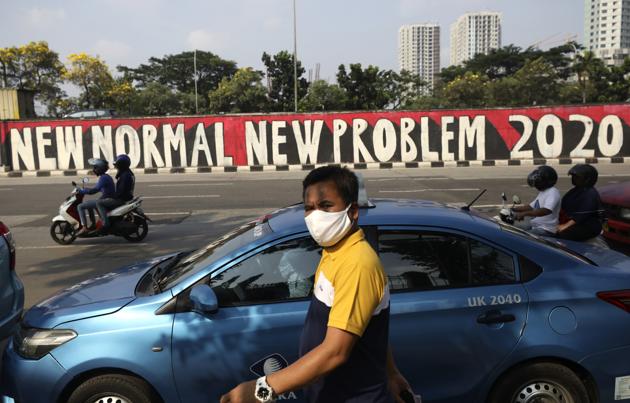
Historically, this period will be remembered not so much for the virus, for it has many predecessors, but as the revelation of the heart of the nation through the tragedies of migrant workers. It will be remembered for the unmasking of a society through horror stories of domestic violence. Both are largely unheeded and brushed off like unwanted flies.
It is in times like these that one journeys back to one’s roots. In the Khasi book of Ethics and Etiquette there is a couplet: “Even if you worship God with folded hands/it is useless if you are not honest and kind”. Surely, even for an atheist or an agnostic compassion and kindness are not taboo. Somewhere along the way, we have lost one important facet of humaneness: our conscience. Animals have their instinct; we were gifted our conscience. Now, it looks like just another word in the dictionary -- meaningless, redundant. I hope, post pandemic, as we heal and recover within, our conscience will surface once again. This is imperative for our survival. We have to clear the muck and reconnect with the divinity within otherwise we are doomed.
In our indigenous religion, Niam Khasi, one of the important precepts is Tip-brew. Tip Blei (Know Man – Know God) which, to me, means tap the divinity within yourself and your fellow beings to understand and connect with God, the Divinity beyond.
After a horrific television programme on domestic violence I stopped watching TV. In fact, every time I see a TV set it seems like a black tunnel with no hope and light at the end so I always turn away. In the programme, the women expressed their helplessness because reporting the violence would mean action by the authorities and this would turn the spouse more vicious. Stoically, they explained that, according to tradition, their parents could not take them back. So where were they to go? They were not educated or skilled enough to take on jobs and support themselves and their children. They wept; their eyes unforgettable pools of despair. It broke my heart.
In traditional Khasi society, there are three types of marriage ceremonies. The most widely observed is the Khawai Lamdoh. Here, after the rituals and blessings, the maternal uncles of the bride and groom and two priests have a formal dialogue. This includes the clauses provided should the marriage fall into difficulty. First and foremost, the problems should be brought to the notice of the elders who would then try to advise and bring about reconciliation. If the marriage continues to bring sorrow, the couple is advised to separate and the formalities are done by the elders. Separation is also allowed, if the couple wishes to, because of childlessness. Importantly, if there is violence in word and deed and there seems to be no remorse and remedy, the elders will advise the couple to end the union. This is prevalent in tribal society amongst those of us who still practise indigenous culture and religion and also among many of those who have converted to other faiths. Divorce is definitely not encouraged but nor is the continuation of a relationship that has no meaning and relevance.
As I sit here in the empty campus of my school, a storm has just abated and the silence sits on the gleaming tree tops, a quiet companion. While savouring this stillness I wonder what lies ahead for the children. Educationist Arun Kapur points out that there are five areas of development of a student: “Cerebral, emotional, physical, social and spiritual. (I would like to add ‘ethical’). The danger now is a shift back to a focus solely on academic performance, facilitated by technology, at the expense of the other important areas of a learner’s development.” This is what I was dreading. I hope it is a temporary phase for the sake of the children.
The board with the motto of my school, which I coined with care 25 years ago, stares at me: ‘Instill the Joy of learning’.
I will wait in hope and prayer. I hope the world has healed, like our flora and fauna. All the best.
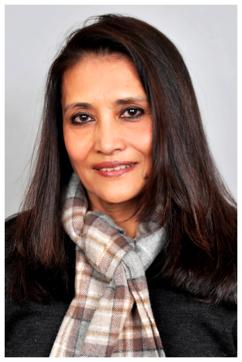
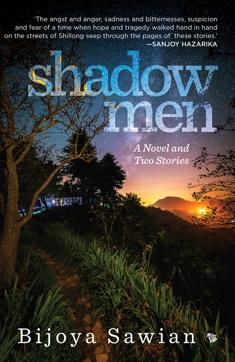
Bijoya Sawian is a translator and writer who lives in Shillong and Dehradun. Her works deal with the life and culture of the Khasi community of North East India. The Teachings of Elders, Khasi Myths, Legends and Folktales and About One God are three of several books that she has translated from Khasi into English.She has recently published Shadow Men: A Novel and Two Stories with Speaking Tiger. The book has been shortlisted for the Rabindranath Tagore Literary Prize 2020.


