
 E-Paper



Unlock Diaries: The gift of Time by Toby Walsh
The author looks back from 2062 to marvel at how far the human race has come since 2020


January 1st 2062
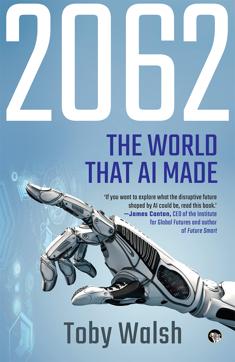
Ha! I made it. Just over 40 years ago, I wrote a book titled “2062”, about the world that technologies like AI was making. I had joked that if only I could live that long, I had accidentally written a best seller for the year 2062.
And now it is 2062. And I’m that old man, at the end of his life, looking back on a life that was hopefully well lived, marvelling how far the human race has come since that eventful year in 2020.
Of course, my book got many things wrong. It didn’t even predict the global pandemic. But the book did argue that we needed a global shock to precipitate change, to reform our society, to reduce inequality, and to live life more sustainably. And it argued that to deal with such a global shock, technologies like Artificial Intelligence would provide us with many of the tools to make the planet a better place.
Back then I thought it might be the ongoing effects of the global financial crisis or the climate emergency that would provide that global shock. But it turned out to be something much smaller, just 125 nanometers in diameter in fact, that kick-started two decades of monumental change across the planet: the simple COVID-19 virus.
In mid 2020, as the first lucky countries started to emerge from the first lockdown, people around the world were awake to the idea that change was possible. Decades of neo-liberalist politics had locked us into policies that tried to balance budgets, reduce taxes and seek economic growth at any environmental cost.
Whilst these policies did grow the economy, they had done so at the expense of the planet. And at the expense of equality within society. The planet was literally burning whilst the rich were getting richer.
But the pandemic showed that alternative, kinder, more equitable and sustainable paths were possible. Leaders like President Trump were exposed for who they really were. And compassionate and inclusive leaders, mostly female it has to be noted, like Prime Minister Jacinda Ardern led the way in showing that we could rebuild a kinder society to improve the well being of everyone, not just the rich 1%.
It’s hard to remember how sweet freedom tasted back then after lockdown. I guess my parents might have had a similar taste of freedom and of change fifty years before in 1968. But in 2020, as we cautiously emerged from our isolated social bubbles, solidarity between the citizens of the planet took hold. We were in this together. Every life mattered.
There was a lot that needed to be changed. The mass demonstrations against racism were only the start. Climate. The environment. Poverty. Inequality. Sexism. All these movements were fired up. Change was possible. Change began to happen.
Of course, there were set backs along the way. The second wave of the pandemic took even more lives than the first. And it wasn’t till the middle of 2021 that a vaccine was in production and life could return to normal. But life never did go back to normal.
Globalization was reset. We didn’t throw away the benefits of international trade and cooperation. But the pandemic had reawakened an appreciation for simpler, more local, and in many ways, more “old fashioned” values. We stopped flying strawberries around the planet, but we didn’t stop importing medicine or scientific advances.
The economic pressures of coming out of lockdown hastened automation and the adoption of technologies like Artificial Intelligence. The 2020s saw a decade long fight to get the big tech giants to pay more taxes, to moderate fake news and to act more responsibly within the markets in which they acted.
The 2020s also saw a decade long fight to reign in those governments that had tried to use the pandemic as an excuse to control their citizens more. 1984 became 2024. But the surveillance state effectively ended with the Great Internet Blackout that cyber-activists unleashed on us all that fateful New Year’s Eve 2026.
As the machines began to take over more jobs, there was a flowering of the arts, the artisan, and of community. It was the start of a second Renaissance. A rebirth of the human race.
We started to realise that the most valuable commodity on the planet is time. And the gift that the machines gave us back then was more time. More time to spend with our families. More time to spend with our communities. More time making art. More time appreciating art. And more time seeking spiritual enlightenment.
But my time with you is coming to an end. What a privilege it was to live through such change. Good luck!
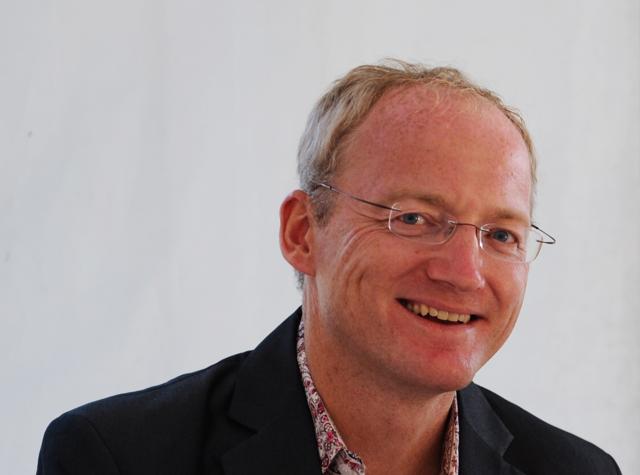
Toby Walsh is Scientia Professor of Artificial Intelligence at the University of New South Wales in Sydney, Australia and Fellow of the Australian Academy of Science. He was named by the Australian newspaper as a “rock star” of Australia’s digital revolution. Professor Walsh is a strong advocate for limits to ensure AI is used to improve our lives. He has been a leading voice in the discussion about killer robots, speaking at the UN in New York and Geneva on the topic. He appears regularly on TV and radio. He has authored two books on AI for a general audience, the most recent was just published in India by Speaking Tiger Books and is titled “2062: The World that AI Made”.


