
 E-Paper



Vietnamese literature: From the classic to the contemporary
A wander through a Hanoi bookstore leads to some discoveries about the Vietnamese literary scene, its evolution, and its unique connect with India

 Prefer HTon Google


Somewhere along the bustling Ba Đình quarter of Vietnam’s capital city sits a sheltered space devoted to the joy of reading. Spread over two storeys and stacked with books, old and new, The Bookworm Hanoi, is one of the oldest surviving English-language bookstores in the city.
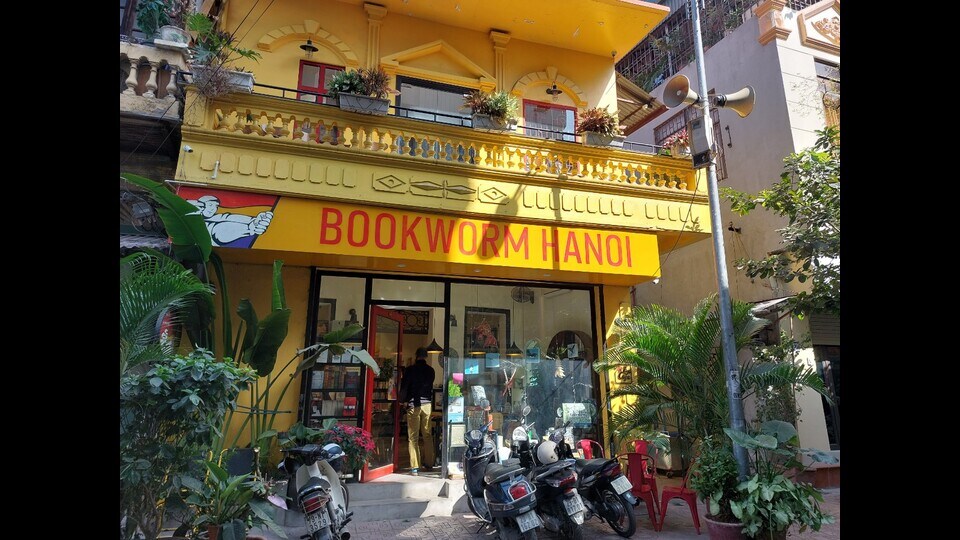
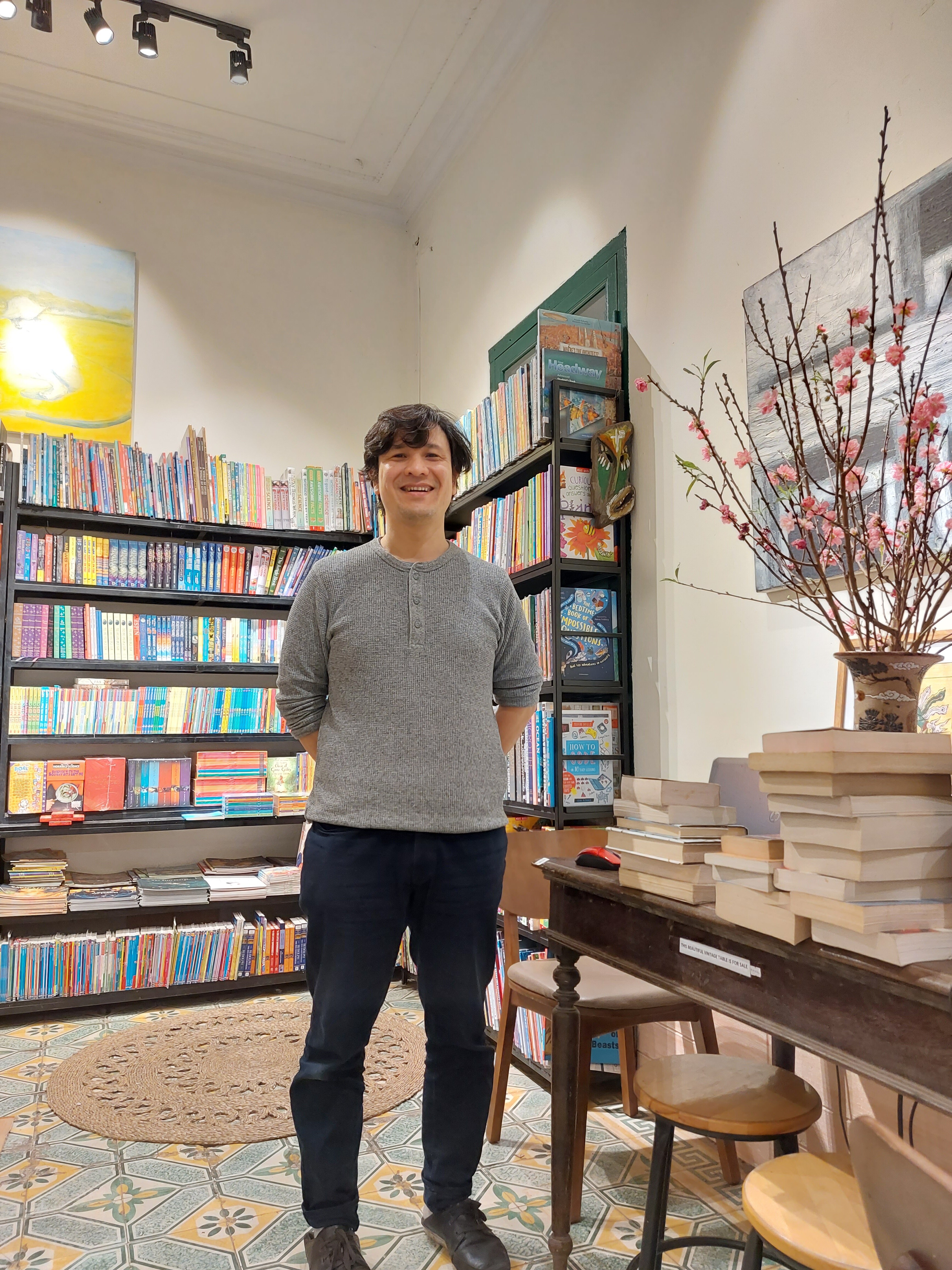
Established by Australian author Pam Scott in 2001, it is now owned and managed by Truong, who took over the store in 2006. “In Vietnam, only a few bookstores have the permission to import foreign books and The Bookworm, Hanoi is the biggest of them all. Earlier, the store mostly kept second-hand books but after I became the owner, we expanded and started keeping more and more new titles,” he says.
For the longest time, The Bookworm Hanoi was the only English-language bookstore in the city. Over the years, other shops have started keeping English books in addition to Vietnamese titles. Even so, The Bookworm boasts of an inventory of English best sellers like no other. With exclusive racks dedicated to award-winning books (Nobel and Pulitzer Prizes), it houses as many as 20,000 books comprising both imports and second-hand volumes donated by travellers and visiting customers.
“We sell most of our second-hand books at half-price or less. With the reading culture growing steadily in Vietnam among the youth, more people are reading English language books,” says Truong, who grew up reading Vietnamese authors and books.
For some cultural context: Around the beginning of the twentieth century, Vietnam became a French colony and this historical event acted as a push for Vietnamese literature to escape the influence of Chinese literature. Western studies and French literature then came into the picture. As a result, modern Vietnamese literature has its roots in colonialism, both in absorbing Western literature’s influences in and trying to resist them.
Tran Ngoc Hieu, a lecturer in the Department of Philology, at Hanoi National University of Education, throws light upon the origins of Vietnamese literature and its evolution over the years: “Vietnamese literary scholars often take the 10th century as the starting point. That was when Vietnam regained its autonomy after almost 1000 years of domination by the Chinese feudal empire. Classical Vietnamese literature spans 10 centuries. Initially, it imitated the canons of classical Chinese literature and adopted the norms of its genres. But this literature gradually developed its own language, forming some native genres.”
He elaborates on the impact of the country’s three-decade long history of wars: “From 1945-1975, Vietnam witnessed two important wars: the first Indochina war associated with the end of the French colonial rule in Vietnam, and the second Indochina war is often known as the Vietnam War. These wars resulted in the division of Vietnam into two regions, each supporting opposing political regimes. While the literature in the north of the country was mainly in the line of socialist realism, the pre-1975 literature in the south followed modernist aesthetics. After 1975, when the country was unified and the communists came to power, the pre-1975 literature of the south was considered a decadent phenomenon. Many of its important authors have not yet had the opportunity to be reprinted officially. The aesthetic ideals and norms of socialist realism have gradually been abandoned, especially since 1986, when the Communist Party of Vietnam had important political reforms. Vietnamese literature from 1986 to the present has become more diverse in terms of aesthetics and ideas, although the censorship regime is still not completely tolerant of many artistic creations.”
Like every country, Vietnam’s historical context and traditions have shaped some popular literary themes. As an agricultural country, nature plays an important role in cultural life and is a prominent theme in literature. Nature is often portrayed as providing people with comfort or shelter.
Vietnamese literature, Hieu mentions, also often borders on sentimental themes. He believes sentimentalism is a psychological characteristic of the Vietnamese with readers often preferring writing that is lyrical and emotional instead of rational or argumentative. Even foreign literary works that carry such values, he says, are likely to be well received. Of course, given its history, war is also a common theme. Wars are described both as heroic narratives and as tragic ones with trauma that persists.
Today, though publishing is still under state control, it is affected deeply by market trends. “Literary books are not usually on the list of best-sellers. For the first edition, publishing houses often hope for 1000-3000 print copies to be sold out. Fiction and non-fiction are much more favoured than poetry,” Hieu explains.
Indeed, it was only in the mid-1980s that contemporary literature began being published. The period is often referred to as the literature of Đổi mới (Innovation). The best-known writers of this time are Dương Thu Hương and Phạm Thị Hoài, who are both known for their political dissidence. Their works reflect the disillusionment of the post-war period and reject the conventions of socialist realism. While Nguyễn Huy Thiệp, another important figure of this era, marked the radical turn of Vietnamese post-war literature, Bảo Ninh is famous for his novel, The Sorrow of the War, which has been translated into various languages. It was during the Đổi mới period that Vietnamese literature gained the attention of foreign publishing houses. It was also the time when the US and Vietnam began to rebuild their diplomatic relationship. Still, Vietnamese contemporary literature has not been widely picked up abroad as foreign readers generally think of it as being burdened with a war legacy. This is only partly true.
Now, some new authors are drawing attention from foreign publishing houses. Thuận’s Chinatown, which was translated into English, has been enjoyed by both readers and critics. Other prominent names include Trần Dần, Bùi Ngọc Tấn, Dương Nghiễm Mậu, Nhã Thuyên, and Nguyễn Hoàng Quyên.
Interestingly, the Vietnamese are familiar with a lot of classic Indian literature including Hindu epics like The Ramayana and Kalidasa’s play Shakuntala. The Ramayana, Hieu says, was even adapted into a chèo drama (a traditional musical drama popular in the North of Vietnam) by two famous playwrights- Lưu Quang Thuận and Lưu Quang Vũ.
Malayalam author Thakazhi Sivasankara Pillai’s novel, Chemmeen (Prawns, 1956), which won him the Kendriya Sahitya Akademi Award, is also one of the best-known Indian novels in the country. In 1986, the book was even adapted into a cải lương drama — a traditional genre of melodrama — titled Love and Tears.
However, Hieu says, the best-known Indian author in Vietnam is Rabindranath Tagore. “Between 1960 and 1970, Tagore was translated in both North and South Vietnam. While translators in the north connected him with Marxist ideology; in the south, he was imagined as the representative of Eastern spirituality. In fact, Tagore is the only modern Indian author included in our curriculum,” he says.
Clearly, this once war-ravaged land has excellent literary taste.
Arunima Mazumdar is an independent writer. She is @sermoninstone on Twitter and @sermonsinstone on Instagram.


