
 E-Paper



Zarna Garg: “I’ve been saying inappropriate things my whole life”
The author of This American Woman on growing up privileged, sharing her opinions publicly, and being devoted to stand-up comedy

 Prefer HTon Google


You’ve dedicated This American Woman to American women who “showed” you your voice. However, it can be argued that you were quite vocal before you were “found”. Tell us about what convinced you to share your opinions publicly?

Your observation is accurate. I’ve been saying inappropriate things my whole life. Most of my life has been a struggle to keep my thoughts to myself. To constantly tell myself: Don’t say it.
But being in America, as a grown woman, as an adult, I felt okay to say things. I’m not killing anybody. People can disagree with me and walk away. Now, I’m in a business where the more I say it, the more successful I am. So, for 45 years, my whole life has been about putting a speed breaker [over my thoughts]. Now, I’m like, remove the barrier. What’s your first thought, your most raw observation? Put that on stage. So, I think my inner struggle has found its peace because of American women.
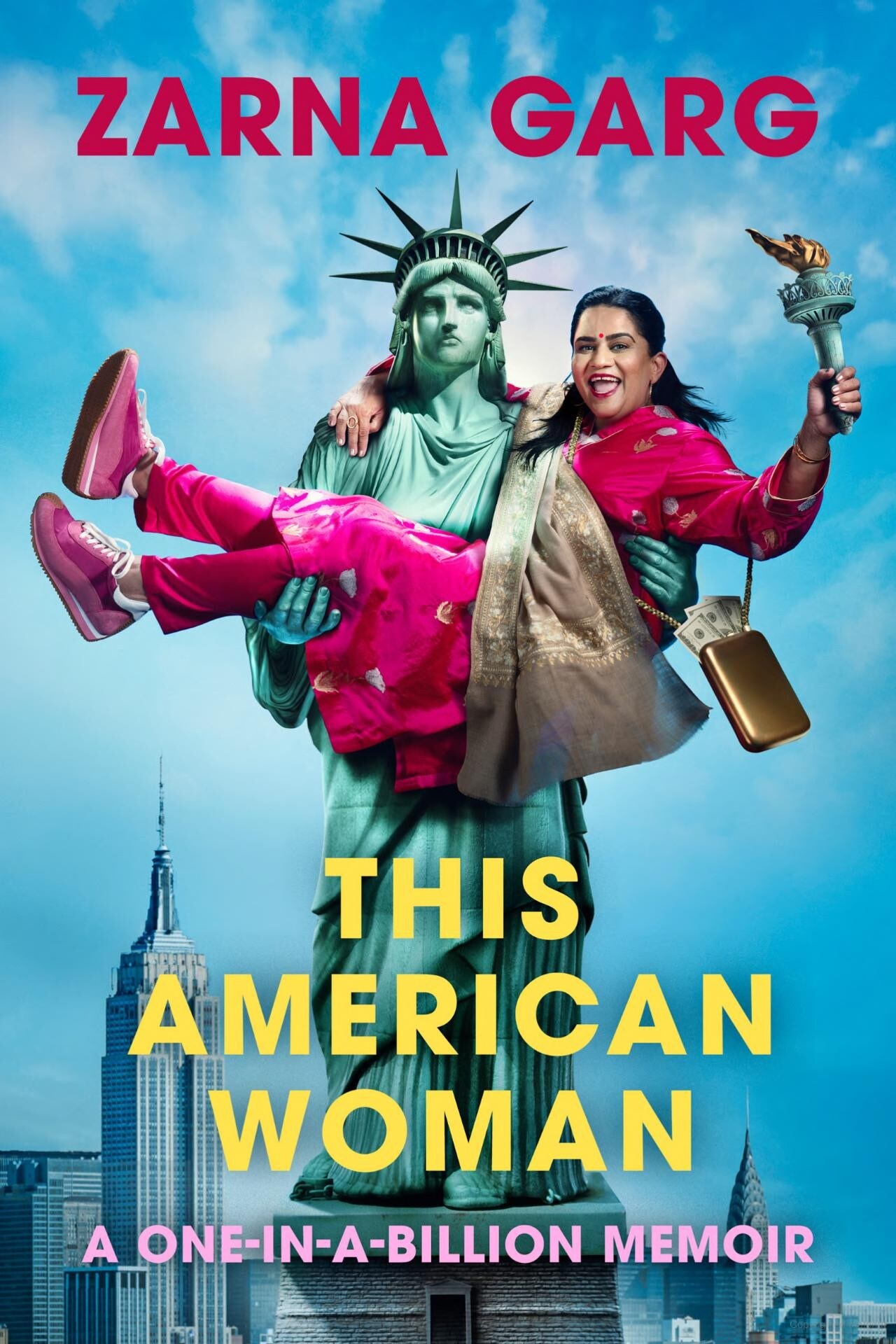
I have lots of amazing Indian women friends, too. But none of them would have said to me, ‘Zarna, just say it’. From them, I learned to be respectful, to be quiet, and to be a pacifist. You could think whatever you were thinking, but you weren’t encouraged to say it. Don’t cause a fight; don’t cause a scene. American women [on the other hand] were like, ‘Oh, say it. Just say it. It’s so funny. We’re going to laugh. We’ll all laugh at it together.’ Therefore, I felt like I owed it to them because I don’t know if, without their influence in my life, I would have this career, this job, this book, any of it. I think I would have been too scared.
Despite coming from privilege, you weren’t at ease doing what you wanted to do. Tell us about tasting freedom in America.
In America, brown writing, movies, and stories are often centred around poverty. But I talk openly about how much privilege I had back then in the 1980s. I mean, we had everything; everything that makes a great life in India and the rest of the world. But in the end, when it came down to actual life, [money] didn’t matter.
I went to the best school, and every day [when] I came home, my dad was like, ‘Why are you reading another newspaper? I don’t understand.’ He was very proud of the fact that I was a good student, that I used to top the class and all that. But the idea was to do all that, but shut up!
Some of my friends, who grew up in humbler situations were living far more liberal lives than I did in extreme privilege. I’ve friends, women, who went to engineering schools and have corporate jobs in India. They lived that life, but that life was never an option for me. So, freedom, in my case, was not tied to money.
What was the writing process like?
I have a massive team that works with and for me. They were against me writing the book. It was not a high-priority project in their eyes because I’m writing TV shows, I have offers for movies; I sell tickets, I make money right away. Book writing is a very intense, years-long journey, right? They were like, You can write a memoir five to 10 years from now; your price will only go up. Why do you want to write a book right now?
I made it a priority because, in my observation, the world that we’re in, is on fire. I wanted to put something positive and hopeful out into the world as soon as I could.
I’m a live performer; I’m before a live audience every night of the week. In the six years I’ve been doing standup, I’ve been on stage a minimum of five nights a week. That’s a lot! Usually, I’m on multiple stages. I do two or three shows a night. So, in every show, I meet people who ask me, ‘How did you do it? I’m stuck.’ Aside from the business—and I’m a hardcore capitalist by the way, I feel there’s a need for somebody to say to others, you can do this.
This brings me to the chapters. First of all, neither my team nor my family was involved in writing this book. I told my family that either I’m writing a very honest book, and you have to have faith that I’m going to do you right, or I’m not writing the book. [I asked them], tell me you’re scared and I won’t write this book. Not a single person in my family read a single word until the manuscript was locked, and you can verify this with anybody.
Secondly, I truly am a product of social media. I believe that the biggest reason people come to me is that they believe and know that I’m authentic, that I’m real, that I’m not controlled by my team, even though I have a huge team.
I do what I want to do. My daughter thinks I’m completely unhinged on social media, but that’s who I am and that’s okay. I own it. I wanted to write a book that, first and foremost, was entertaining. This was not meant to be a therapy session for myself at my audience’s expense. The idea was not to dump every trauma of my life on paper. Absolutely not. The north star of the whole book was how entertaining this book is. Each of the 21 chapters of this book has a beginning, middle, and an end, and each was meant to entertain. I was anal about it. And I’m very proud of my writing. I won the top comedy feature award in America, beating 11,000 or so screenplays, which included Oscar-winning screenwriters’ works, too. So, I’m very proud of the work that I put out. Everything was chosen from the lens of what value this delivers to my audience. You know, I built my entire social media base by myself with only one principle: You don’t get a million followers, you get one follower at a time a million times.
I wrote the book as if I were your friend sitting next to you, telling the story. And I’m glad that even my publisher loved the voice so much because I would rather have a mistake go out in the published version than have everything polished with its rawness entirely gone.
READ MORE: Review: This American Woman by Zarna Garg
People often make your success about your age. While some marvel that even after so many failed LLCs later, your comedy career took off, others think of this as a ‘late arrival’ at the scene. How do you view it?
The best part of failing, as much as I did, is that you stop being so scared. It’s like you’ve been slapped around so much. My whole life, I’ve taken shots that I didn’t even put in the book because I didn’t want to traumatise my audience more than I already was.
All the failing didn’t really pinch beyond a day, honestly. It was like, ‘Yeah, so what, I tried it and people made fun of me, but I don’t really care.’ Go make fun of me if that’s your jam. I don’t really take these things to heart because I’m too busy making fun of other people, and I kind of hold myself at that level. So, if somebody wants to play this game, that’s on them, because I believe that the real gladiators who are in the arena, they understand failure.
No one built anything big without failing many, many times. So, I limit my thoughts and my interactions to the top people in anything, because why should I bother? Because the fear of failure is surrounded by the question, ‘What will people think?’ Once you get rid of that, there’s nothing to be scared of. You should be more scared that if you don’t try anything, you’ll never know. That’s where I was; I was desperate. I was like, at all costs, I wanted to find my thing.
The best part of being in a very self-absorbed social-media-streaming generation is that we are all in now, no matter your age. Even our parents are addicted to Facebook and WhatsApp. The best part about it—they don’t have time to care how much you’re failing. They’re so consumed by their own thing. So, the good thing is that you don’t need to worry about anybody and their opinions. You are free to focus on your life and on your journey.
You do podcast, comedy, screenwriting, what do you consider as an art form that’s closer to you?
No contest. Standup comedy is the spine; that is the root of everything I do — that is the tree of all the other branches that hang around it. That is what connects me to my audience. My brain is always thinking like a stand-up comic. Even the skits that I make on social media that millions of people watch, they’re designed with punchlines in mind. They’re designed to hit in a way that if you were in the audience with me, you would feel it. And that is my secret sauce. No one else can do that.
Saurabh Sharma is a Delhi-based writer and freelance journalist. They can be found on Instagram/X: @writerly_life.


