
 E-Paper



Rude food by Vir Sanghvi: The Amritsar food diaries

 Prefer HTon Google


It is a great food city and the bread capital of India
I have been to Amritsar many times. And I always thought the food was great. But is it really one of India’s great food cities? I was never sure.
So when I went back for a weekend, I warned my wife that all we would do is eat. I requested Sartaj Chahal, a young and bright IPS officer I know to give me a list of places to try. (I already had several other lists sent in by friends.) Sartaj went one better. It was the weekend, he said, so he would ask two off-duty police officers who were great foodies, to help.
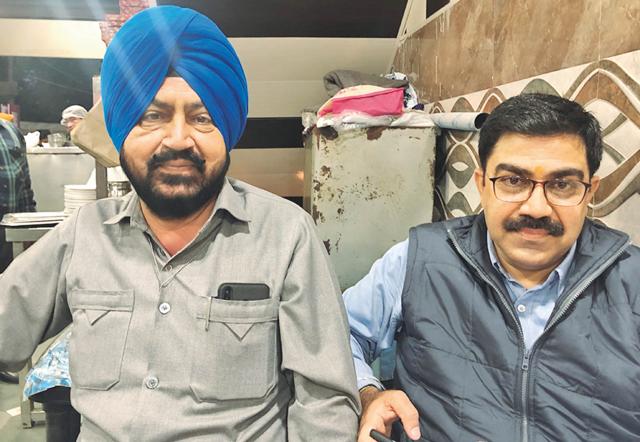
Which is how I came to meet Inspector Anoop Saini and ASI Bhagwant Singh, both veterans of the force. They say that cops always know the best dhabas and I am here to tell you that they are right. Anoop and Bhagwant took me to place after place, ensuring that I never had a bad meal. And I had some really great ones.
It would be too tedious to write about every place we went to but here are the highlights of what I discovered.
Kulcha
Amritsar is the kulcha capital of India. I am sure there are places in the rest of Punjab where the kulchas are as good (Ludhiana, for instance), but I have long had an enduring love affair with Amritsar’s kulchas.
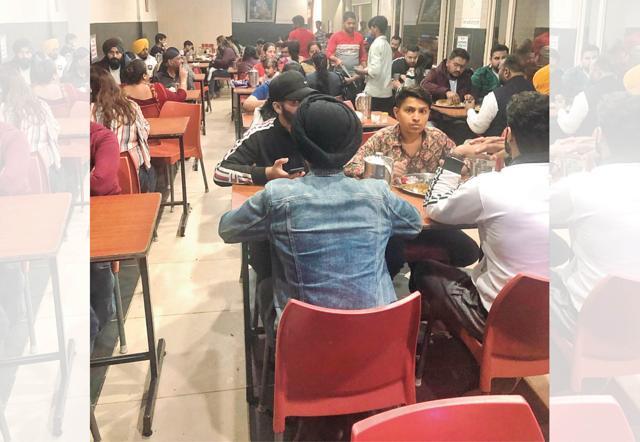
Anoop and Bhagwant took me to innumerable kulcha places but the ones I really liked were Brother’s (part of a chain – I went to the branch in the old city) Kulwant (near the Golden Temple), and Kulcha Land (a subject of some controversy because its kulchas are different). At each place I spent time in the kitchen trying to figure out exactly what they were doing.
The most helpful were the owners of Kulwant. This is a small (but famous) place with no room for a kitchen. So they have built one on a mezzanine. As there is only a small and awkward staircase, they make the kulchas upstairs and then lower them down in a bucket tied to a rope to waiting servers. It is a slightly bizarre system but it works.
The secret of a good kulcha is layering. The flour is rolled into thin layers, which are then coated in ghee and put together to create the kulcha. You can use whatever stuffing you like but potatoes and cauliflower seemed to be the most common.
To bake a kulcha, you must use a tandoor (non-gas fired is always the best) where the temperature has been kept low. The kulcha is stuck to the wall of the tandoor and then cooks slowly (around 10 minutes).
The guy who operates the tandoor has no thermometer so he guesses what the right temperature is. He also has no way of checking when the kulcha is ready to be pulled out so he uses his own judgement.
Why don’t we get kulchas of Amritsar quality in Delhi? Well, partly because you need an expert kulcha guy with tremendous judgement to make the right calls. In a kulcha shop, there will be upto 10 kulchas in the tandoor at any given time. Each kulcha has been put in at a different time. The kulcha guy needs to recall when he stuck each kulcha to the tandoor’s walls so that he can judge when it is ready.
The other problem is tandoor temperature. My guru, the great chef Manjit Gill, explained it to me. Most Indian restaurants have only one tandoor in which they cook everything. But you simply cannot cook a kulcha at the tandoor temperature required for kebabs. Even if you have two tandoors, there is still a problem because a naan or a tandoori roti require higher temperatures than a kulcha.
The key to a good kulcha, Manjit says, is the manner in which you get the ghee to slowly melt and impart a flakiness to the kulcha. That can only happen at a low temperature.
So the only place you can get good kulchas is one where there is a designated kulcha tandoor. And outside of Punjab, there aren’t too many of those.
Anoop was keen on Kulcha Land, which he said had the best kulchas in Amritsar. They were different: thinner and crispier but even more delicious for that. When I posted pictures of those kulchas on social media, I was told it was a tourist trap.
Well, perhaps it is. But I did not see a single tourist there and my cop friends who swore by it, were hardly tourists.
Dal
It is the dirty little secret of every Punjabi restaurant outside of Punjab. The black dal they serve is roughly as authentically Punjabi as Donald Trump.
There are no tomatoes in real Punjabi dal. It is not meant to be a dairy dish full of home-made butter and cream. The tomato-butter dal was invented by Moti Mahal in Delhi in the early 1950s, using the same principle as butter chicken gravy: lots of butter and tomato. After Bukhara began serving a fancier version of the dal, that recipe has been copied all over the world while the real thing has not travelled well.
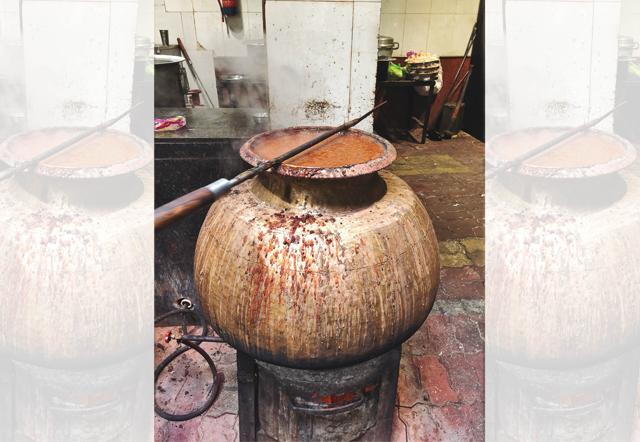
In Amritsar you do find the real Punjab dal. According to Manjit Gill, the original name is not Maa Ki Daal to indicate that mummy made it. It is maanh, after the Punjabi name for urad which was, originally, the only lentil in the dal.
Anoop and Bhagwant introduced me to the owner of Kesar Da Dhabha, an all-vegetarian establishment that started in Lahore in the early years of the 20th century and moved to Amritsar after Partition.
Their dal had no tomato, no home-made butter and no cream. Urad dal was slow-cooked for around eight hours in a large vessel with subtle spicing and lots of ghee. Before service, they did a tadka of onions in more ghee and poured it over each individual bowl of dal.
The dal is fat-filled (because of the ghee) but has a deeper and more intense taste then any black dal I have ever eaten in Delhi.
Pooris
Kanha is an Amritsar institution. It has a limited menu. If you pay for one plate, you get two pooris, channa and an aloo sabzi with a sweet and sour, imli-inflected taste. You will get free refills of the aloo and the channa but each plate has only two pooris. If you want more pooris they charge you extra.
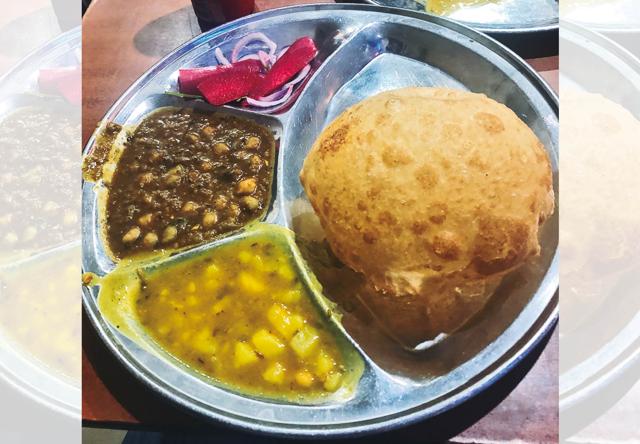
It is always full because of the pooris, which are perfectly billowed till they puff up but stay soft and crispy at the same time. Thanks, I suspect, to Bhagwant’s status as a regular, the owner took me to the kitchen and explained the secret of the pooris. They make them with a mixture of atta, sooji and maida. After the dough is ready, they make the pedas, adding a little urad dal to each one, and leave them for half an hour before frying. The pooris fluff up and that amazing texture is achieved.
Naturally, the owners are reluctant to reveal what goes into the dough. Even when they do talk about it, the exact proportions remain a secret.
Bheega Kulcha
You don’t find this at many places. It is not the famous kulcha but a totally different dish: a thin maida kulcha, baked with yeast in a wood-fired oven. On its own, the kulcha does not taste like much but they soak in a dekchi full of channa. When it has absorbed the gravy, they put more channa on top.
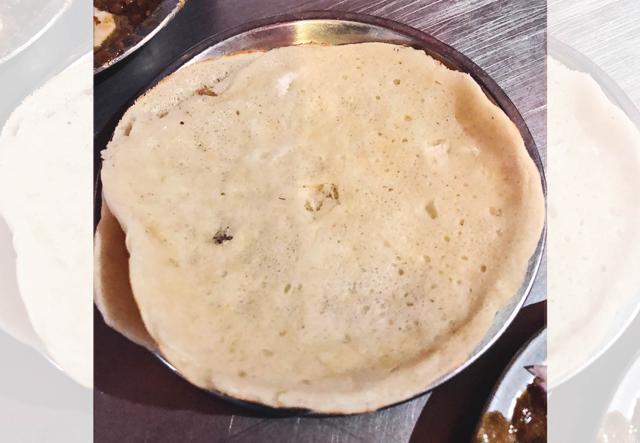
The Kulcha King of Amritsar (Anoop’s description) is Hansraj Choleyanwala. Legend has it that he is a multi-millionaire but he is at his little stall every day making his bheega kulcha.
I thought the flavour was really in the channa, which Hansraj makes himself at another location in secret so nobody finds out what the recipe is. And when he gave me the channa without the kulcha but with crisp matthi, it tasted even better.
Non-Vegetarian
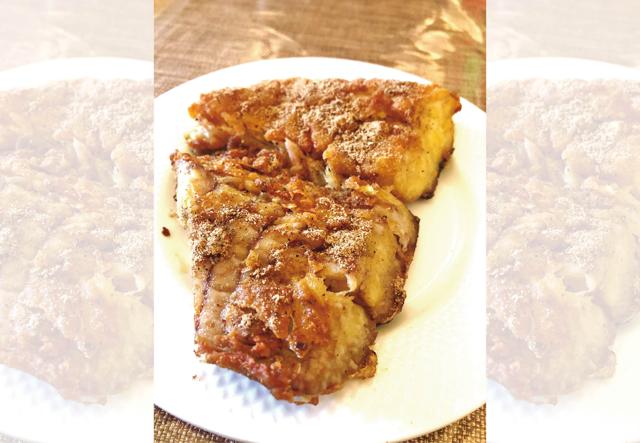
Amritsar is not a vegetarian city but it has only a few classic non-veg dishes of its own. The most famous is the fried fish. Usually made with singhada, a fresh water fish, it is lightly battered and should be plump, firm, crisp and delicious. The best fish I had was at Makhan. Bunty, whose family owns the restaurant showed me around the kitchen but avoided giving any detail of the recipes. Manjit Gill says, however, that the secret is that the fish is fried once, put aside and then fried a second time a little later.
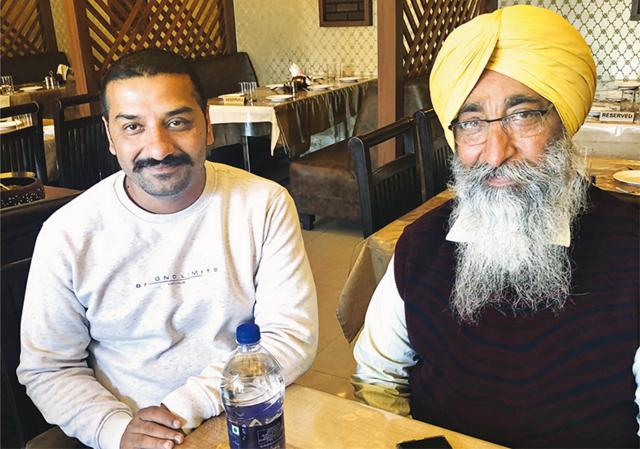
Bunty also offered me his boti kebab, his tandoori chicken and his murgh malai tikka (all fabulous). The key to his food, I thought, lay in the masala mixes, all made in-house including garam masala and chaat masala.
Then, there are dishes which came to Amritsar from Delhi and have morphed into something different. My friend Rajat Kalia now lives in Australia but when he heard I was in Amritsar, he got his brother to get me tandoori chicken from Beera and butter chicken from Charming Chicken. The tandoori chicken was great but the real revelation was the Butter Chicken, which bore only a passing resemblance to the Delhi original. (It was better.)
I guess that if Delhi transformed its dal then Amritsar has a right to re-invent Butter Chicken.
So is Amritsar a great food city?
How could I ever have doubted that?
From HT Brunch, March 8, 2020
Follow us on twitter.com/HTBrunch
Connect with us on facebook.com/hindustantimesbrunch


