The interim budget has announced the Pradhan Mantri Kisan Samman Nidhi (PM-KISAN), a direct income transfer scheme which will give an annual payment of Rs 6,000 per family to farmers which own up to 2 hectares (Ha) of land.
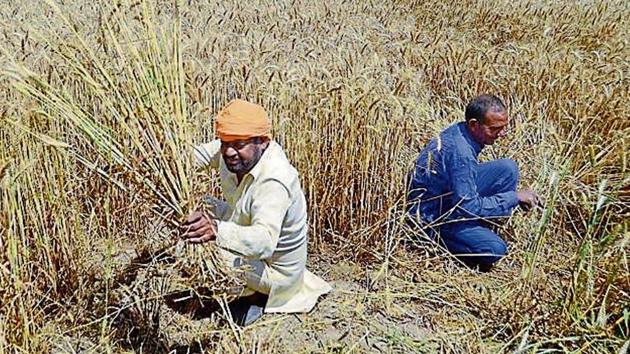
The budget outlay for the scheme is Rs 75,000 crore for 2019-20, which means that it will benefit 125 million families.
An HT analysis of a 2013 National Sample Survey Office (NSSO) report on Household Ownership and Operational Holdings in India shows that farmers from the Other Backward Class (OBC) category could be the biggest beneficiaries of this scheme.
According to the report, there were an estimated 156 million rural households in the country in 2013. 11.6 million households owned less than 0.002 Ha of land and were classified as landless. 133 million households reported a land ownership of between 0.002 and 2 Ha of land, while another 11 million reported a land ownership higher than 2 Ha.
Assuming that the scheme will also include landless farmers among its beneficiaries, the total number of households which could gain from it comes to around 145 million according to the 2013 National Sample Survey Office (NSSO) estimates.
This is not very far from the 125 million number one gets by dividing the total budgetary allocation by amount to be given to each beneficiary. The NSSO also gives a caste-wise break up of land ownership in India. Among the 145 million households which were either landless or owned up to 2 Ha of land, 65 million were OBC households. Upper caste groups have the second biggest share in this category.
{{/usCountry}}This is not very far from the 125 million number one gets by dividing the total budgetary allocation by amount to be given to each beneficiary. The NSSO also gives a caste-wise break up of land ownership in India. Among the 145 million households which were either landless or owned up to 2 Ha of land, 65 million were OBC households. Upper caste groups have the second biggest share in this category.
{{/usCountry}}While the total number of beneficiaries given in the NSSO report is likely to have changed due to workers shifting from agricultural to non-agricultural employment, the share of different social groups is unlikely to change drastically.
The NSSO report also shows that some states could see a bigger share of their farmer population benefitting from the scheme than others. For example, the scheme would include practically all rural households in West Bengal, where the average landholding size is smaller due to a history of land reforms. The figure would only be 80% and 90% in states such as Rajasthan and Punjab.