
 E-Paper



Auto makers vie for production sops
Enthused by the prospects of growing exports and utilizing excess capacities, senior executives at companies such as Tata Motors Ltd, Mahindra and Mahindra Ltd, Renault India Pvt Ltd, Nissan Motor India Ltd, Skoda Auto Volkswagen India PVt Ltd have begun scouting for opportunities in new markets in Europe, America and Africa.


Multiple automakers in India have begun exploring the possibility of enhancing their exports of passenger vehicles and parts to qualify for incentives under the recently-announced production linked incentive (PLI) scheme, said three people directly aware of the developments.
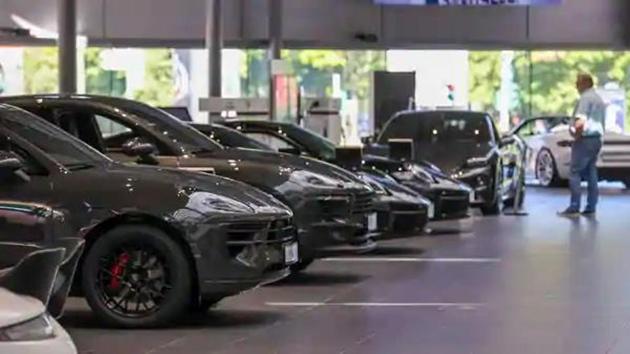
Enthused by the prospects of growing exports and utilizing excess capacities, senior executives at companies such as Tata Motors Ltd, Mahindra and Mahindra Ltd, Renault India Pvt Ltd, Nissan Motor India Ltd, Skoda Auto Volkswagen India PVt Ltd have begun scouting for opportunities in new markets in Europe, America and Africa, said the people mentioned above, asking not to be named.
The Indian government had on 11 November announced a PLI scheme of about 2 trillion rupees to incentivise companies in 10 sectors for improving local manufacturing and exports subsequently. The automotive sector comprising vehicle makers and their parts suppliers will receive subsidies worth ₹57,000 crore--the biggest chunk of the scheme.
The government has been pushing for a reduction in import of components, especially from China, and an increase in exports of vehicles and components from India. Prime minister Narendra Modi also launched the ‘Atmanirbhar’ campaign to promote local manufacturing and exports. The government also put in place curbs on import of components such as tyres and introduced certain quality-control measures to curb flow of low-quality parts from China.
The first person cited above said most automakers have already started looking at opportunities to maximise exports which will allow them to qualify for the PLI scheme.
“Some of them are also working with consulting firms on how and where exports can be increased from India. Though the parameters are not known but senior bureaucrats in charge have told automakers that export-related revenues will be taken into consideration while choosing the beneficiaries,” the person said.
A spokesperson of Nissan Motor India said the company will continue to focus on exports to make India its major export hub and leverage competitiveness of its plant outside Chennai to support markets in the region. //which region?/
“The Nissan Magnite is the first made for India B-SUV on our ‘Make in India, Make for the World’ philosophy and we are exploring export opportunities,” the spokesperson said.
A spokesperson of Tata Motors said the PLI scheme will promote “the potential and ambition” of India’s auto sector.
“At Tata Motors, we offer mobility solutions across several geographies and have more than 8.5mn Tata branded vehicles plying in 175-countries. We will continue to seek new markets to offer our products and win more business from markets we are already present in,” the spokesperson said in an emailed response to queries.
Queries emailed to spokespersons of M&M, Skoda Auto Volkswagen and Renault India remained unanswered.
The second person mentioned above said the PLI scheme will indirectly promote exports from India and subsequent revenues for the automakers as they will be able to better utilise their idle capacities and offset slower sales in the domestic market.//ck//
“Most of the manufacturers don’t want to depend on the Indian market for survival and companies like Ford, Nissan and Volkswagen have been reasonable big exporters from India. Also, most of them have excess capacity and the local demand won’t be back to 2018 levels till another 2 years. Hence some of the upcoming products of Nissan, Renault Volkswagen and others could be exported to new markets to qualify for the subsidies,” the person said.
Amid the enthusiasm, some industry executives are also cautious since finer details of the scheme are still to be divulged.
“The scheme has been devised carefully to indirectly support companies who export but we still don’t know what will be the threshold and how stringent it will be. Having said that, most companies are looking to enhance exports from India in the coming years to qualify for the incentives,” the person said.


