
 E-Paper



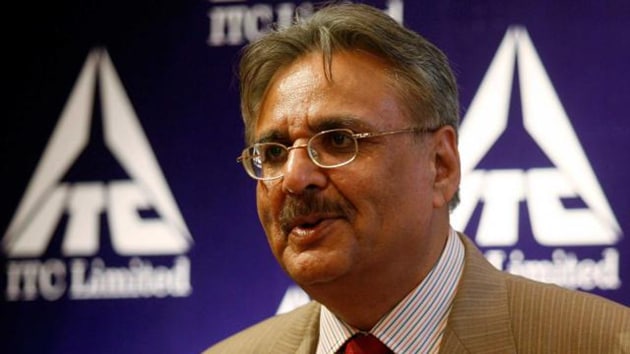
YC Deveshwar, man behind ITC diversification, dies at 72
Deveshwar (72), who stepped down from executive role as chairman and CEO in 2017 but remained as a non-executive chairman, breathed his last at a private hospital in Gurugram.


In the 1990s, soon after he became chairman of the company, he fought off the advances of the single-largest shareholder, a multinational, keeping the company board-run and Indian.
In the 2000s, his company moved to triple-bottomline reporting, measuring the use of its environmental and social capital in addition to its financial one.
And in the 2010s, he oversaw his company’s rapid diversification (although the process had started earlier) into consumer products. Any other business leader would be proud of just one of these; it is a measure of Yogesh Chander Deveshwar’s abilities as well as character that he had three such to show for his efforts, not that the man himself made a show of these.
Deveshwar, 72, passed away on Saturday, a little over two years after he stepped down as CEO (in February 2017), although he remained non-executive chairman.
Deveshwar, YCD or Yogi to people, was born in Lahore in February 1947, on the cusp of Indian independence and his family moved to India shortly after. He studied mechanical engineering at the Indian Institute of Technology, Delhi, and on graduation, in 1968, joined ITC. He was 21 at the time. At the time, ITC was run by the redoubtable Ajit Narain Haksar, who would go on to become the company’s first Indian chairman a year later. Haksar was big on identifying young sparks whom he thought could be future leaders (he hired many), and Deveshwar was one such.
Haksar retired in 1983; a year later, in 1984, at the age of 37, Deveshwar was named on to the company’s board. Even back then, despite a large foreign shareholder British American Tobacco keen to have things its way, ITC was a board-run company. Interestingly, like other best-in-class board-run companies in India -- Larsen & Toubro and HDFC are easy examples – ITC too has always been associated with a strong larger-than-life leader.
At ITC, until 1983, it was Haksar. After he took over as chairman in 1996, it was Deveshwar.
Between 1991 and 1994, Deveshwar was the chairman and managing director of Air India. Then civil aviation minister in the Narasimha Rao government, Madhav Rao Scindia borrowed him from ITC, to help turnaround the flagging fortunes of the national airline.
By 1993, Air India was earning a profit of almost ₹1 crore a day (it ended the year to March 1993 with a record profit of ₹330-odd crore). In 1994, on his return to ITC, he was named vice chairman. He took over in 1996. His first few years were spent fighting off BAT, which was keen to take control of the company.
That done, in the 2000s, he started looking at ways to diversify the company from its cash-cow cigarettes business into foods, paper, agri-products, hotels, IT, and consumer products, and to look at ways to measure the company by using more than mere financial metrics. The result of the latter was the triple bottomline. And this wasn’t just on paper – last year, almost half of the company’s energy needs were met by renewable energy.
ITC’s diversifications really kicked in during this decade. Last year, the company’s non-cigarettes business accounted for nearly 60% of its revenue, and almost 90% of its workforce was employed in such businesses.
The year Deveshwar took over, 1995-96, ITC’s revenues were about ₹5,200 crore. The year he stepped down as CEO, 2016-17, its revenues were a little over ₹ 55,000 crore.


