E-Paper



Fuel rates soar fifth time in a week; diesel hits record ₹82.06/ litre in Delhi
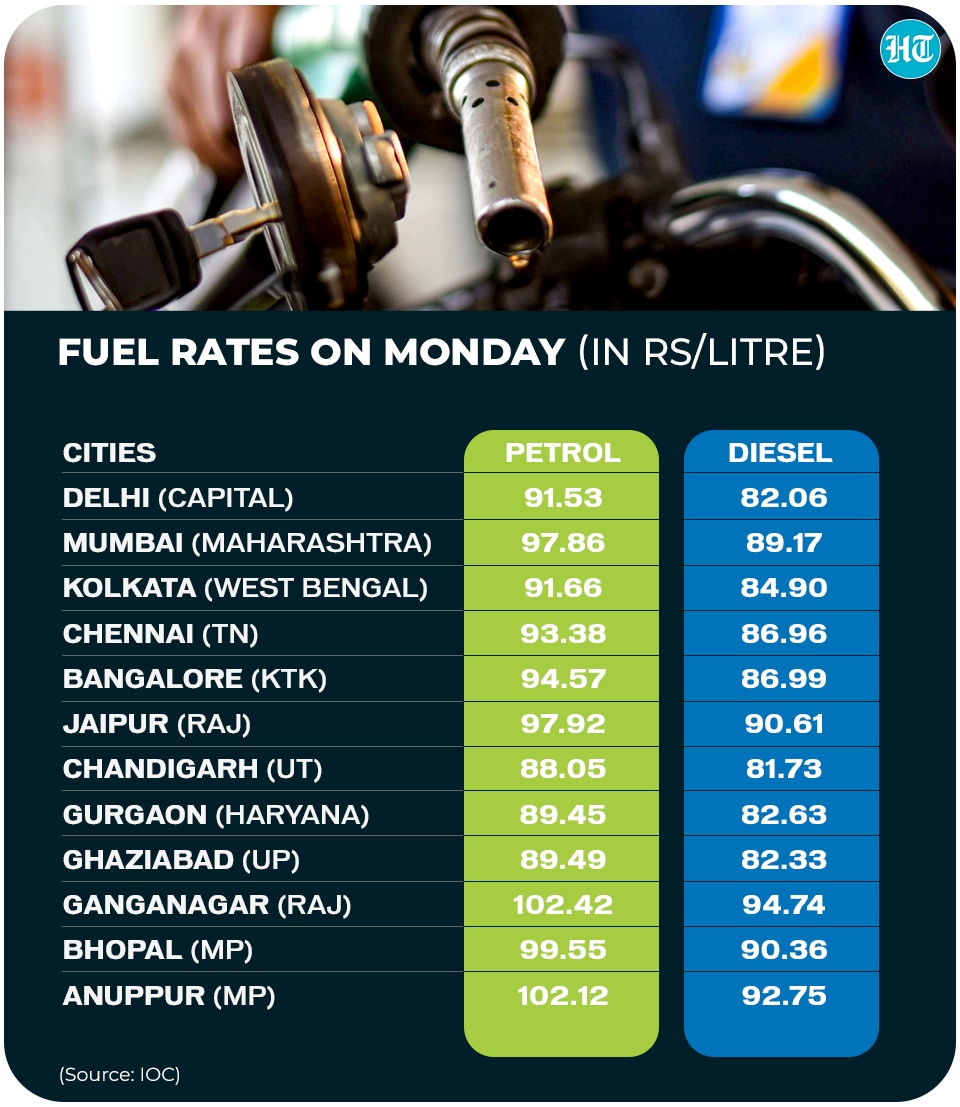
In certain remote areas, such as Ganganagar (Rajasthan) and Anuppur (in Madhya Pradesh), petrol prices have already crossed ₹100 per litre mark due to state-specific taxes, cess and other local levies

 Prefer HTon Google


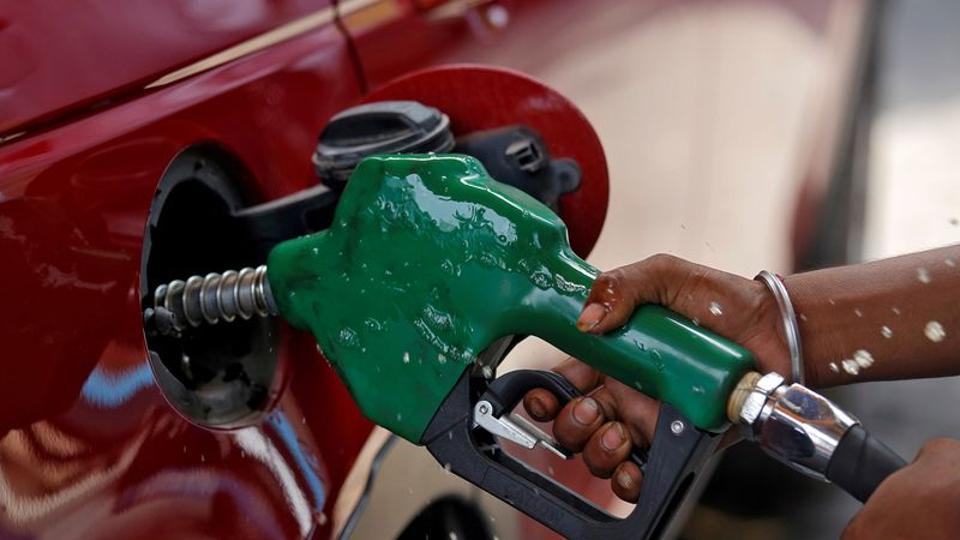
After a two-day pause, state-run oil companies again raised petrol and diesel rates by 26 paise per litre and 33 paise a litre respectively. Pump prices of petrol is at record ₹91.53 per litre and diesel at ₹82.06 a litre, an all-time high.
In certain remote areas, such as Ganganagar (Rajasthan) and Anuppur (in Madhya Pradesh), petrol prices have already crossed ₹100 per litre mark due to state-specific taxes, cess and other local levies.
Petrol is costlier by ₹1.13 per litre and diesel by ₹1.33 a litre in just five rounds of prices hike in less than a week since May 4, a day after results of assembly polls were declared. The upward revision of fuel rates would have varying impact of pump prices across the country because of different state and local levies.
According to Indian Oil Corporation (IOC), petrol and diesel is being sold at ₹97.86 per litre and ₹89.17 a litre respectively in Mumbai on Monday. Fuels are priced at ₹91.66 per litre (petrol) and ₹84.90 a litre (diesel) in Kolkata, and ₹93.38 per litre (petrol) and ₹86.96 a litre (diesel) in Chennai.
State-run fuel retailers are compelled to hike petrol and diesel rates now as they have to recover their past revenue losses for not raising fuel prices during the assembly elections in four states and one Union Territory, two executives working in different oil marketing companies said, requesting anonymity. Retail prices of petrol and diesel did not see any upward movement for 66 days in a row a day after the Election Commission announced poll dates on February 26. Companies had, however, reduced fuel rated four times during this period, bringing down pump price of petrol by 77 paise per litre and diesel by 74 paise a litre.
Also Read | US fuel sellers scramble for alternatives to hacked pipeline
Besides, international oil prices are constantly moving north and the same is also factored in retail prices of fuels in India, the executives said. Pump prices of petrol and diesel in India are aligned to their international benchmarks and often move in tandem. The rupee-dollar exchange rates also have impact on fuel pricing as India imports over 80% of crude oil it processes and pays in dollar. Benchmark Brent crude was hovering around $69.20 a barrel on Monday intraday trade, about 1.34% up from Friday closing price of $ 68.28.
HT wrote on April 28 that fuel rates would move north after polls and their pump prices would start seeing small increments as state-run fuel retailers had been losing about ₹3 a litre on sale of the fuel because of higher international oil rates and depreciation of rupee against the dollar.
Fuel rates in India is also high because of high central and state taxes. Central and state levies account for the chunk of the retail price of fuel -- in Delhi for instance, central levies account for over 36% of petrol’s retail price, and state levies, 23% but given the parlous state of the economy, especially in the midst of the raging second wave of the coronavirus disease pandemic, it is unlikely that those will be reduced. Indeed, the Centre’s move to raise excise even as global oil prices crashed last year, helped boost government revenues.
The government deregulated the pricing of petrol on June 26, 2010 and diesel on October 19, 2014. Accordingly, state-run retailers are free to change pump prices every day. Public sector retailers — IOC, Bharat Petroleum Corporation Ltd (BPCL) and Hindustan Petroleum Corporation Ltd (HPCL)— controls almost 90% of the domestic fuel retail market.