E-Paper



What does an 'unserious' generation's serious protest look like? Memes, virality and talking points

 Prefer HTon Google


India's youngsters have taken to the streets in cities like Kolkata, Mumbai and Bengaluru—armed with humor, memes, and digital fluency.
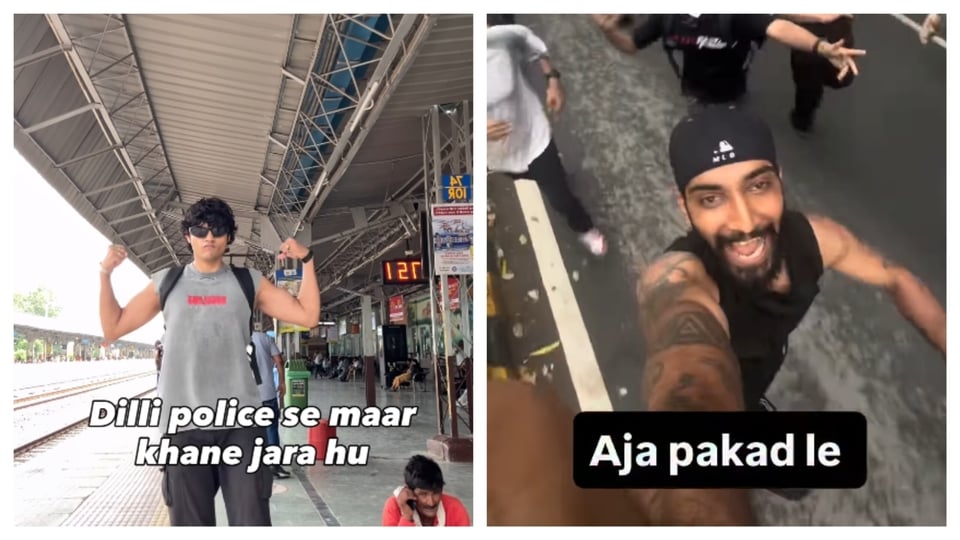
“Dilli Police se maar khane jaa raha hu,” posted a young Gen Z protester on Instagram on Monday, sharing a tongue-in-cheek ‘fit check’ before heading to the Chalo Sansad March at Jantar Mantar. As events unfolded, he seemed a little too prepared for what was to come. Yet that blend of humour, self-awareness and defiance captured the mood of thousands of young protesters who joined the march in New Delhi, which later saw tear gas shells fired and a lathi charge by Delhi Police.
The Cockroach Janta Party (CJP) had called for a march from Jantar Mantar—where protesters had been camping for nearly a month—to Parliament. The call drew a massive response but was met with heavy police action as demonstrators attempted to move towards the Parliament complex.
But this was no ordinary protest. It was a protest shaped by India’s Gen Z, many of whom were participating in a large-scale political mobilisation for the first time in their lives. What does a protest look like through the eyes of a generation raised on social media, memes and constant digital connectivity? What are young people so angry about, and what has united them so powerfully?
La Révolution: Then and Now
History books often depict protests through the lens of sacrifice, patience and non-cooperation. Gen Z approaches dissent differently. At an age when they are already grappling with competitive exams, uncertain career prospects and anxieties about the future, many feel they are also being forced to fight for accountability. Exam paper leaks, concerns over education and growing frustration with institutions have fuelled a sense of disillusionment. That frustration is now finding expression on the streets.
The result is a style of protest that is both deeply serious and remarkably unserious. Gone are the images of khadi-clad demonstrators and restrained slogans that defined earlier generations. Gen Z’s protest culture is rooted in urgency, restlessness and a refusal to separate politics from popular culture. Placards carried at the march reflected this sensibility. One read, “Jaldi resign karo, kal subah Panvel nikalna hai.” Another declared, “It’s so bad even the introverts are here.”
A generation that documents nearly every aspect of its life was always going to bring that instinct into activism. Social media is not merely a tool for Gen Z; it is where much of their collective identity is shaped. Naturally, the protest became content too. Fit checks were filmed before heading out. Reels showed protesters running from police barricades set to the iconic Subway Surfers soundtrack. “Most serious and unserious generation at the same time,” one user commented under a viral video.
Internet personalities and meme icons also became part of the movement’s visual language. The young man who had previously gone viral for his “Gian hain aap!” remark while supporting Rahul Gandhi was spotted at the protest, arguing that the real “pappus” were those refusing to answer the questions being raised by young people. “Thoda masti bhi hona chahiye,” one commenter wrote.
That perhaps best captures the spirit of the demonstrations: unemployed graduates, students and young professionals who are simultaneously content creators, activists, organisers and participants, documenting their movement while helping build it.
Yet the turnout witnessed on Monday did not materialise overnight. For weeks, the protest had been gathering momentum at Jantar Mantar, where members of the Cockroach Janata Party had assembled beneath a makeshift stage. It was there that social activist Sonam Wangchuk had been on a hunger strike for more than three weeks, demanding the resignation of Union Education Minister Dharmendra Pradhan. Wangchuk was removed from Jantar Mantar and hospitalised at Safdarjung Hospital on Saturday after 21 days of fasting over alleged paper leaks and the deaths of students linked to the NEET examination controversy.
That intervention marked a turning point. What had remained largely peaceful suddenly escalated. The march began with protesters carrying flowers for police personnel, but by late afternoon the main protest stage had been dismantled and demonstrators cleared from Jantar Mantar. Until then, volunteers had been managing crowds, painting placards and distributing drinking water under the oppressive Delhi humidity as hundreds gathered in solidarity.
Protest and Protect
The same spirit was visible on Monday. With metro stations shut, roads barricaded and internet services disrupted in parts of the city, protesters coordinated routes, shared updates and helped one another reach the protest site.
Support also came from people who could not attend in person. Across the country, individuals ordered food for protesters through delivery apps. One viral video showed a delivery worker explaining how people were sending meals to demonstrators from afar. Another captured a free chai stall serving those gathered at the site.
Solidarity was visible beyond Delhi as well. Demonstrations and gatherings were reported in cities including Kolkata, Mumbai, Chandigarh and Bengaluru, highlighting how the movement had resonated far beyond Jantar Mantar.
As the protest continues to evolve, one thing has become clear: Gen Z's sharpest weapons are not slogans alone but memes, satire and a digital fluency that allows them to turn moments into movements. They know how to capture attention, build communities and keep conversations alive long after a protest ends.
Accountability may still feel like a distant goal. But if the scenes at Jantar Mantar revealed anything, it is that this generation has little intention of slowing down. They will laugh, joke, sing, dance, film reels and make memes along the way. But they will also make themselves heard.