
 E-Paper



Everyday explained: Why do elevators almost always have mirrors? Know the real reason

 Prefer HTon Google


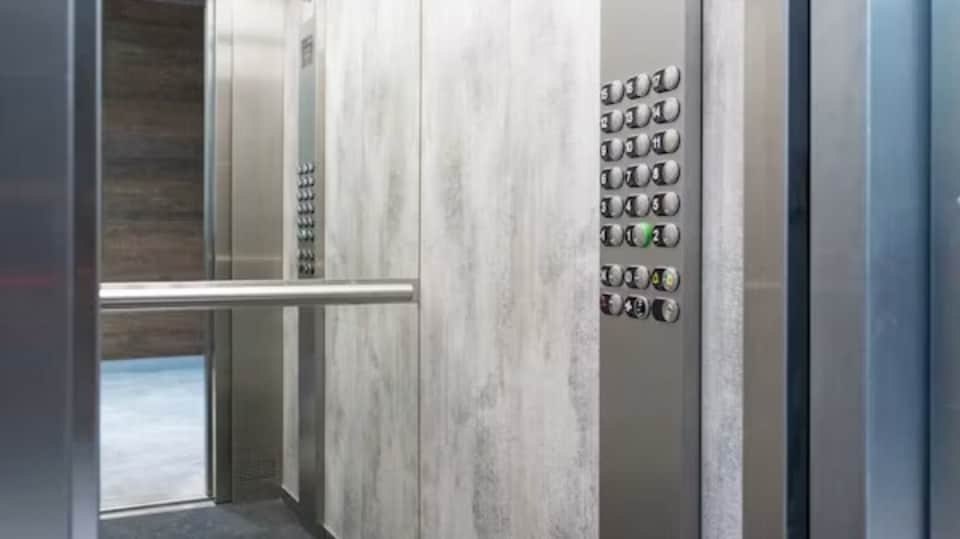
The fascinating history behind mirrors as a standard feature in modern elevators.
We’ve all been there: you step into an elevator, and within two seconds, your eyes dart straight to the mirror on the wall. You adjust your hair, fix your top, or subtly check if you’ve got food stuck between your teeth. Also read | Everyday explained: Why garbage bags have that thin white string
While it feels like elevator mirrors were installed purely to satisfy our vanity, the truth may be much cooler. It turns out that elevator mirrors aren't an architectural accident — but a masterclass in psychology, engineering, and safety design.
Theory 1: the 'slow elevator' psychological hack
During the rapid growth of high-rises in the US in the early to mid-20th century, building managers reportedly faced a surge in tenant complaints about excruciatingly slow elevator rides. Building faster motors was prohibitively expensive and, in many cases, engineeringly impossible at the time.
As detailed in behavioural psychology studies and by design historians in a 2015 report on Psychologicalscience.org, building owners brought in industrial psychologists to solve the issue. The experts realised the core problem wasn't actual mechanical speed — it was perceived waiting time. When trapped in a plain box with nothing to look at, seconds felt like minutes.
By adding mirrors, managers gave lift riders a passive distraction (checking their outfits, adjusting makeup, or discreetly observing others). The result? Complaints reportedly dropped to nearly zero overnight, despite the elevators moving at the exact same speed. Also read | Everyday explained: What does the unique number on Indian trains mean?
Theory 2: accessibility and wheelchair navigation
Beyond psychological tricks, elevator mirrors serve a critical practical function for mobility access. As shared by Japan Elevator Association in a 2021 SoraNews24.com report, early elevator mirrors gained momentum in Japan to solve an ergonomic challenge for wheelchair users.
Because older elevator cars were notoriously small, wheelchair users couldn't do a 180-degree turn inside the car. Without a mirror, they had to back out blindly into busy building hallways. Placing a mirror on the back wall allowed wheelchair users to see behind them — functioning exactly like a car’s rearview mirror — and navigate safely out of the lift without relying on assistance.

Theory 3: beating claustrophobia and easing anxiety
Riding in a sealed metal box suspended by steel cables isn't natural for human optics. In a 2022 Psychologytoday.com article, Dr Tara Well, a professor of psychology at Barnard College of Columbia University, explained that elevators frequently trigger mild to severe claustrophobia.
Architects use mirrors to create an optical illusion of depth, doubling the perceived visual volume of the car. The reflection bounces light around the small space, making it feel brighter, less oppressive, and easier to endure mentally, she highlighted. Also read | Everyday explained: Why mosquitoes bite some people more than others
Theory 4: safety, security and crime deterrence
Mirrors give you a 360-degree awareness of your surroundings without requiring you to turn around awkwardly and stare at your fellow passengers. Dr Tara Well pointed out in the Psychologytoday.com article that reflective walls allow passengers to monitor strangers' hands and movements, discouraging pickpocketing, unwanted contact, and unexpected breaches of personal boundaries in tight spaces.
So the next time you fix your outfit in an elevator mirror, remember: you aren't just being vain — you're participating in a century-old combination of spatial trickery, universal accessibility, and social psychology.
Note to readers: HT.com has not independently verified the claims and does not endorse them. This article is for informational purposes only.


