E-Paper



Number Theory: Understanding August's CPI inflation numbers
While the headline number has come down compared to its 7.4% print in July, what is the larger economic picture around inflation in the economy?
Published on: Sep 13, 2023, 08:42:26 IST


Share via


Copy link

At 6.8%, India’s benchmark inflation number, as measured by the Consumer Price Index (CPI) has stayed above the upper limit of RBI’s tolerance band for the second consecutive month.

Here are four charts which explain this in detail.
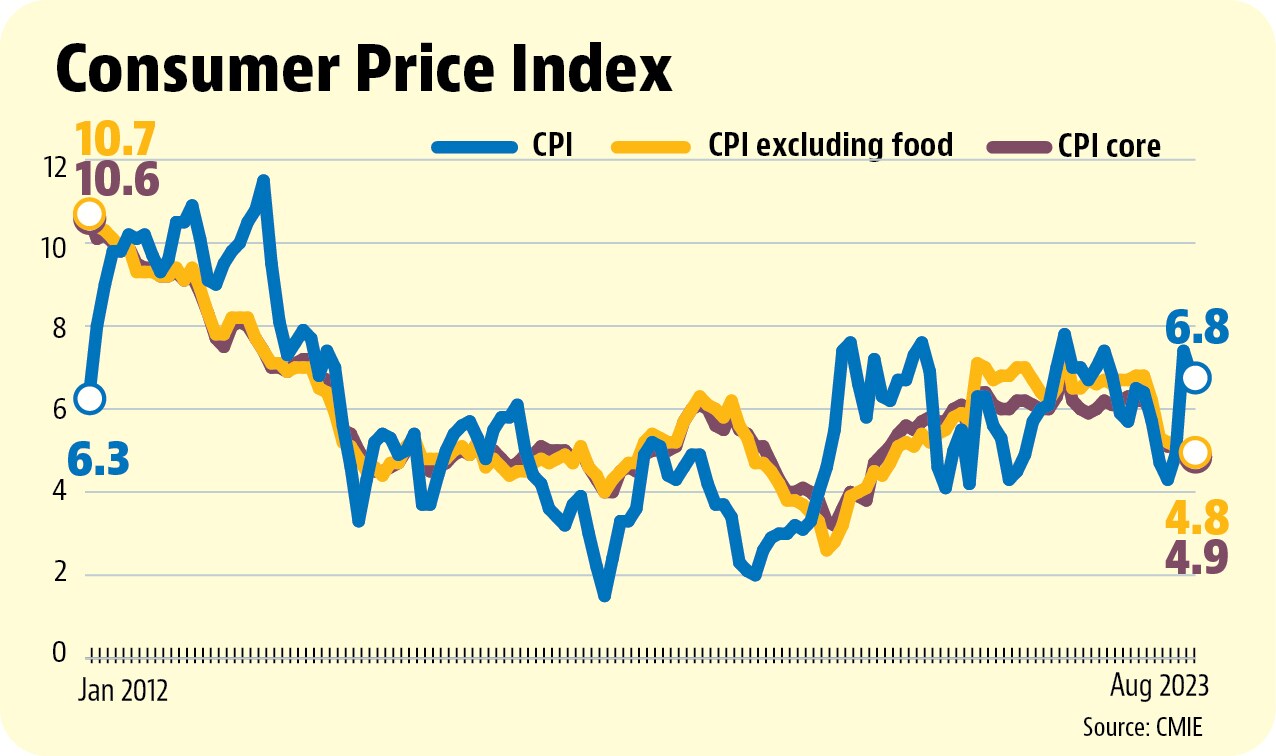
 Food prices are more than neutralising the moderation in non-food itemsThe headline inflation number of 6.8% in August would come down to just 4.8% if one were to exclude food items from the CPI basket. This is the second month when headline CPI number is higher than CPI excluding food items after eight months of the former being greater than the latter. Even core inflation – this measures the CPI basket excluding food and fuel items – was at 4.9% in August. This comparison underlines the fact that inflationary tailwinds are now coming from food markets rather than non-food items. This statistical comparison notwithstanding, it is a fact that food items have a share of 39% in the CPI basket and the share of food spending is significantly higher for the poor. This means that a high food inflation, especially less than a year before the general elections, will keep economic policy on its toes.
- Food inflation has moderated but only because of vegetablesA seasonal shock to vegetable, especially tomato prices in July was the biggest driver behind the jump in headline inflation number from 4.9% in June to 7.4% in July . While prices have eased a bit, vegetable inflation still came in at 26% in the month of August compared to 37% in July, which kept food inflation at 9.9% in August compared to its July value of 11.5. But the situation, barring onions, continues to improve and this is likely to ease food inflation from September . However, what is worrying is the fact that inflation in food items excluding vegetables is actually increasing. This number was 5% in May and it has increased continuously to reach 6.7% in August 2023. This means that food inflation will continue to remain under pressure despite a correction in vegetable prices. This situation could worsen if a deficient monsoon harms the summer and winter crops in India. To be sure, latest food price data from the Food and Agricultural Organization (FAO) of the United Nations shows that international cereal and edible oil prices saw a slight moderation between July and August . International prices are also lower than their last year levels, except in the case of sugar where they have increased significantly. The course of future inflation in key food items such as cereals, pulses and edible oils will depend on the interplay of domestic production and international price movements.
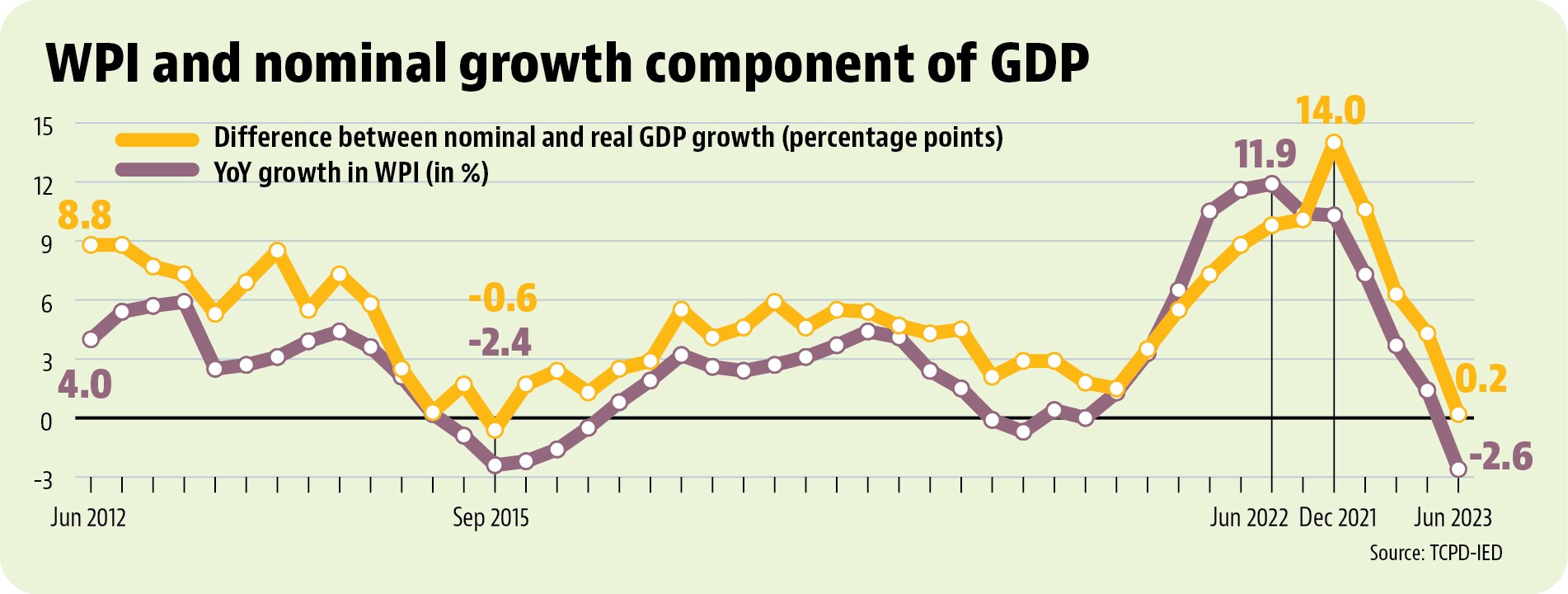
- A food price driven inflation amidst falling WPI also means difficulties on the revenue frontWith less than a year to go before the national elections, it is almost a given that the government will do all it can to control inflation, especially in food items. The fact that the government has been proactively imposing outright export bans and price controls for exports and is already encouraging the import of crucial food items such as pulses suggests that this process is already underway. While aggressive intervention in the food markets might help control inflation, or at least insulate the really poor from its adverse effects, it will generate headwinds to growth due to a hit to farmers’ incomes and may also end up adding to the fiscal burden if it takes the form of an expansion of the food safety net or compensating farmers through other means. It is here that the mismatch between wholesale and retail inflation – this is largely a reflection of a large weight of food items in the CPI basket – could present a problem to the government on the revenue front via a lower nominal GDP growth. Nominal GDP growth in the quarter ending June was just 0.2 percentage point more than the real GDP growth rate of 7.8%. If this trend continues, the government might find it difficult to find fiscal resources to manage the contradictions in its efforts to keep food inflation under control without adding to farmer discontent. WPI numbers for August will be released on September 14.