
 E-Paper



Sensex crash today: Why are markets falling and how low will they go?
Sensex crash today: Indian stock market's fall defies global trade setup as the S&P500 had hit a record high overnight. So what's happening?
Updated on: Mar 13, 2024, 18:09:17 IST

 Prefer HTon Google
Share via


Copy link

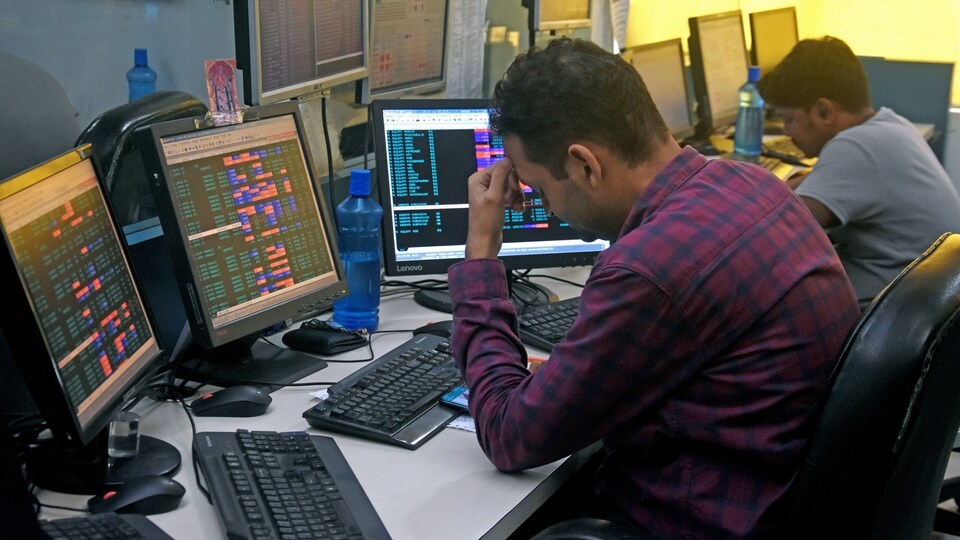
Sensex fell over 900 points and reached below the 73,000-level while Nifty dropped over 1% today (March 13). It was the worst single-day fall for smallcap index since December 2022 which fell 5% while midcaps lost 3%. Microcaps and SME stock indices dropped around 5% each. With this, market capitalisation of all BSE-listed stocks reduced by ₹12 lakh crore and is currently at ₹374 lakh crore.
Read more: Adani Group stocks down 13%, 90,000 crore wiped in market-cap. Top loser is…
The crash defies global trade setup as the S&P500 had hit a record high overnight and FIIs have also bought Indian stocks and invested $3 billion so far in the month.
What has led to the fall in Sensex, Nifty and smallcaps?
Read more: Stock market crash| NSE boss' advice to small investors as markets bleed: ‘If no capacity for high risk then…’
- Sebi stress test could be a major reason for the crash as Sebi chairperson Madhabi Puri Buch put out a froth warning on smallcaps and midcaps. After the market regulator asked mutual funds last month to put in place a system to protect interest of smallcap and midcap investors, Madhabi Puri Buch said, “There are pockets of froth in the market. Some people call it a bubble, some may call it froth. It may not be appropriate to allow that froth to keep building.” Read more: Sebi chief's 'froth' warning: There is a risk of bubble in stock market
- Sebi chief also warned that valuation parameters are off the charts and not backed by fundamentals leading to "irrational exuberance". Read more: Uday Kotak on Sebi chief's froth warning: ‘Not yet out of control’
- ICICI Prudential Mutual Fund: Following Madhabi Puri Buch's comments, ICICI Prudential Mutual Fund temporarily suspended fresh subscriptions via lumpsum mode to smallcap and midcap funds. Read more: ICICI Pru MF halts fresh subscriptions via lumpsum mode in mid, smallcap schemes
- On Tuesday, Indian stock market faced heavy selling pressure as majority of indices ended in red which included smallcap and midcap indices which are still under huge selling pressure. In the BSE Smallcap index over 80 per cent stocks have recorded negative returns since February 19. In the same period, Nifty has gained nearly one per cent. Read more: Why are midcap, smallcap stocks falling after Sebi chief's froth warning?


