
 E-Paper



Tata Sons revolt erupts as board votes to reappoint N Chandrasekaran, Noel objects
The appointment lacks majority endorsement from Tata Trusts, leading to potential conflicts impacting corporate operations and the path to public listing.

 Prefer HTon Google


An unprecedented revolt at Tata Sons has plunged India’s largest conglomerate into a critical governance crisis, after directors voted to grant chairman N Chandrasekaran a fresh five-year extension in the face of objections by Noel Tata, who chairs the charitable trusts holding a majority share of the company. Tata termed the decision a “legal nullity” and vowed to press on with the search for a successor, opening up a chasm between the holding company and its majority-owner that lawyers expect to play out in courts.
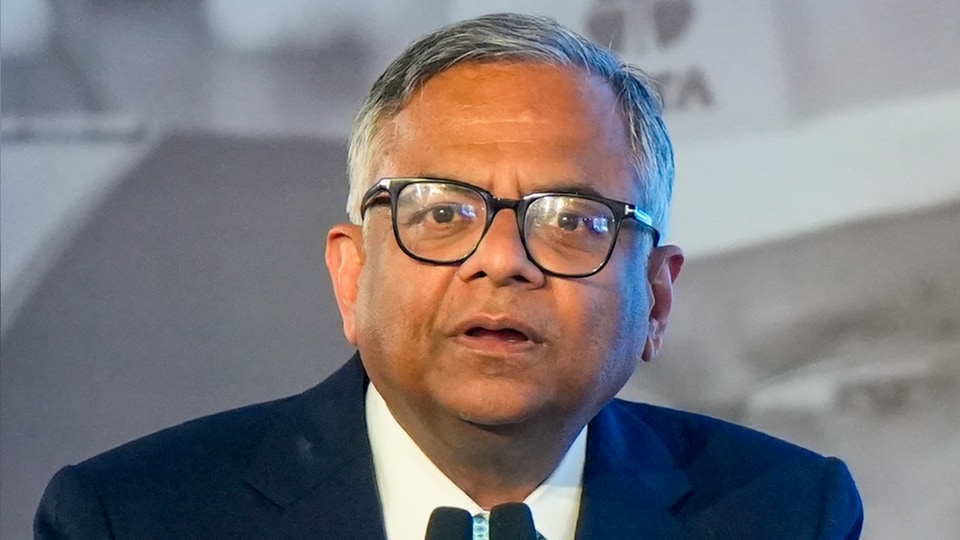
After a meeting that ran close to four hours, the six-member board reappointed Chandrasekaran for five more years when his term ends on 20 February. Four directors voted in favour, while Tata voted against. Trustee-nominee Venu Srinivasan sided with the majority.
Tata Sons said: “At the meeting of the board on September 17, 2026, Chandra acceded to the board’s request to reconsider his decision. The board thereafter resolved by a majority vote to re-appoint him as executive chairman for a further term of five years upon the expiry of his current tenure.” The company added that “the board also resolved to initiate steps to comply with the applicable RBI Guidelines and will seek guidance from RBI, Tata Trusts and other stakeholders on applicable compliance requirements.”
The conflict holds deep implications for Tata Sons’ mandate to go public, the Shapoorji Pallonji Group’s hopes to reduce debt, and future relationship between the philanthropic bodies and the business conglomerate.
Tata Trusts termed the resolution illegal.
Also Read | Noel Tata vows to veto IPO listing, seeks 3-yr window from RBI: ‘If I’m forced to vote…'
“The resolution seeking to reappoint Mr. N. Chandrasekaran in the board meeting today, with four directors voting in favour, and Mr Noel Tata against, was a legal nullity in view of the provisions of the Articles of Association of Tata Sons,” it said.
The Trusts said the process “requires a majority of the Trusts’ nominee directors voting in favour of the resolution,” and “applies equally to a first appointment and to reappointing someone who already holds the office.”
The board, it argued, “cannot lawfully hold a meeting or pass a resolution on the chairman’s appointment or reappointment unless both nominee directors are present, and cannot validly pass such a resolution unless both nominee directors vote in favour. Given that Mr Noel Tata, being one of the Trust nominee directors, voted against the proposal, it was rendered legally void and without any basis.”
In a statement to the board, Tata cast the reappointment as an attempt to reverse a settled decision.
He said Chandrasekaran had written to the board on 12 August that he would not seek a further term—“That was his own decision”.
Also Read | Tata Trusts chairman Noel Tata calls Chandrasekaran's reappointment ‘illegal’, cites Tata Sons' rules
Meanwhile, Tata Sons said its board had received the Trusts’ “unanimous resolution dated July 28, 2025 expressing their appreciation of the chairman of Tata Sons… for his stewardship of the group from 2017 onwards,” recommending a fresh term, and had “agreed in principle” in September 2025. But “in February 2026, in the absence of unanimity, the resolution was deferred for decision,” and in “May 2026 and June 2026, this matter was discussed but was not resolved”, it said.
Under Section 121 of the Tata Sons articles of association, a majority vote of the Tata Trustees’ nominees is needed to appoint and reappoint Chandrasekaran. Since Noel voted against and Srinivasan voted in favour of third term, the vote deadlocked.
As Chandrasekaran was an ‘interested party’, he recused himself from the proceedings of this crucial resolution, according to an executive privy to the development.
Tata Sons chair of the nomination and remuneration panel Harish Manwani presided over the resolution to grant a new term to the Tata Sons chair.
Manwani, as the chairman of this resolution, cast the deciding vote to break the deadlock and grant Chandrasekaran a new stint, the executive said on the condition of anonymity.
“How do you expect to fight with the largest shareholder and operate your businesses effectively?” wondered Amit Tandon, founder and managing director at proxy advisor Institutional Investor Advisory Services. “Multiple decisions would need the approval of Trusts. The appointment of chairman as director, the capital allocation policy, the remuneration of Tata Sons chair, and so on.”
Also Read | Noel presents SP Group's offer to sell back 3% Tata Sons stake for ₹25,000 crore
“There has to be alignment between the executive management and the owner. In the context of Tata, there is an even greater risk of an impact on the performance of the Tata Group operating companies,” said Tandon.
Some found merit in independent directors backing Chandrasekaran.
“I assume that the independent directors of Tata Sons took this decision in the interest of the company and the Tata Group. Noel Tata has not explained how his decision is for the broader good of the company and the group. So, it seems like the wishes of one person. It is a good thing that the directors have stood up to the promoter’s wishes,” said Sanjay Kallapur, professor of accounting, Indian School of Business, and an independent director on the board of IDBI Bank. “It is a sign of maturing corporate governance in India”.
The deadlock could hardly come at a worse time. On 11 September, the RBI rejected Tata Sons’ bid to shed its core-investment-company tag, which implies a listing mandate.
A holding company that cannot lawfully confirm who leads it cannot file a prospectus.
Anxiety runs deep at the Shapoorji Pallonji Group, Tata Sons’ largest minority holder with about 18.4% stake.
The group is struggling to service crushing debt—some ₹3,500 crore due by end-September and roughly ₹11,275 crore over 24 months—and is banking on a listing or a negotiated liquidity event to unlock a stake it cannot otherwise sell.
“The conflict will unfortunately lead to a governance issue because personalities and conflicts will tend to overshadow the interests of the companies below and obviously, minority shareholders holding shares in those companies will be impacted,” said Ketan Dalal, the managing partner at Katalyst Advisors LLP, a boutique business advisory and structuring firm. Dalal explained how Tata Sons’ funding to privately held businesses would get impacted.


