
 E-Paper



Tighter unsecured lending norms in overall interest of sustainability: Shaktikanta Das
Shaktikanta Das pointed out that banks, NBFCs and other financial entities must continue to do stress testing of their books.

 Prefer HTon Google


Reserve Bank of India Governor Shaktikanta Das on Wednesday termed the central bank's recent tightening of norms on unsecured lending as a “preemptive and targeted move” in the overall interest of sustainability.
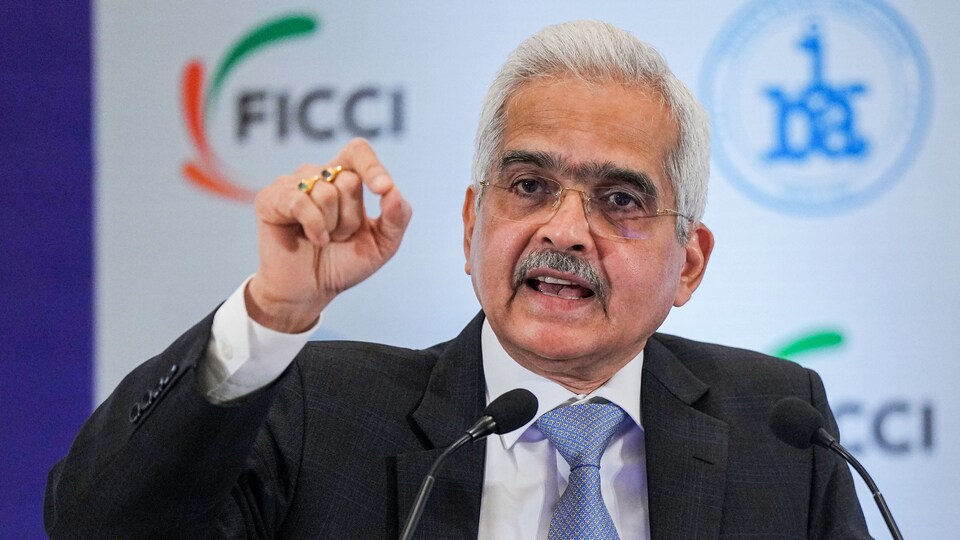
“On our part, the Reserve Bank of India has significantly strengthened its regulation and the supervision of banks, NBFCs and other regulated entities in recent years,” Das said. “We have also very recently announced a few macro-prudential measures in the overall interest of sustainability. These measures are pre-emptive in nature.”
Das made the remarks while addressing the annual FIBAC 2023 Conference, organised jointly by the Federation of Indian Chambers of Commerce and Industry (FICCI) and the Indian Banks’ Association (IBA).
Last week, the RBI came out with a notification increasing the risk weight for consumer credit exposure of banks and non-banking financial companies, in an apparent move to check the sudden growth in unsecured consumer lending.
The central bank also barred Bajaj Finance Limited from sanctioning and disbursing loans under its two lending products – eCOM and Insta EMI Card.
During Wednesday's address, Das said that the RBI excluded certain sections like loans for house and vehicle purchases, and also the ones availed by small businesses, because of the advantage on the growth front they have.
“We continue to focus on strengthening governance and assurance functions, ensuring effective risk management and robust lending practices. We are monitoring the supervised entities through various onsite and off-site tools, stress testing, vulnerability assessments, thematic studies, data dump analysis, etc. as part of our proactive and forward-looking supervisory approach,” he said.
The RBI governor also pointed out that banks, NBFCs and other financial entities must continue to do stress testing of their books.
“In fact, there is a strong case for companies in the real sector also to stress test their businesses and balance sheets. Many of them may already be doing so, but it would be desirable that many more also do this,” he said.
‘India vulnerable to food-price shocks’
In his address, Das said that India is vulnerable to food-price shocks from extreme weather events and global factors despite a recent moderation in prices.
“Momentous changes are taking place. Moderation in core inflation is noteworthy but the MPC (monetary policy committee) must be watchful, and the stance must be disinflationary,” Das said, speaking at a conference of bankers.
Headline inflation “is still vulnerable to food price shocks from extreme weather events”, the central bank governor warned, stating that the RBI will continue to be vigilant against “sources” of inflation.
This is the RBI governor’s second warning in a month about the risks from food inflation.
In a speech delivered in Japan on November 8, Das had said the RBI saw risks from “recurring and overlapping” food-price shocks.


