
 E-Paper



Bajaj Chetak 3001 vs TVS iQube vs Ather Rizta vs Vida V2 vs Honda QC1: Price comparison
How does the new Bajaj Chetak 3001 stack up against the competition? Let’s take a look.

 Prefer HTon Google


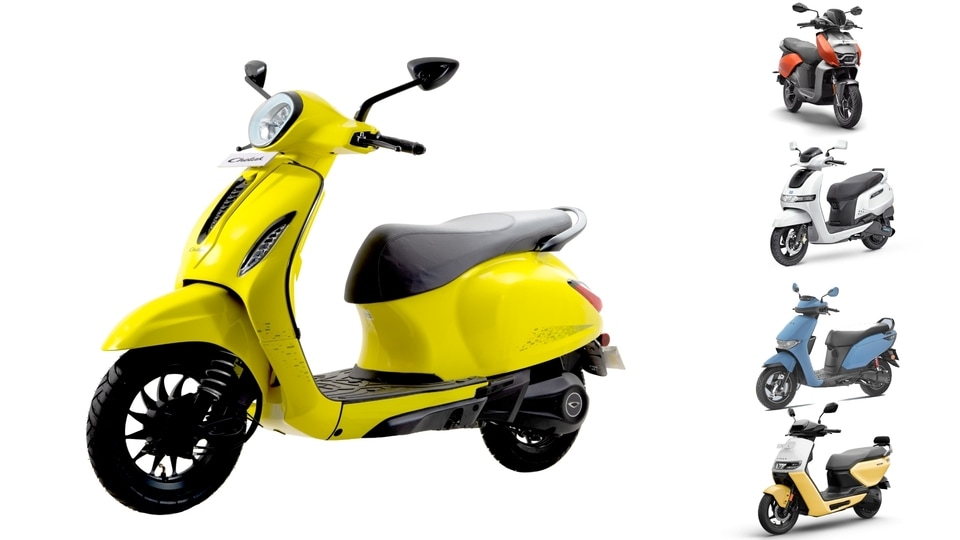
The recently launched Bajaj Chetak 3001 is the new most affordable variant in the Chetak family. The Chetak 3001 replaces the Chetak 2903, and is priced at ₹99,990 (ex-showroom). At this price point, the model competes against entry-level variants of several popular electric scooters, including the TVS iQube, Ather Rizta, Vida V2, and Honda QC1. The new Suzuki e-Access sits this one out since prices are yet to be announced. How does the new Bajaj Chetak 3001 stack up against the competition? Let’s take a look.
Bajaj Chetak 3001 vs TVS iQube 2.2
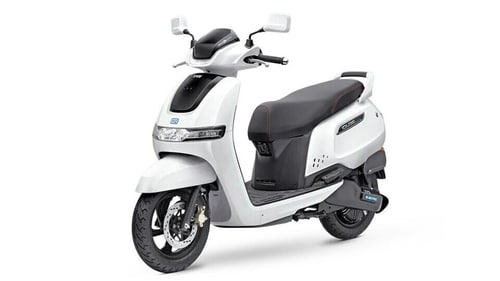
The Chetak 3001 takes on the TVS iQube 2.2 variant, which is also priced at ₹1 lakh (ex-showroom). The base trim comes with a much smaller 2.2 kWh battery pack, promising a range of 94 km (IDC) on a single charge. In contrast, the Chetak 3001 gets a 3 kWh battery pack with a claimed range of 127 km. The Chetak also supports 750-watt charging, while the iQube 2.2 gets a 650-watt charger. Notably, those wanting more range on the iQube can opt for the 3.5 kWh variant that offers a 145 km range (IDC), but also costs more at ₹1.31 lakh (ex-showroom).
(Also read: Bajaj Chetak 3001 launched as the new entry-level variant, priced at ₹1 lakh)
Bajaj Chetak 3001 vs Ather Rizta S
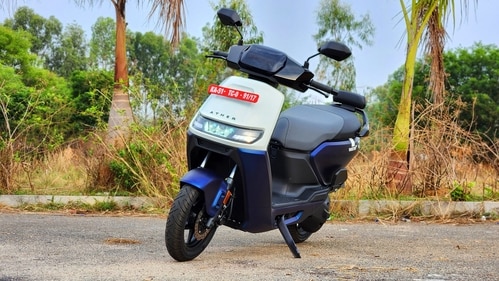
The Rizta S is the base trim on the electric scooter priced at ₹1.10 lakh (ex-showroom). The model packs a 2.9 kWh battery pack that offers 123 km (IDC) range on a single charge, identical to the Chetak 3001. The Rizta S packs the essentials on the feature front but uses a slower 375-watt charger, elongating the charging time to 6 hours and 30 minutes to top up the battery from 0-80 per cent. In comparison, the Chetak 3001 takes about 3 hours and 50 minutes to do the same. However, the Rizta S can be charged via a fast charger on the Ather grid, which drops the charging time significantly.
Bajaj Chetak 3001 vs Vida V2 Plus
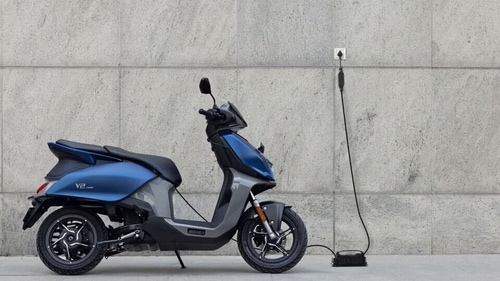
The Vida V2 Plus is priced at ₹85,300 (ex-showroom) and is the only scooter here that comes with removable batteries. The Hero MotoCorp-backed electric scooter comes equipped with a 3.44 kWh battery capacity and a claimed range of 143 km (IDC) on a single charge. The V2 Plus can also use the Ather grid’s fast charger for fast charging, but the stock charger is a slow unit, pushing the charging time to 5 hours and 15 minutes for 0-80 per cent.
Bajaj Chetak 3001 vs Honda QC1
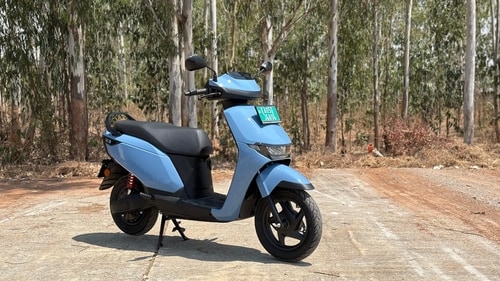
Honda’s maiden electric scooter for India is priced at ₹90,000 (ex-showroom) and is the smallest off the lot when compared to everything else on sale. The more comparable Honda Activa e is priced at a substantial ₹1.17 lakh (ex-showroom) onwards, but also comes with only battery-swapping technology, against a fixed battery on the Chetak 3001. The Honda electric scooter is equipped with a small 1.5 kWh battery pack, promising a claimed range of 80 km on a single charge. Despite the small battery, it takes longer than the Chetak to charge from 0-80 per cent at 4 hours and 30 minutes, thanks to the 330-watt charger available with the model.


