E-Paper



All Mt Everest climbers to bring down garbage
Beginning next climbing season, which starts in April, those ascending Mount Everest will have to descend with at least eight kilograms of trash besides their own waste. This is part of a new list of measures initiated by Nepal government to rid the world’s highest peak of the tons of rubbish accumulated over the years since Tenzing Norgay and Edmund Hillary scaled the peak in 1953.


Beginning next climbing season, which starts in April, those ascending Mount Everest will have to descend with at least eight kilograms of trash besides their own waste.

This is part of a new list of measures initiated by Nepal government to rid the world’s highest peak of the tons of rubbish accumulated over the years since Tenzing Norgay and Edmund Hillary scaled the peak in 1953.
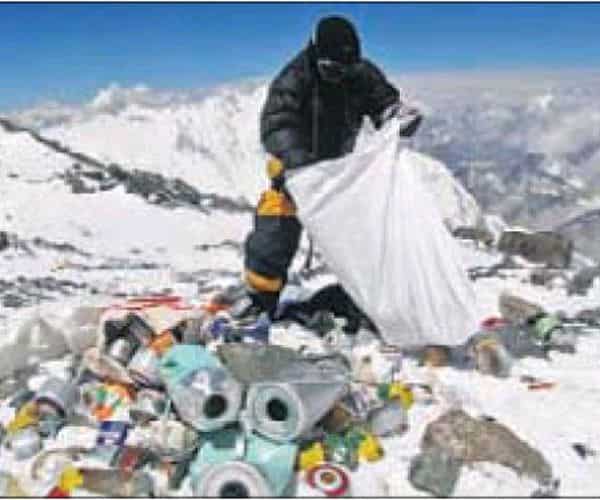
“From now on each climber who ascends beyond the base camp will have to bring back at least eight kilograms of garbage besides their own oxygen cylinders and human waste,” Madhusudan Burlakoti, an official with the tourism ministry told HT. The collected waste will have to be deposited with a pollution committee at the base camp which will verify the exact waste brought down by each climber.
“Earlier too some climbers used to bring back some of the waste from the peak but there was no fixed rule. From now we will try and ensure that the new rule is followed,” he said. According to some estimates there is around 40 to 50 tonnes of garbage on Everest at present. Most of it comprise of oxygen cylinders, gas cylinders, plastic materials, human waste and even bodies of dead climbers.
In recent years some expeditions have focused entirely on bringing down as much garbage as possible.