E-Paper



AIIMS, IIT-D study if it is possible for drones to transport corneas
The National Eye Bank (NEB) of AIIMS transplanted 1,426 corneas last year, but the waiting period for non-emergency transplant surgery at the hospital last year was at least six months.

 Prefer HTon Google


The All India Institute of Medical Sciences (AIIMS), in collaboration with the Indian Institute of Technology-Delhi, is exploring the possibility of making use of drones to transport corneas to hospitals for transplantation surgery.
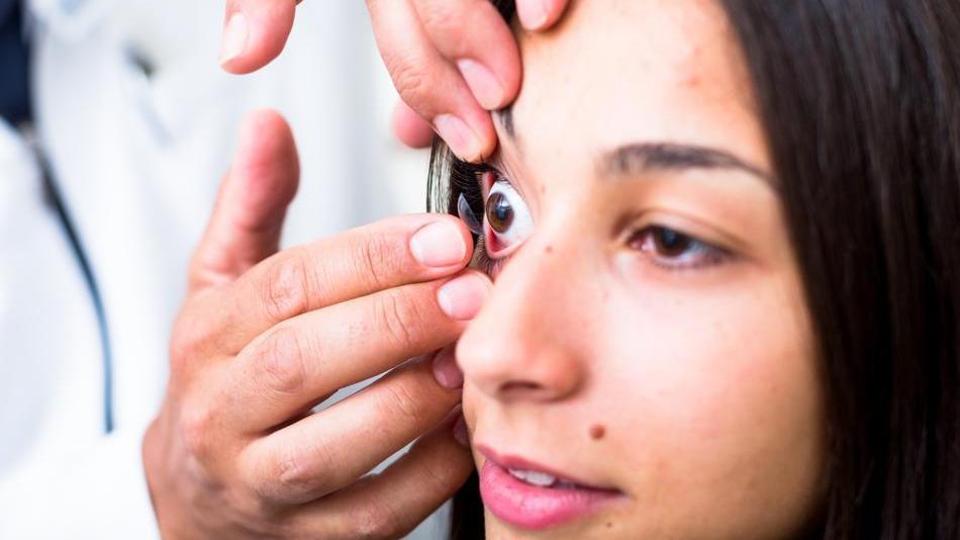
Corneas need to be transplanted ideally within six hours of the donor’s death. The use of drones is expected to save precious time that tend to get wasted in negotiating traffic.
“It’s just an idea at the moment, as part of the memorandum of understanding that AIIMS and IIT-D has signed for exchange of research and innovation. It’s too early to comment how feasible the idea will be in the long run,” said Dr JS Titiyal, professor, department of ophthalmology, AIIMS.
Even though corneal transplant surgeries are the most common of all transplant surgeries, eye donations taking place in the country are still not enough to meet the demand.
Of the 100,000 patients requiring an eye transplant annually, barely 26,682 could get it last year.
The National Eye Bank (NEB) of AIIMS transplanted 1,426 corneas last year, but the waiting period for non-emergency transplant surgery at the hospital last year was at least six months.
“Eye donations are improving, and with that the number of surgeries is also going up. In fact, in past five years we received more donations than what our eye bank got in the previous 45 years. Last year we received a record 2234 donations. Our wait period dropped from the earlier one year to three months this year,” said Titiyal.
Pallavi Kumar, executive Director (Delhi-NCR), MOHAN Foundation, says, “For a single eye bank amongst many eye banks in a place like Delhi, the figures that AIIMS has are not bad. They are doing fine amidst several challanges.”
Apart from increasing donations, the other challenge that the experts face is to increase the conversion rate.
Though AIIMS utilizes 50-70% of the corneas donated annually, higher than the national average of about 50%, it is not enough to meet the demand.
“There is improvement but we need to do better. South Indian states are doing better with maximum donations coming from Karnataka, Tamil Nadu, Telangana and Andhra Pradesh. There is a need to tweak the law and make first person consent enough in cases of donation,” said Dr Namrata Sharma, professor, ophthalmology, AIIMS.
Family consent isn’t the only hindrance; as in most cases of deaths that take place outside a hospital the tissue isn’t usable.
“People need to preserve the body well, and follow dos and don’ts properly. The body needs to be kept either on an ice slab or in an airconditioned room. The eyes of the donor should be closed as keeping eyes open leads to faster degradation of the tissue. Keep a wet cloth over the shut eyes,” says Dr Titiyal.
AIIMS is celebrating 34th National Eye Donation Fortnight to promote awareness about cornea transplantation.