
 E-Paper



After 71% fare hike, Bengaluru Metro confirms annual increases up to 5% starting 2026: Report
The Bangalore Metro Rail Corporation Limited's (BMRCL) financial stress was a key factor behind the decision.

 Prefer HTon Google


Bengaluru metro passengers will face automatic fare hikes of up to 5% every year starting February 2026, as per the recommendations of the Fare Fixation Committee (FFC).
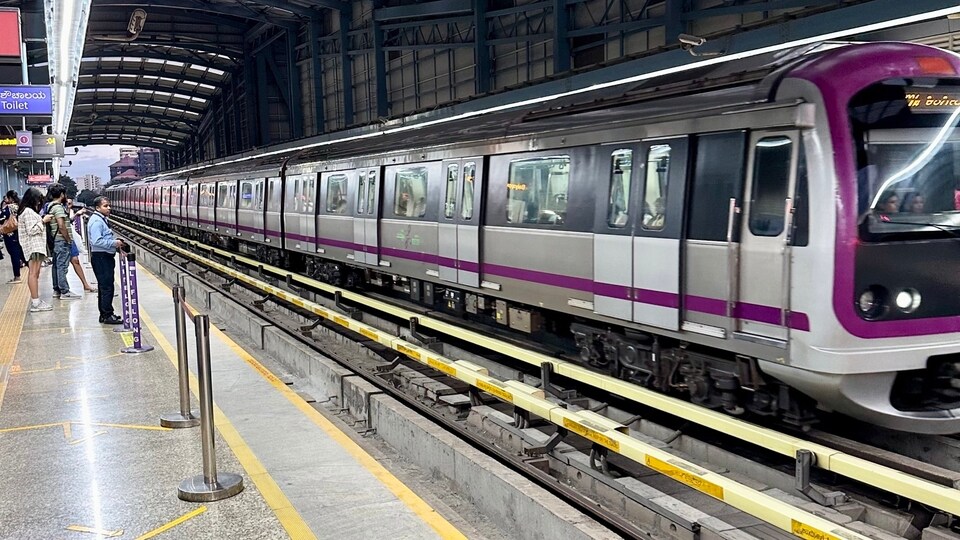
The move comes just months after the Bangalore Metro Rail Corporation Limited (BMRCL) raised fares by as much as 71.43% in February 2025, making Bengaluru’s metro system the costliest in India.
This annual revision, now approved, is the first of its kind for Namma Metro and is designed to ensure financial stability for the corporation, Deccan Herald reported.
(Also read: Bengaluru Metro Orange Line delayed to 2031 as BMRCL adds double-decker flyovers: Report)
The FFC, headed by retired Justice R Tharani, submitted its report in December 2024. Under the Metro Railways (Operations and Maintenance) Act, 2002, the BMRCL is bound to follow its recommendations, the report added.
The BMRCL had initially sought a steep 105.15% hike (14.02% per year before discounts), which would have raised minimum fares to ₹21 and maximum fares to ₹123. However, the committee recommended a smaller increase of 51.5% (6.87% annually since 2017), bringing the new fare slab to a minimum of ₹10 and a maximum of ₹90.
According to the publication, the committee also supported the corporation’s request for annual revisions but capped the hikes at 5% per year. These increases will be calculated through a transparent formula based on changes in operational and maintenance costs, and rounded off to the nearest rupee. For instance, a ₹10 ticket could become ₹11 after a 5% hike, while a ₹25 ticket would only rise to ₹26.
Financia stress behind decision
Financial stress was a key factor behind the decision, Deccan Herald report added. Without fare adjustments, BMRCL projected net losses of ₹577 crore by 2029–30. With heavy loan repayments due, ranging from ₹911 crore in FY 2025–26 to ₹1,457 crore by FY 2029–30, the corporation warned it would have little cash left for asset renewals and replacements. The FFC’s formula is expected to ease this burden.
The first round of automatic fare revision will come into effect in February 2026, one year after the last hike.
(Also Read: Bengaluru Traffic Police invite cab and delivery apps to join No Parking Compliance system)


