
 E-Paper



Bengaluru revives 73-km Business Corridor, tenders worth ₹7,000 crore by March 2026
The eight-lane corridor will connect major highways, while land acquisition for Phase 1 is almost complete amid farmer resistance over compensation rules.

 Prefer HTon Google


The sprawling 73-km long corridor around Bengaluru, previously known as the Peripheral Ring Road (PRR) and now rebranded as the Bengaluru Business Corridor (BBC), is back on track.
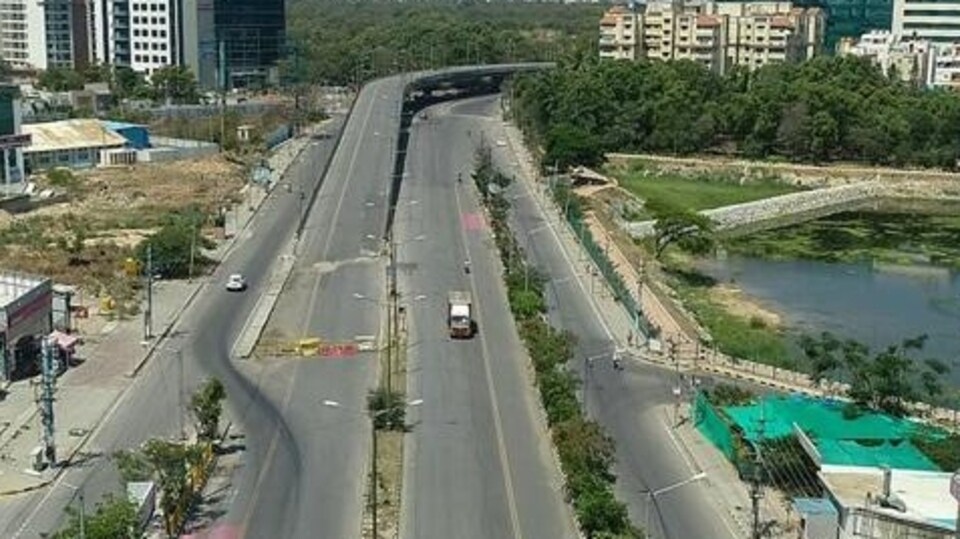
The state government has approved inviting civil work tenders worth ₹7,000 crore by March 2026 to kick-off construction. The project will be split into three packages, each valued at around ₹2,500 crore, and is being developed by the Bengaluru Business Corridor Limited (BBCL), a special purpose vehicle set up for this purpose, The Hindu reported.
(Also Read: Bengaluru Business Corridor: Landowners demand fair compensation, reject 35% land return clause)
Designed as an access-controlled eight-lane road with flanking four-lane service roads, the corridor will connect major highways including Tumakuru Road, Ballari Road, Old Madras Road and Hosur Road.
Project officials say that land acquisition for Phase 1 is nearing finalisation, and the Detailed Project Report (DPR) is being drafted by French consultancy Assystem, the report further added.
Once about 80% of land is acquired, tenders will be floated, and contracted agencies will have 30 months for construction from the date of land possession. The government is still evaluating the execution model, whether EPC (Engineering, Procurement, Construction), BOT (Build-Operate-Transfer) or Hybrid Annuity Model (HAM). The corridor also requires around 500 acres additional land for interchanges and cloverleafs; initially three cloverleafs were planned, but this has now been increased to five to accommodate future traffic volumes.
Resistance from landowners
The project has faced resistance from farmers and landowners, who have objected to compensation rules and say the older 1894 Land Acquisition Act is being used instead of the newer 2013 R&R Act.
Meanwhile, the wider road infrastructure in Bengaluru remains under severe stress: according to city data, 13,000 potholes have been filled so far, but complaints persist about the speed of repairs and durability of patch-works, particularly on major stretches where rain quickly undoes fixes.
(Also Read: Bengaluru Peripheral Ring Road landowners demand justice after 20-year wait. ‘No award, no rehabilitation')


