
 E-Paper



Hijab as essential as namaz, say clerics
Abdul Lateef Madani, a cleric of a local mosque in Karnataka’s Udupi, about 400 kms from Bengaluru, said that the hijab is part of the lifestyle that defines Islamic practice.

 Prefer HTon Google


Hijab is an essential part of Islamic practices like namaz, Muslim clerics and scholars said on Tuesday after the Karnataka high court ruled that it was not part of the “essential religious practice”.
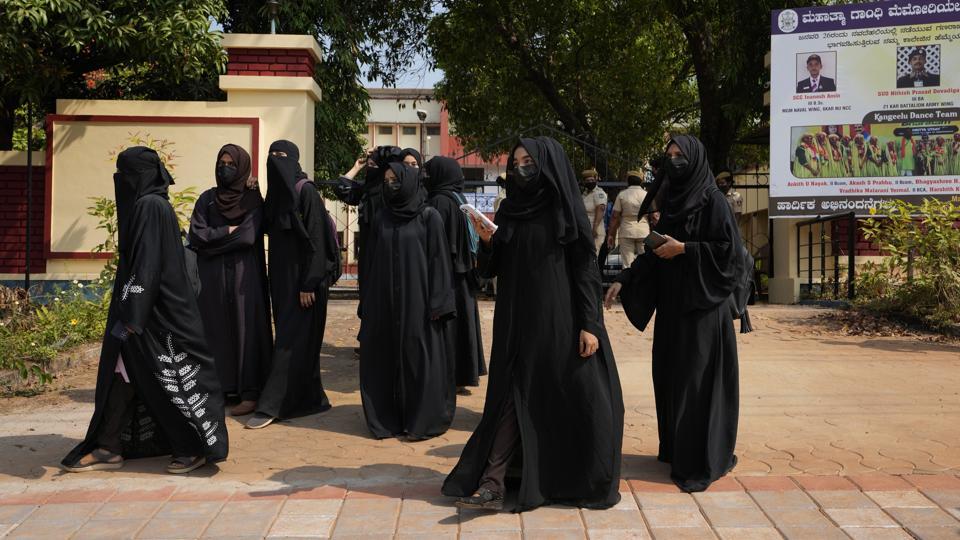
Abdul Lateef Madani, a cleric of a local mosque in Karnataka’s Udupi, about 400 kms from Bengaluru, said that the hijab is part of the lifestyle that defines Islamic practice.
“If I have to explain this simply, the Quran and the Hadees, which shares the lifestyle of Prophet Mohammed... if we combine the two, we can understand Islam. In the Quran, we are given orders that any adult (woman) who has crossed puberty, has to Purdah against those who she may marry. In this, her father, her brother, or the children of her siblings don’t count. She has to cover certain areas (body parts). This is clear cut like the five-time namaz we follow,” Madani told HT.
His statements come after the Karnataka high court delivered its verdict over the contentious Hijab row that continues to grip the discourse in the southern state and minority rights at large.
Prominent Muslim body, Jamiat Ulema-e-Hind said that the HC order was “deeply disappointing”, PTI reported. The body added that the verdict would harm the freedom and education of Muslim girls.
Maulana Mahmood Madani, president, Jamiat Ulema-e-Hind (Mahmood Madani faction) said it was “deeply disappointing” and the verdict would have a direct impact on religious freedom, PTI reported.
“It’s only since around 2010 that many (Muslim girls) started coming to colleges for higher education as their families were ready to send them,” Phani Rajanna, a Udupi-based political analyst and a writer on communal politics, said.
“I am much more concerned about moderates in the community where it is the first generation, who are coming out of their homes to get an education,” he said.
Several people believe that much of this move from conservative to moderate is on account of knowing that their children are allowed to attend schools and colleges with the burqa or hijab, which has now changed.
“We urge the governments to take action that can serve larger national interests,” Maulana Mahmood Madani said.


