
 E-Paper



Karnataka BJP MLA raises voice against ban on hijab
Benake is the second BJP leader to talk against the saffron fold after AH Vishwanath, the party’s member of legislative council, on Sunday said the government must intervene in the hijab row or it would have grievous consequences.


Anil Benake, the BJP legislator from Belagavi North, on Monday said there is no question of banning Muslims from setting up shops in religious fairs, going against the saffron folds narrative that has been pushing for a ban on minorities doing business around Hindu temples.
“There is no question of banning Muslims in (Hindu) religious fairs but if people do it, we cannot say much. No matter where it is, whether people should buy or not buy from somewhere is wrong and according to the Constitution, everyone has the opportunity and people are smart. Anyone has the opportunity to do business anywhere but people have to get smarter. But people have to decide where to buy what. That’s all,” he said.
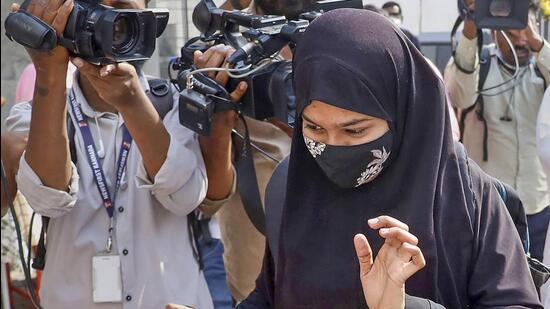
The statements come at a time when right-wing organisations in Karnataka have targeted the Muslim community over the hijab row that later manifested into a ban against all businesses done by members of the minority community around Hindu temples and religious fairs.
Benake is the second BJP leader to talk against the saffron fold after AH Vishwanath, the party’s member of legislative council, on Sunday said the government must intervene in the hijab row or it would have grievous consequences. “It is very dangerous to indulge in politics of religion. One should never use religion to win elections. How many elections will you win on basis this?”
He further invoked the Prime Minister’s vision, “Prime minister Narendra Modi has given the message of ‘Sab ka vikas and vishwas’. But our state is moving in the wrong direction. How are those Muslims, who sell flowers, fruits, and puja material near temples, going to earn their livelihood? It amounts to untouchability.”
“How many Indians live in the United Kingdom? How many Indians do you think there are on the planet? In Muslim-majority countries, how many Indians work? What will happen if these governments decide to take action against them? Will our government be able to take them in if they are expelled from these countries?” the former minister said.
“When India and Pakistan were partitioned, India’s Muslims decided to remain in India. They were not in favour of Jinnah. This is something that we should consider. They stayed because they wanted to be Indians. They are Indians, not people of other ethnicities,” Vishwanath told reporters.
Following pressure from right-wing organisations like the Vishwa Hindu Parishad, the Bajrang Dal, and the Sree Rama Sene, a number of temples in the Udupi and Shivamogga districts had banned Muslim merchants from participating in their festivals. Ban on Muslim sellers has now expanded across the state’s temple festivities.
The restriction is based on rules of the endowment department in 2002, implemented by the SM Krishna-led Congress government that prevented non-Hindus from conducting enterprises on temple grounds.
Several BJP legislators believe that such a move will not benefit them electorally as they have a large number of Muslims residing in their respective constituencies. The Basavaraj Bommai-led BJP government has been accused of condoning and even supporting right-wing elements by giving them a free hand to target minorities.

Stay updated Bengaluru Weather Live and with all the Breaking News and Latest News from Bengaluru. Click here for comprehensive coverage of top cities including Delhi, Mumbai, Hyderabad, and more across India . Stay informed on the latest happenings in World News.


