E-Paper



MP begins project to shift 500 black bucks, blue bulls; uses chopper to herd them
The project involves flying a helicopter over the herd and gently guiding the animals towards a designated enclosure, known as Boma, from where they are further shifted into transport trucks

 Prefer HTon Google


Bhopal: The Madhya Pradesh forest department is using a helicopter to help with the translocation of black bucks and blue bulls from Shajapur to Gandhi Sagar Wildlife sanctuary (GSW) in Mandsaur, the second designated home for cheetahs in India.
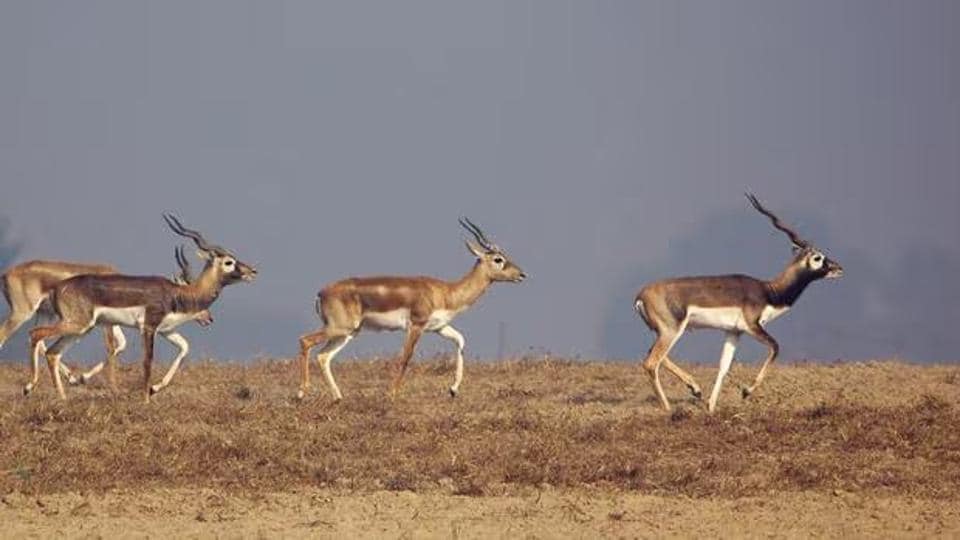
L Krishnamurthy, additional principal chief conservator of forest (APCCF), wildlife, said the state government had approved a budget of ₹3 crores two years ago for translocating 500 blue bulls and black bucks and imparting training to MP forest officials and also Indian pilots.
Currently, the use of the helicopters for the translocation is being carried out by South African experts including a chopper pilot.
“The technique involves flying a helicopter over the herd and gently guiding the animals towards a designated enclosure, known as Boma, from where they are further shifted into transport trucks.This technique is highly effective and minimally stressful for the animals. The helicopter’s role is that of a sheepdog,” said Krishnamurthy.
He added that the manoeuvring of the herds through the agricultural fields and around electric lines is challenging but was being done skillfully by a South African pilot in coordination with an Indian counterpart.
South African experts including Kester Vickery, Les Carle, Grant Tracy and pilot Chris Bosman, who have translocated wild animals in the African countries by using this technique arrived in India on October 15, for conducting the translocation and to train the forest officials. The experts will be in the state till November 5.
Shajapur district and surrounding areas are home to approximately 20,000 black bucks and over 2,000 blue bulls but they are giving a tough time to farmers by impacting their livelihoods.
The farmers had been demanding for a long time to either shift them or give permission to kill them. The government decided to shift the herds in the wildlife sanctuaries where prey base for the flagship species like cheetah or tiger is less.
The officials said that initially, 400 blackbucks and 100 blue bulls will be shifted to GSW, Mandsaur, where two male cheetahs were shifted in April and a female cheetah in September this year.
Kalapipal former MLA Kunal Chaudhary said, “The farmers are suffering due to the large population of black bucks and blue bulls but the government never took any concrete steps. Now, we will see how this technique helps the farmers as shifting 500 out of 20,000 will not leave much impact.”
Wildlife Conservation Trust president Anish Andheria said, “While shifting black bucks to BOMAs, many times 50% died due to stress and tranquillisation, but this is a much less stressful technique. It will definitely conserve wildlife while resolving human-animal conflict.”