
 E-Paper



Chamba’s centuries-old Minjar Fair to be symbolic affair this year
The traditional Hindu fair, scheduled from July 26 to August 2, symbolises the blossoming of maize in the historical town, located on the banks of the Ravi River

 Prefer HTon Google


Dharamshala Chamba’s famed Minjar festival, believed to have first started in the 10th century to mark the victory of King Sahila Varma over the king of Kangra, will just be a symbolic affair this year, due to the covid-19 pandemic and the resultant restrictions on gatherings.
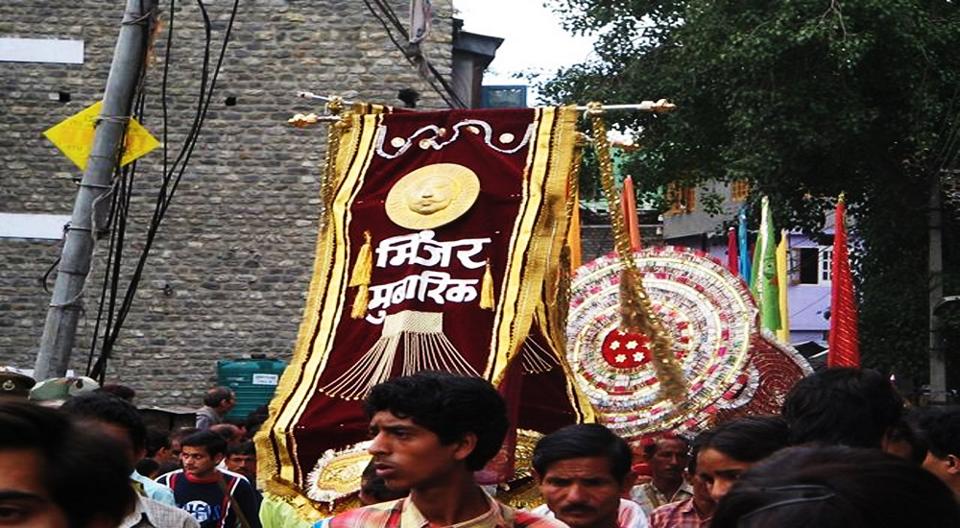
The centuries-old traditional Hindu fair symbolises the blossoming of maize in the historical town, located on the banks of the Ravi River. The fair is associated with the monsoon, in which the farmers pray for heavy rain for a good harvest, is scheduled from July 26 to August 2.
Minjar itself refers to silk tassles, worn by locals on their dresses that glow like maize blossoms in the sun.
“The Minjar fair will be celebrated symbolically sans festivities this year due to Covid-19 pandemic,” Chamba deputy commissioner Vivek Bhatia confirmed.
The festival will begin on July 26 with a ceremonial Puja and offering of holy Minjars at the historic Laxmi Narayan and Raghuvira temples. There will be no cultural festivities and sports activities. The Chowgan (public promenade), the main venue of the fair, will remain closed for the general public. Only some local artists will sing traditional ‘Kunjri-Malhar’ at the town’s cultural hall that will be telecast live on the local cable network. “The festival will end on August 2 with the immersion of Minjars in the Ravi,” the DC added.
Later, the palanquin of lord Raghuvira, the chief deity of the region, is led around the town in colourful procession on opening and closing day.
THE SYMBOL OF
COMMUNAL UNITY
Minjar fair symbolises not just the blossoming of maize, but also the close ties between Hindus and Muslims. The festival starts after a Muslim Mirja family offers the first holy Minjar at Laxmi Narayan temple. Muslims do the embroidery on the Minjars, a tradition that has been followed sine the festival began.
MANIMAHESH YATRA
MAY ALSO BE SYMBOLIC
The DC added that the annual Manimahesh Yatra, scheduled from August 12-25, may also be organized symbolically. Lakhs of pilgrims undertake the arduous 14-km yatra to oval-shaped glacial-fed Manimahesh Lake in tribal Bharmour sub-division, to catch a glimpse of Mount Kailash, believed to be the abode of Lord Shiva, and offer prayers. The lake is located at a height of 13,500-feet in the Pir Panjal mountain range of Himalayas. This year, however, pilgrims may not be allowed to visit the lake.


