
 E-Paper



How Tejaswin Shankar beat the pain to rewrite history
Battling patellar tendonitis, the 27-year-old took bronze to claim India’s first decathlon medal at CWG

 Prefer HTon Google


New Delhi: Four days after he cut a sorry, sobbing figure on being forced out of the high jump final due to an injury flare-up, Tejaswin Shankar was a picture of triumph and resilience at Glasgow’s Scotstoun Stadium.
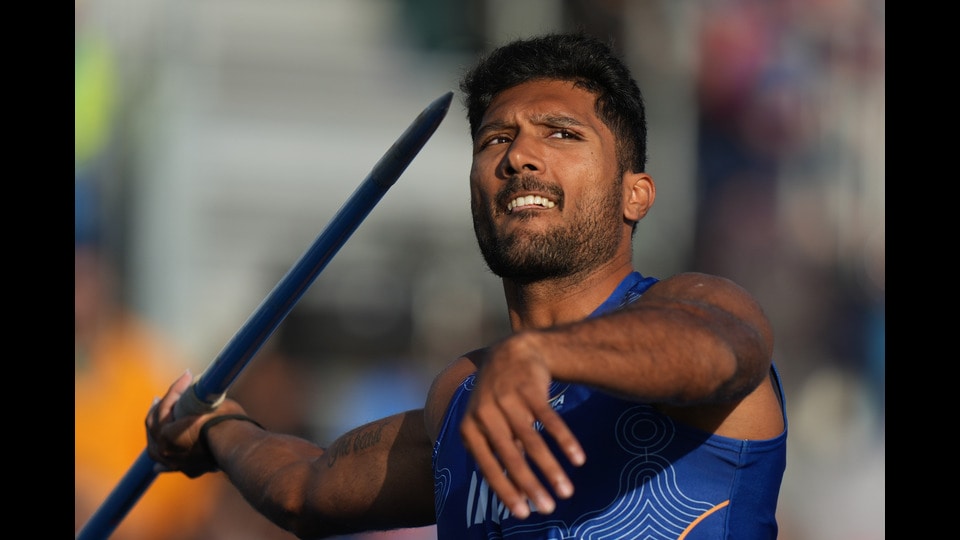
The 27-year-old, the only Indian to cross 8000 points in decathlon, willed himself to a first ever Commonwealth Games (CWG) medal for India in the combined discipline with bronze late on Friday night.
Tejaswin logged 7976 points after two days of gruelling competition to finish behind Grenada’s Lindon Victor (8096) and Canada’s Damian Warner (8036). Victor, the 2024 Paris Olympics bronze medallist, won his third straight CWG gold while Warner, the 2021 Tokyo Olympics champion and multiple Worlds medallist, took silver.
The enormity of the achievement sank in. “I have been watching their videos since the day I decided to try decathlon. To share the podium with them feels great,” Tejaswin told reporters after his medal. “I had a bronze in high jump in the previous edition and now one in decathlon. I don’t know how many people have been able to do that.”
It was a remarkable turnaround for Tejaswin who found himself sucked into a negative spiral after his patellar tendinopathy resurfaced. Emotional help came from long jumper Murali Sreeshankar, who missed the Paris Olympics following a patellar tendon rupture in his left knee, an injury that put him out of action for over a year and very nearly ended his career.
“I was really down the day that injury happened. But the next day, I had a chat with Sree who is coming off a similar injury, although much worse. He told me to assess it after the 100m,” Tejaswin said.
The first of the ten events, 100m is followed by long jump, shot put, high jump and 400m on Day 1. Long jump and high jump put a significant load on the take-off knee, which meant pain tolerance and management became critical.
“I was told by (team doctor and orthopaedic surgeon) Dr Dinshaw Pardiwalla that there was no chance that I would rupture my tendon. Once I knew that, it all came down to my pain threshold. The knee held up after the 100, so I took it event by event. I was fine after long jump and high jump which put the most stress on the knee. Once I managed that, I knew I’ll finish the event. I’m very happy I was able to overcome all the things that I had to.”
Strength and conditioning expert Wayne Lombard helped as well. “With these patellar tendonitis or acute flare-ups, you needed quite a bit of time for it to settle down, so the doctor put him on anti-inflammatories. Once I had a quiet knee, then we could see we are making progress,” Lombard told HT from Glasgow.
“By a quiet knee I mean we needed the pain and the inflammation to settle,” he added. Besides anti-inflammatory drugs, Lombard outsourced a hyperbaric chamber, red light therapy, and Pulsed Electromagnetic Field (PEMF) therapy to expedite recovery.
Then came isometric muscle actions that involved putting gentle pressure on the knee. The process continued on the second day of injury — day before competition — as Lombard got Tejaswin into the actual jump positions, holding the contractions.
“That gave him confidence in the take-off position. Once he knew the knee will hold up and he’s not going to experience as much discomfort as he did in the individual high jump, he was good to go.”
Tejaswin ensured the hard work didn’t go in vain. A 7.82m long jump and a 2.15m high jump were best in the field as he ended Day 1 second with 4339 points. Day 2 began with Tejaswin doing 110m hurdles in 14.41secs — second fastest overall — and he maintained a consistent tempo to finish with a medal.
Two medals in triple jump
In men’s triple jump, India had two men on the podium for the second edition in a row with modest efforts. Pravin Chitravel, fourth in 2022 with 16.89m and with a national record of 17.37m, cleared 16.58m for silver. T Selva Prabhu was third with a best of 16.52m. Jamaica’s Jordan Scott won with 16.72m.
In women’s 10,000m race walk, Priyanka Goswami came fourth clocking 45:53.93. Ravina Gayakwad was disqualified after three red cards for ‘running’.


