
 E-Paper



32 years of mass exodus: Kashmiri Pandit’s wounds remain raw, hearts crave for homeland
While successive regimes did try to soothe their frayed nerves by doling out sops in the form of jobs and promises of resettlement, January 19, 1990 is marked as a black day by Kashmiri Pandits

 Prefer HTon Google


Thirty-two years on, the wounds of the exiled Kashmiri Pandit community have not healed. However, they have still not lost hope of returning to their homeland someday.
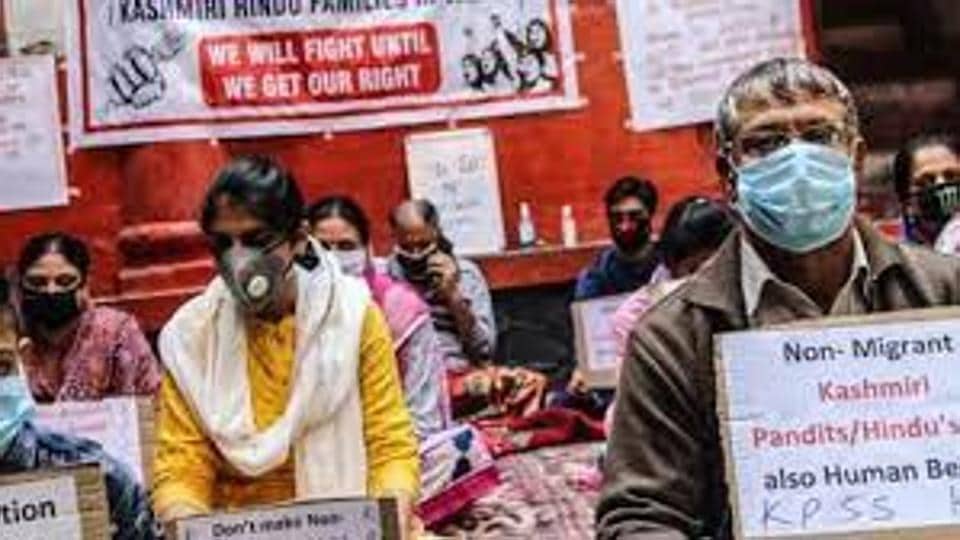
While successive regimes did try to soothe their frayed nerves by doling out sops in the form of jobs and promises of resettlement, January 19, 1990 is marked as a black day – the day the entire Kashmiri Pandit community had to flee the Valley amid calls of “ Cheliv, Galiv ya Raliv (leave,die or support us)” by Islamist radicals.
“I was nine years old when my family fled Valley. We had a three-storeyed palatial house on eight canals in Amirakadal. The house was torched in 1992 in the aftermath of Babri mosque demolition. It remains in dilapidated condition now,” recalled 40-year-old Sunit Kachroo.
“We lived in inhumane conditions with scores of other Kashmiri Pandits s in tents in Prukhoo till 1992 and then my father purchased a small piece of land and constructed a room,” he added.
“While my father breathed his last in 2017 with a wish to return to his roots, my mother still calls our Srinagar house as her real home. My father was caught in a sort of time warp. Though he shouldered all his responsibilities of a father, he couldn’t find happiness in anything after 1990,” said Sunit.
Yamini Kaul, who now lives in Delhi, said, “January 19, 1990 remains a painful reminder to all Kashmiri Pandits of an unbearable loss of their homes, livelihoods, cultural moorings, and much more than just a piece of land. Even 32 years later, there is a gaping wound in our lives, which refuses to heal unless the status quo is changed. My son, who is seven years old, would never know Kashmir the way his parents and grandparents knew. Who will be answerable for that sense of disconnect for a whole generation of Kashmiri Pandit kids”.
Yamini recalled she was 13 when her family home in Jammu became the base for several Pandit families fleeing from Kashmir in the aftermath of January 19, 1990.
“During those months, I was witness to a humongous tragedy unfolding as each family reached Jammu, heartbroken, desperate to return, and clinging on to that tiny sliver of hope, which remains a painful reminder to all Kashmiri Pandits of an unbearable loss of their homes, livelihoods and cultural moorings”, she said.
The community observes January 19 every year as a holocaust day.
A 75- year old Kashmiri Pandit, who insisted anonymity, recalled how his eldest son was shot dead by the terrorists in Shopian bus stand in 1990.
“I still remember the day when my eldest son was shot dead at the bus stand and how I along with my wife and two sons had to flee our home in the dead of night,” he said.
“We had a vast orchard, a big house and a thriving business but we had to leave everything behind,” he said.
The old man said that the wounds of losing a son and leaving behind home and hearth can never be healed.
Meanwhile, to mark the day Panun Kashmir, a frontal organization of the Pandits organised a webinar and took a renewed pledge to rededicate itself to the cause of a separate homeland in Kashmir.
Meanwhile, Omar Abdullah, in a tweet, said, “Sadly Kashmiri Pandits are no closer to being able to return to the valley than they have been in the recent past. Along with a clear-cut policy, a greatly improved security environment would be essential precursors to facilitate a return. We hope & pray that day is not far.”


