
 E-Paper



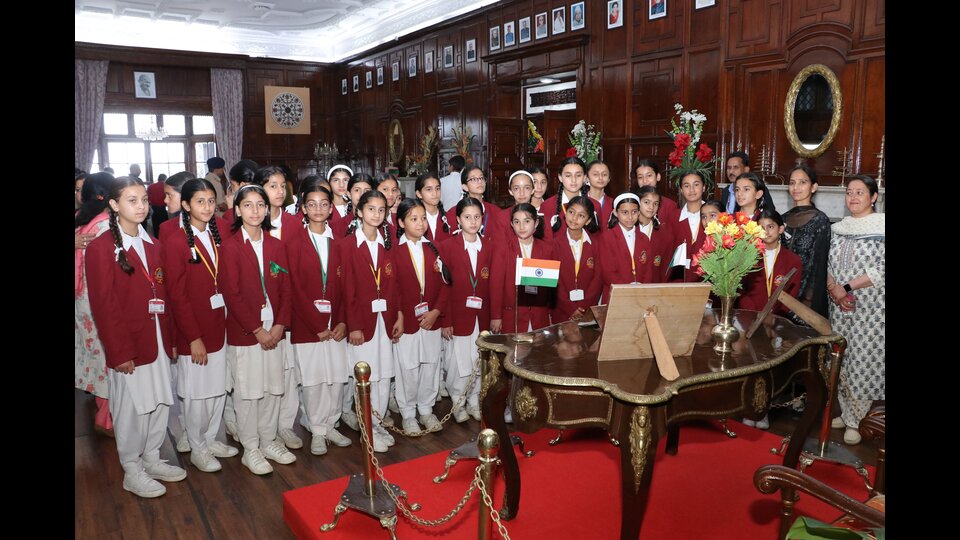
Himachal Raj Bhawan thrown open for public, 60 students take tour on Day 1
On the first day, the students of government-run schools took a tour of the Raj Bhawan and were explained the importance of the events that occurred in the building

 Prefer HTon Google


About 60 students of government schools visited the Raj Bhawan here that was thrown open to the public on Saturday.
Calling it a historical structure, Himachal Pradesh governor Shiv Pratap Shukla said in a statement, “I took the initiative to throw the Raj Bhawan open to the general public so that the common man can come and learn more about the heritage building, besides enjoying its magnificence.”
On the first day, the students of government-run schools took a tour of the Raj Bhawan and were explained the importance of the events that occurred in the building. The children also interacted with Shukla and his wife Janaki Shukla. A short documentary on the history of the Raj Bhawan was also screened.
Earlier known as Barnes Court, the building features a Tudor-style architecture. It is named after its first occupant — Sir Edward Barnes, the Commander-in-Chief of the British Indian Army — who lived there in 1832. Afterwards, it became the residence of various commanders-in-chief of the British Indian Army.
The Shimla Agreement between India and Pakistan was also signed in the building in 1972 by the then Prime Minister Indira Gandhi and President Zulfikar Ali Bhutto respectively.
Shukla said the earlier Raj Bhawan protocol prevented tourists and locals from entering the building. Now, not only will tourists be granted access but it will become an added attraction in Shimla’s list of heritage sites. He added that he was inspired to take the step after President Droupadi Murmu opened the Rashtrapati Niwas to the public.
Murmu, on April 20, declared that the Rashtrapati Niwas, earlier called the Presidential Retreat, at Chharabra in the outskirts of Shimla city open for the public.
The Raj Bhawan will remain open for the public from 2 pm to 5 pm every weekend, according to the statement.
Entry will be free for school students and children below 10 years of age. Students of universities and colleges, visitors from the state and outside will be charged an entry fee of ₹30. Foreign tourists will be charged ₹60. Admission will also be free for persons with disabilities and national-and state-level awardees. Soft copies of a maximum six photographs and the Raj Bhawan brochure will be provided for free during admission, the statement said.


