
 E-Paper



Adopt ‘tar-wattar DSR’ method to preserve natural resources, says PAU V-C
During the inspection of the 25-acre rice field managed by farmer brothers S Lakhwinder Singh and S Sukhvir Singh, Gosal noted the establishment of the crop without any post-sowing irrigation

 Prefer HTon Google


Experts from Punjab Agricultural University (PAU), led by vice-chancellor Satbir Singh Gosal, conducted an assessment of the “tar-wattar direct seeded rice” (DSR) method in Govindgarh village on the Raikot-Barnala road. The approach is developed by PAU which involves directly drilling rice seeds into a tar-wattar field and delaying the first irrigation until three weeks after sowing.
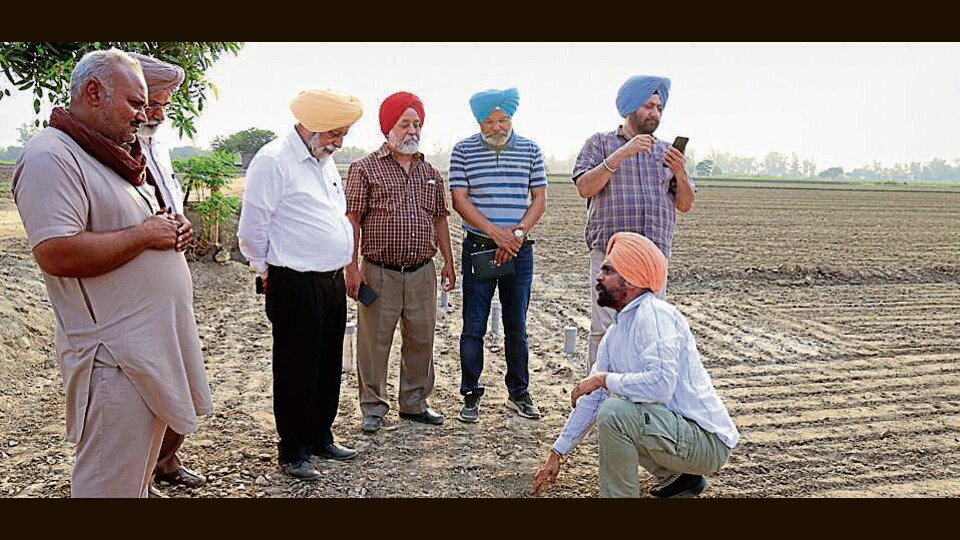
During the inspection of the 25-acre rice field managed by farmer brothers S Lakhwinder Singh and S Sukhvir Singh, Gosal noted the establishment of the crop without any post-sowing irrigation. He commended the farmers for their dedication to conserving natural resources and promoting sustainable agricultural practices. Gosal encouraged more farmers to adopt water-saving technologies like “tar-wattar DSR” to help preserve vital natural resources.
“The ‘tar-wattar DSR’ method has gained popularity among farmers due to its adaptability to various soil types, reduced weed problems, and significant water savings,” said Gosal.
The farmers, who adopted this technology during the COVID-19 pandemic, shared their positive experiences with the PAU team. They highlighted that applying the first irrigation three weeks after sowing saved substantial water, promoted deeper root growth, and resulted in a healthier, weed-free crop. Additionally, they reported achieving 1.0 to 1.5 quintal per acre higher yields compared to traditional puddled transplanted rice.
Encouraged by their success over the past 3-4 years, other local farmers have also started adopting this water-saving technology. However, the farmers emphasised the importance of regular crop monitoring during the first month to achieve the best results.


