
 E-Paper



Centre tells Punjab to control stubble fires, plan in advance
Against the total farm fire count of 49,922 in 2022, the numbers came down to 36,623 last year. However, the area under stubble fire increased to 19 lakh acres in 2023 against 15 lakh acres in 2022.

 Prefer HTon Google


The Union agriculture ministry on Tuesday asked Punjab to start advance planning to control stubble fires during the harvest season in the October-November months.
In a meeting held in New Delhi, between the secretary agriculture Manoj Ahuja and officials from Punjab led by special chief secretary KAP Sinha and also attended by the vice-chancellor of Punjab Agricultural University (PAU) SS Gosal, the state was asked to submit a plan.
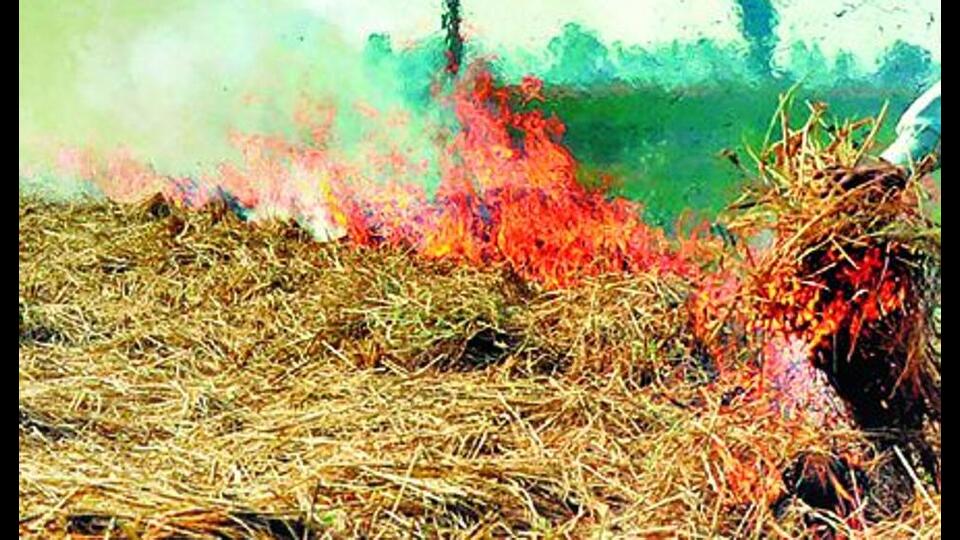
Stubble burning is a contributory cause of air pollution coinciding with the onset of the winter. The smoke rising from the paddy fields in Punjab, Haryana and western Uttar Pradesh forms a smog jacket over north Indian states, particularly the national capital region, leading to severe health hazards.
About 20 million tonnes of paddy straw is generated in the paddy harvest season, which also includes 3.3 million tonnes of stubble of the premium aromatic basmati variety. Out of the total paddy straw, the state government manages around 11.5 million tonnes through various in-situ management measures and 4.67 million tonnes by the ex-situ method.
Last season, Punjab’s total farm fire count dipped by 26% as per official figures supplied by the Punjab Pollution Control Board (PPCB) and the Punjab Remote Sensing Centre (PRSC). Against the total farm fire count of 49,922 in 2022, the numbers came down to 36,623 last year. However, the area under stubble fire increased to 19 lakh acres in 2023 against 15 lakh acres in 2022.
In the meeting, the state agriculture department officials apprised the Centre that applications have been sought from the farmers for supplying subsidised machines for in-situ management of paddy stubble and so far 11,000 have applied. “We want maximum farmers to apply for machines by the last date June 20, as the department wants to target 25,000 to 26,000 farmers,” said an officer of the state agriculture department.
According to PAU V-C Gosal the experts from the Philippines-based International Rice Research Institute (IRRI) were also part of the meeting to direct the research in the field of rice varieties.
“The meeting initiated advanced planning which will help in curbing crop residue burning,” he added.
Earlier, the state department sought a grant of ₹500 crore from the Centre for in-situ and ex-situ management of paddy stubble, for which the union agriculture ministry has asked for requisition. This means out of the total outlay, the centre will contribute ₹300 crore and the rest will come from the state’s kitty.
The Union ministry started funding the CRM programme in 2018 and until 2022, it was a 100% grant given by the Centre, but the norms were changed from the last season. As per the new mandate, which came into practice from the previous kharif season’s harvest, the Centre and state contribution for paddy stubble management will be 60:40 respectively.
In the last season, the Centre sanctioned ₹350 crore, out of which the state contributed ₹140 crore.
From 2018- 2022, a total of ₹1,370 crore was given to farmers in Punjab for the purchase of machines. In all, 1.17 lakh machines were distributed to the farmers. Last year, 23,000 machines were given to the farmers.
For the upcoming season, the state government said the action plan for supplying more in-situ machines than in the previous season is being made. Also, the department may spend more on ex-situ management of paddy stubble, he added. “The expenditure on in-situ and ex-situ management will depend on the need as we near the harvest, but largely it will be on in-situ management,” said an officer of the state department.


