
 E-Paper


Chandigarh: CTU buses to run at 15-minute frequency, says Kataria to residents
The announcement on bus frequency follows an earlier review of Chandigarh’s public transport system by the administrator on July 7

 Prefer HTon Google


With the tricity’s search for a mass rapid transit system still going in circles and key road decongestion projects facing prolonged delays, the UT administration is banking on an improved bus network to ease commuters’ woes. CTU buses will operate at 15-minute intervals on busy routes, Punjab governor and UT administrator Gulab Chand Kataria announced during a samadhan shivir (resolution camp) at Sarangpur on Monday.
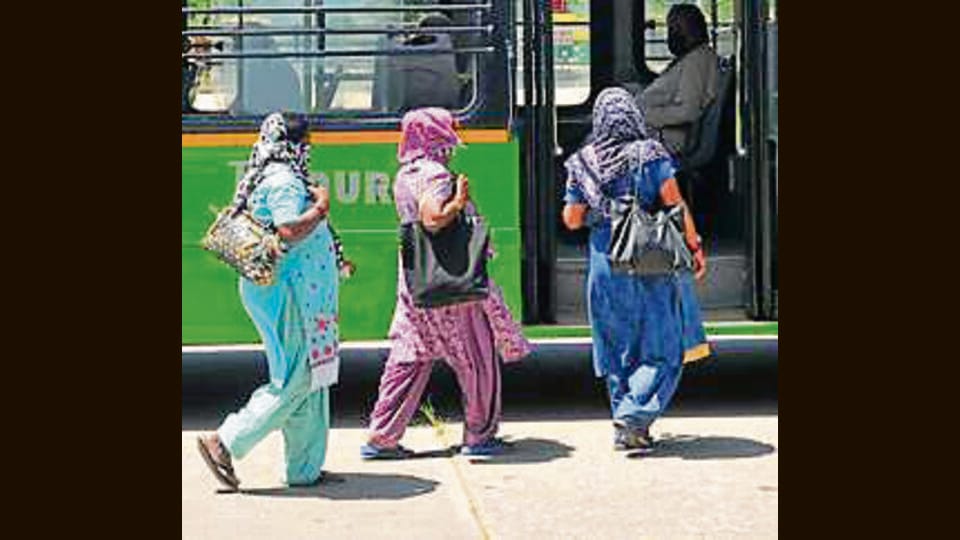
The announcement on bus frequency follows an earlier review of Chandigarh’s public transport system by the administrator on July 7. At the meeting, officials were directed to increase frequency on high-demand routes, rationalise services on low-demand routes and improve connectivity across Chandigarh, Mohali, Panchkula, Zirakpur and Kharar. It was also suggested to examine a grid-based route planning model for the city, with high-frequency services proposed along major corridors and feeder routes connecting residential sectors, villages and peripheral areas to these routes.
Options explored in the past
Chandigarh has explored several mass-transit options, including Metro, MetroLite, MetroNeo and Bus Rapid Transit (BRT), over the years, but none has reached implementation. The latest mobility planning has favoured Metro as a long-term solution, but costs and inter-state coordination remain hurdles. Conceived in 2016 and approved in 2019, the project has faced years of delays, initially due to litigation over tree felling. In May 2026, the Punjab and Haryana high court once again issued stay order, stalling a flyover’s construction in the city.
The UT administration is also working to expand CTU’s electric bus fleet under the Centre’s PM e-Bus Sewa Scheme. As part of the expansion, 328 additional electric buses are expected to be inducted from March 2027, with deliveries likely to be completed by June-July 2027. The new buses will help replace 170 ageing diesel buses operating on local and suburban routes, which are due to complete their 15-year operational life by March 2027. Once inducted, CTU’s electric bus fleet on local routes is projected to reach 508.
The proposed 15-minute frequency could improve access to public transport for residents of peripheral areas, although the routes identified for the revised schedule and the implementation timeline are yet to be specified.
In 2022, RITES had identified six busiest corridors — Sector 43 ISBT to New Chandigarh (Mullanpur), Sector 43 ISBT to Mansa Devi Complex, Sector 43 ISBT to Panchkula, Sector 5, Sector 17 ISBT to Kharar, PGIMER to Zirakpur, and PGIMER to Panchkula, Sector 5.
A subsequent Comprehensive Mobility Plan in 2023 proposed seven corridors, with buses at 10-minute intervals and real-time passenger information. This ISBT-43 to New Chandigarh included ISBT-87, Mohali to Mansa Devi Complex, ISBT-43 to ISBT Panchkula, ISBT-17 to ISBT Kharar, PGI/Dadumajra to ISBT Zirakpur, PGI to ISBT Panchkula and ISBT Kharar to ISBT Zirakpur.
Land pooling in next year’s budget
Addressing residents’ grievances at the camp, the Governor also announced that the UT administration would include provisions for land pooling and regularisation of construction outside the Lal Dora in next year’s budget.
The samadhan shivir was organised exclusively for residents of Sarangpur, Dhanas, EWS Colony Dhanas, Khuda Lahora and Khuda Jassu, with senior UT administration officials present to take up complaints.


