E-Paper



Haryana’s paddy arrivals hit 10-year low, fall 16% short of last year’s level
State records 51.95 lakh tonnes arrival against the 58-lakh-tonne procurement target; 5.68 lakh tonnes await lifting as season winds up, while Basmati arrivals rise 6% and private traders buy nearly all the bajra brought to mandis

 Prefer HTon Google


Haryana’s kharif procurement season is drawing to a close, with the state recording 51.95 lakh metric tonnes (LMT) of common parmal rice (PR) paddy arrivals in mandis till November 15, nearly 16% lower than the 62.07 LMT arrived in the mandis of the state during the last season and the procurement target of 58 LMT.
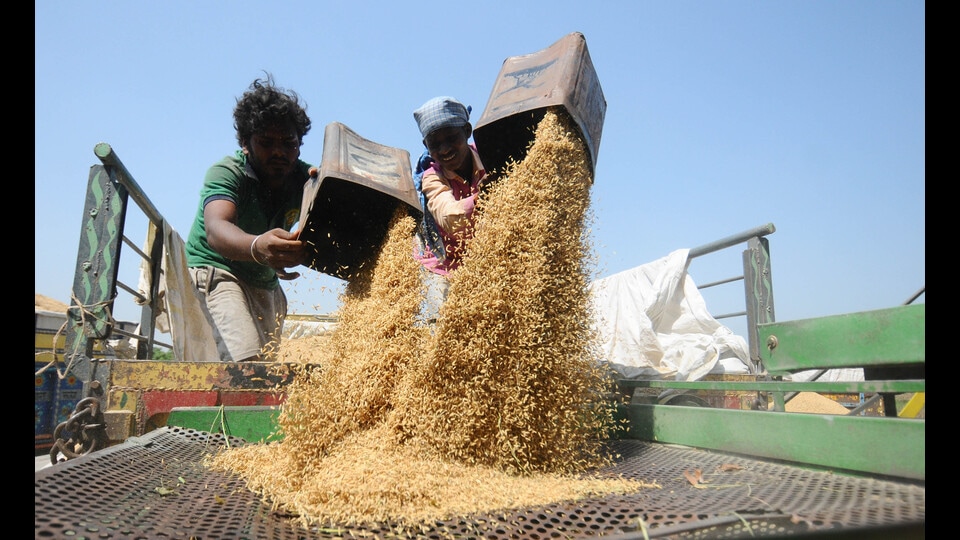
While procurement agencies and private traders have purchased most of the crop that has arrived, the movement of stocks from mandis remains a major concern, with nearly 5.68 LMT of procured paddy still awaiting lifting. This year the procurement started in the state on September 29 against the scheduled October 1.According to the Haryana State Agricultural Marketing Board’s (HSAMB) reports dated November 15, the state recorded cumulative arrivals of 51.95 LMT of common paddy (PR), around 12.8% lower than the 59.60 LMT reported by the corresponding date last year and the lowest in the past 10 years. Moreover, the current arrivals are also about 16.3% below the 62.07 LMT received during the entire 2025-26 procurement season.
The board’s KMS 2026-27 abstract report puts government procurement of PR paddy at 49.62 LMT, while private buyers purchased another 1.12 LMT. Officials attributed the decline in paddy procurement to several factors.
They said private traders purchased certain PR varieties like PR 14 and PR 26 outside the mandis to avoid market fees at prices higher than the fixed minimum support price (MSP) of ₹2,461 per quintal. They said the registration on the Meri Fasal Mera Byora (MFMB) portal was subjected to stricter scrutiny this year and the agriculture department in coordination with revenue officials, carrying out field verification of the entire 23.98 lakh acres registered under Parmal varieties on the portal which helped to put a check over procurement of paddy from non-registered farmers in the mandis of the state.
Haryana agriculture minister Shyam Singh Rana said the state government is promoting crop diversification and offering financial incentives to farmers to shift to alternative crops. He said this could also be a key factor behind the decline in paddy production in the state, with farmers being encouraged to move away from paddy cultivation under the Mera Pani Meri Virasat scheme. He said that several initiatives to check irregularities in procurement also helped to bring more transparency in the procurement system. Dharmendra Singh, chief administrator HSAMB, said the kharif procurement season is over in the mandis of the state, entire produce as no gate passes will be generated but the produce left in mandis will be lifted within a day or two. He said that the procurement this year remained below the set target of 58 LMT.
Kurukshetra remained the largest contributor to PR paddy arrivals with 9.30 LMT, followed by Kaithal (8.40 LMT), Fatehabad (7.91 LMT), Karnal (7.25 LMT) and Ambala (5.28 LMT). These five districts together accounted for more than 38.13 LMT, nearly three-fourths of the state’s total PR arrivals.
On the other hand Basmati arrivals showed a different trend as the state received 25.10 LMT by November 15, compared with 23.73 LMT during the corresponding period last year, an increase of around 5.8% as private buyers purchased 24.28 LMT or 96.77% of arrivals. The officials predict that the overall Basmati arrivals may also exceed the 39.94 LMT procured in the state last year.
Among other major kharif crops, the state recorded 7.24 LMT of bajra arrivals, against 6.54 LMT during the corresponding period last year. Private buyers purchased 7.15 LMT, accounting for 98.76% of arrivals, while lifting stood at 6.07 LMT, or 84.89%.
The average reported market rate was ₹2,328 per quintal against the declared minimum support price of ₹2900. However, around 6 LMT fall in the overall procurement figures also affect the procurement estimates of the Food Corporation of India which has around 44.79 LMT of rice in stock in Haryana before the beginning of the procurement season.