
 E-Paper



Chandigarh: Expansion of tertiary treated water network to begin in January
Under the Atal Mission for Rejuvenation and Urban Transformation, the civic body has already floated tenders to expand the 100-km network to 129 km, particularly in southern sectors, industrial areas and green belts in Chandigarh


Having completed the upgrade of all six sewage treatment plants (STPs) using sequencing batch reactor technology, the Chandigarh municipal corporation is all set to expand the tertiary treated water network throughout the city at a cost of ₹97.25 crore.
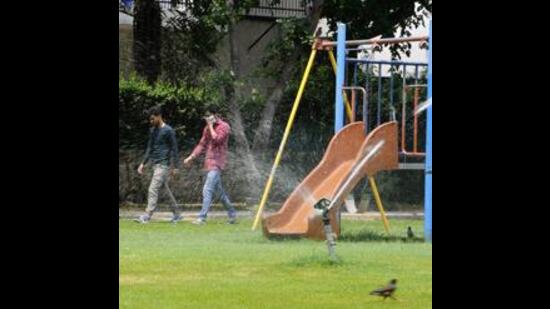
Under the Atal Mission for Rejuvenation and Urban Transformation (AMRUT), the civic body has already floated tenders to expand the 100-km network to 129 km, particularly in southern sectors, industrial areas and green belts. Once launched, the project is estimated to take around a year to complete.
Through tertiary treatment — the final stage of wastewater cleaning process — the sewage is made suitable for irrigation through chemical treatment and sedimentation process by bringing its biochemical oxygen demand (BOD) below 10 mg.
Use of tertiary water for agriculture and related activities is one of the main objectives of the City Water Action Plan (CWAP) as it will reduce dependence on ground and potable water.
The six STPs — 3BRD, Dhanas, Raipur Khurd, Raipur Kalan, Maloya and Diggian — have been upgraded at a cost of ₹650 crore, utilising sequencing batch reactors that produce effluent low in organic compounds, meeting the desired effluent standards.
MC commissioner Anindita Mitra said the primary goal behind the expansion project was conservation of potable water. She said technical and financial bids for the project had been opened, and approval from the state-level technical committee was expected within a week.
“The target is to increase consumption from 8 million gallon daily (MGD) to 20 MGD, saving 12 MGD of potable water. Once the network is enhanced, 1,911 parks, gardens and green belts will receive tertiary treated water for maintenance of green cover, and the entire industrial area will also have access to it for activities such as floor and car washing,” she added.
The civic body had started laying tertiary water pipelines in 1990, and initially covered Sectors 1 to 12 and Sector 16. Currently, almost 80% of the sectors have been covered and the remaining will get tertiary water through the CWAP. Under the Water Bylaws 2015, MC made tertiary water connections mandatory for all houses sized 500 square yards and above.
STP Maloya receives ISO certification
Meanwhile, the Bureau of Indian Standards has granted the civic body an ISO certification for the Maloya STP, the second after its Construction and Demolition waste processing plant that received the certification in October 2022.
The ISO 9001:2015 certificate has been awarded as a recognition of MC’s service of treatment of sewage water. It will be valid till November 23, 2026.
Mitra said a team of analysts had visited the STP and conducted a comprehensive assessment with regard to processing services provided by MC. Focus was on recycling the sewage waste generated by the city and producing tertiary treated water, impact of the services on the public and the quality of service being rendered by MC, she said.


