
 E-Paper



Chandigarh: HC expansion plan to come up before heritage panel tomorrow, UNESCO next
The meeting was called after all stakeholders gave clearance to the proposal during the hearing of the case at the Chief Justice’s camp office on Sunday

 Prefer HTon Google


After months of back-and-forth and an earlier rejection by UNESCO, the long-stalled expansion plan of the Punjab and Haryana high court has finally begun moving forward.
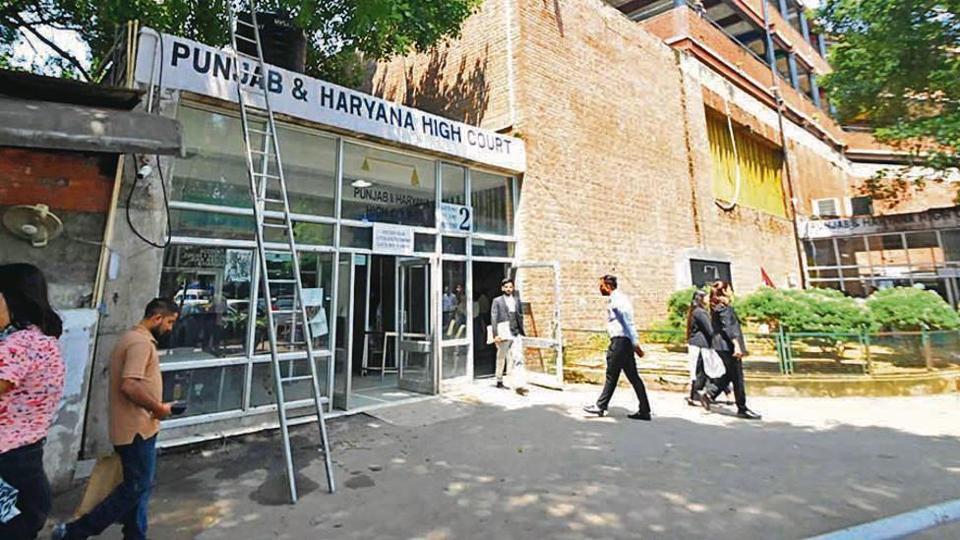
A revised holistic development proposal — prepared by a newly appointed consultant — will be taken up by the Chandigarh Heritage Conservation Committee on Tuesday, a mandatory step before it is sent afresh to UNESCO for approval.
The meeting was called after all stakeholders gave clearance to the proposal during the hearing of the case at the Chief Justice’s camp office on Sunday. It is learnt, the Noida-based consultant gave a presentation of two concept plans — and the proposal with development on 20.5 lakh square feet area was cleared.
The detailed order is awaited. However, those present at the hearing said the bench presided over by chief justice Sheel Nagu and justice Sanjiv Berry asked the central government as well as UT to submit the proposal to the international body by January 21, which is the last date for consideration of the project by the body in 2026.
The presentation was made during the hearing of a 2023 public interest litigation (PIL) by HC employees association secretary Vinod Dhatterwal, seeking the implementation of a holistic development plan, which envisages the setting up of multi-storey buildings to cater to the requirement of additional space.
During these proceedings, a committee, with two judges was formed in 2025 to suggest a development plan. It had recommended the construction of four new blocks with 30-35 more courtrooms on a 11.42 lakh square-feet area behind the heritage building designed by Le Corbusier, and an additional parking capacity on 11.17 lakh square feet at the Capitol Complex.
To execute this, the UT administration earlier this month appointed a consultant, who came up with two models, one of which was cleared on Sunday.
The original proposal envisaged in 2013 had to be shelved after UNESCO’s World Heritage Committee and its advisory body, ICOMOS, had earlier raised objections, warning that the plan could compromise the Outstanding Universal Value (OUV) of the Capitol Complex, comprising the HC complex, which was declared a World Heritage Site in 2016.
Now, the modified plan will be sent to a UNESCO arm for clearance.
Construction at a heritage site is prohibited without approval from the UNESCO World Heritage Committee. Though UNESCO does not provide any funds to the Union territory, it provides technical assistance for conservation and preservation of the buildings at the complex. UNESCO frequently reviews the site and if UT fails to maintain its upkeep, the body can delete it from the heritage status list.
Notably, UNESCO previously has also stalled two other major projects at the complex — an underground multi-level parking facility and an AC chiller plant.
A prime manifestation of Chandigarh’s architecture, with the Shivalik Hills in the backdrop, the Capitol Complex also comprises the Open Hand monument, Tower of Shadows, Geometric Hill, the legislative assembly and the secretariat, spread over more than 100 acres in Sector 1.
The high court expansion plan envisages constructing multi-storey buildings to address the pressing space crunch, given that the court handles over 10,000 lawyers, 3,300 employees, thousands of litigants and around 10,000 vehicles daily, triggering massive traffic jams daily.
There are also not adequate court rooms if the current strength of 60 odd judges were to go up to the sanctioned 85 in future.


