
 E-Paper



Chandigarh headed for chaos: HC
Initiating suo motu proceedings into infrastructure issues, HC seeks responses from Chandigarh administration and Union government

 Prefer HTon Google


The Chandigarh administration has been unable to cope with the urban growth effectively and the city is headed towards chaos, the Punjab and Haryana high court has said while initiating suo motu proceedings on infrastructure issues and poor planning in the UT.
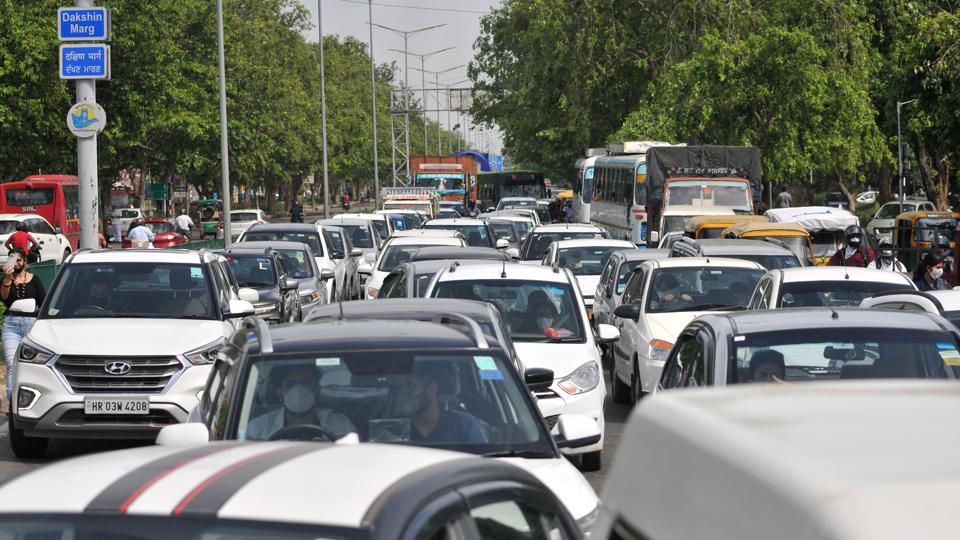
Observing that a number of issues need to be monitored, the court in its order dated June 25, said that otherwise the city will not be able to regain its past glory and turn into another urban mess.
The HC lamented that even though the Punjab New Capital (Periphery) Control Act, 1952, provided that there would be no urban development within 16 km of the city’s periphery, both Punjab and Haryana set up parallel townships of Mohali and Panchkula, respectively, and the area originally meant to cater to a population of 5 lakh is now housing 30-40 lakh people.
Observing that so far it has been ensuring and monitoring the city’s development, the HC said: “However, since the town is a Union Territory, it suffers from futuristic long-term development plans on account of administration being headed by the bureaucracy which is posted in Chandigarh on deputation basis for short periods of around 2-3 years.” Besides the short tenure of the officials, the court also pointed to the lack of elected representatives, as the mayor holds office for just one year on rotation basis and there is a lone Member of Parliament.
“Every time proposals come through, but are jammed up in technical studies on footfall viability of projects and no one is accountable for seeing or pushing through the need of the hour of the town, leading to future decay,” the court observed, citing how there is no planning for public transport system to connect neighbouring towns.
The court questioned whether the infrastructure provided by the administration has grown in proportion to the growth of the city beyond Sector 30 and if the problem is on account of inadequate resources.
“The town thus suffers from planned infrastructural projects coming up, though it has to host a large number of visitors, who come to the city on daily basis on account of town being the capital,” it said taking suo motu note and seeking responses from both Chandigarh and the Centre.
The UT has also been told to file an affidavit regarding any addition to cycle tracks and augmentation done over the years and money spent on it. The details on the number of street lights installed in the city and the data regarding the percentage of those working have also been sought.
Traffic issues
The court said that people are commuting on a daily basis from as far as 60 km from Patiala, Nawanshahr, Kalka, Ambala and Sirhind, but no effort is being made to plan a public transport system.
It questioned whether the city requires Mono Rail or Metro Rail for seamlessly connecting inflow from the adjoining towns of Kalka-Parwanoo in the north, Yamunanagar on the northeast, Ambala on the south, Patiala on the southwest, Sirhind, Fatehgarh Sahib and Kharar on the west, and Nawanshahr and Ropar on the northwest, which could help reduce the traffic on all the adjoining highways.
The court also pointed to shortcomings in the construction of underpasses. The solitary underpass built in 1960s between Sectors 11 and 15 has not been replicated in any other portion of the city, the court said, adding that despite various recommendations, the city has no traffic underpass at high-density points, such as Transport Chowk and Press light point.
The pedestrian underpass between Rose Garden and Sector 17, which cost ₹9 crore, is grossly underutilised with a footfall of just 200 pedestrians. Another is being proposed between PU and PGIMER without any thought for future planning, said the court.
The court also wanted to know as to why the Lake Road/Uttar Marg that is blocked at the turn of Punjab Engineering College and Khuda Ali Sher not be opened to facilitate ready movement for people commuting to the Capitol Complex.
Green issues
The court also raised several questions concerning green cover and its pollution. It suggested that Rajindra Park be developed as a forest area with walkways on the pattern of the Forest Institute at Dehradun to augment the green cover of the city.
It questioned what steps various departments have taken to plant fresh trees in green belts, which are being consumed by the termite. It also sought statistical data of living and dead trees and steps taken to ensure that the latter are felled in time to prevent mishaps.
The court questioned whether sewage is being discharged into the nullahs, especially N-Choe, and whether any checking is being done to ensure if there is any violation of any previous order. It also sought information on dumping of construction debris in green belts and nullahs and steps being taken to challan the violators.


