
 E-Paper



Chandigarh to get third air quality monitoring station by January 2022
The third observatory near the Sector 43 ISBT in Chandigarh and the nearby main road will focus on pollution caused by vehicular traffic

 Prefer HTon Google


After a second Continuous Ambient Air Quality Monitoring Station (CAAQMS) was set up in Sector 22 this year, a third CAAQMS will be launched near the Sector 43 ISBT by January 2022, as per officials of the Chandigarh Pollution Control Committee (CPCC).
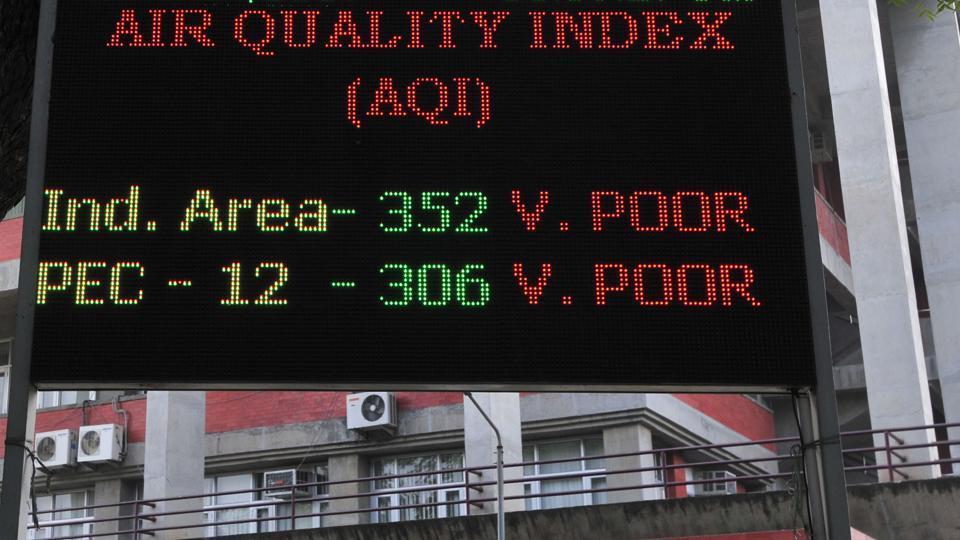
Currently, the city has two air quality monitoring stations in Sectors 22 and Sector 25, and three manual observatories at Sector 17, Sector 39 IMTECH and PEC in Sector 12.
The Sector 22 CAAQMS was earlier a manual observatory, run by the CPCC, before it was converted. The CAAQMS are maintained by the Central Pollution Control Board and provide hour-wise pollution data, which isn’t available at the manual observatories.
Speaking about this, member secretary of CPCC, Debendra Dalai said, “We have set up the third observatory near the Sector 43 ISBT and the nearby main road as the focus was on pollution caused by vehicular traffic.”
Similarly, the Sector 22 observatory focuses on the market area of the city and Sector 25 deals with the outskirts of the city.
The CPCC has been running test runs at the centre, which had been readied around October itself, but due to some electrical faults it wasn’t launched.
“Initial tests conducted on it say it is ready for use. With the election code in place, it will be inaugurated and opened in January now,” Dalai said.
The CPCC also started an air purification tower in Sector 26 this year to clean air within its 500-metre radius.
“The department is looking at the data for the whole year to correlate air quality with the seasons and to ascertain how beneficial the tower has been for the city,” Dalai added.
Air quality deteriorates
With the temperature dropping, the Air Quality Index (AQI) went past 200 at the Sector 22 CAAQMS on Tuesday morning. It touched 200 at 3am and kept rising during the day, reaching 252 at 6pm.
Between 201-300, AQI is considered poor and can cause breathing discomfort to most people with prolonged exposure. The air quality was better at the Sector 25 CAAQMS where it stayed between 100 and 200.
India Meteorological Department (IMD) officials said with a western disturbance coming towards the region, the northerly winds which dispersed pollutants from the city’s air had stopped and due to falling temperature, inversion had also caused the AQI to rise.
On Tuesday, the maximum temperature went down to 21°C from 21.1°C on Monday.
The minimum temperature also dipped slightly from 8.8°C to 8°C. Highs and lows of 19°C and 7°C are expected over the next three days.


