E-Paper



Chandigarh’s AQI crosses 250 ahead of Diwali, brace for the worst
As per Central Pollution Control Board (CPCB), AQI is defined as an overall scheme that transforms weighted values of individual air pollution-related parameters like SO2, CO and visibility into a single number or set of numbers.

 Prefer HTon Google


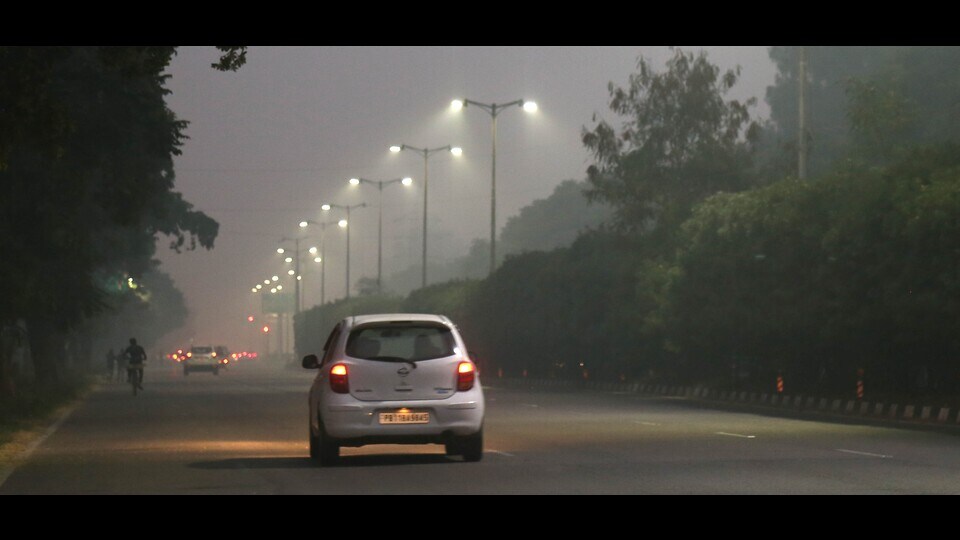
The Air Quality Index (AQI) of the city is continuing to worsen, with AQI crossing 250 for the first time this season on Wednesday morning at the Sector 53 Continuous Ambient Air Quality Monitoring Station (CAAQMS). This also comes after the minimum temperature went down to 17°C for the first time this season as per the India meteorological department (IMD).
As per Central Pollution Control Board (CPCB), AQI is defined as an overall scheme that transforms weighted values of individual air pollution-related parameters like SO2, CO and visibility into a single number or set of numbers. AQI at the continuous monitoring stations set up by the CPCB is calculated by calculating the sub-indices for individual pollutants at a location using its 24-hourly average concentration value (8-hourly in case of CO and O3) and health breakpoint concentration range. The worst sub-index is the AQI for that location.
While AQI had improved at the start of the week, it again started worsening on Wednesday, and was worst in the morning at Sector 53 where it went up to 251 at 10 am. While Mohali has no CAAQMS, this one is situated on the border of Mohali and Chandigarh and is used to get an idea about the air quality in Mohali, which is poorer compared to Chandigarh and Panchkula.
AQI between 201-300 is considered poor as per the CPCB and can cause breathing discomfort to most people on prolonged exposure. AQI had first crossed 200 in the city on Sunday this season. The major pollutant continued to remain PM2.5. As per research by CPCB, crop residue burning is a major source for PM2.5. Short-term exposure to PM2.5 can damage lung function and exacerbate asthma and heart diseases while long-term exposure is associated with an increased rate of chronic bronchitis, reduced lung function, and increased mortality from lung cancer and heart disease.
Speaking about the rise in AQI, member secretary of the Chandigarh Pollution Control Board (CPCB) TS Nautiyal said, “While temperature inversion is a factor, the major factor right now is stubble burning. Chandigarh is land-locked between Punjab and Haryana, and while stubble burning in Chandigarh can be checked, stubble burning in other states ends up affecting Chandigarh as well.”
Nautiyal added that a Graded Response Action Plan (GRAP) is in place and can be referred to if the situation becomes worse.
Temperature dips to 17°C
Meanwhile, the minimum temperature fell from 19.6°C on Tuesday to 17.8°C on Wednesday. This is the lowest that the minimum temperature has gone this season till now, but still 3.1 degrees above normal.
IMD Chandigarh director Surender Paul said, “Dry weather is likely to continue, and temperature will remain along similar lines but will gradually start to fall further.”
He added that AQI is likely to shoot up significantly as temperature falls due to temperature inversion. This happens as temperature becomes colder, pollutants become harder to disperse from the air and end up forming a layer over the city, leading the AQI to go into very poor (301-400) or even severe category (400+).
Even a light spell of rain can significantly improve air quality, but rain remains unlikely for the next couple of weeks. The UT environment department is reaching out to schools and urging children not to burst crackers as even green crackers cause pollution.
The maximum temperature rose from 32.8°C on Tuesday to 32.9°C on Wednesday, 3 degrees above normal. In the next three days, the maximum temperature will remain between 32°C and 33°C while the minimum temperature will remain around 18°C.