
 E-Paper



Chandigarh’s fight against pandemic fraught with lapses
In the year gone by, UT administration’s counter measures lacked in terms of coordination and robust response

 Prefer HTon Google


Over the course of fighting one of the worst health crises to ever befall the City Beautiful, its people and the administration have grown a thick skin against the coronavirus. As Chandigarh marks a year since its first Covid-19 case, here’s a look at the administration’s dealing of the outbreak from March last year till now.
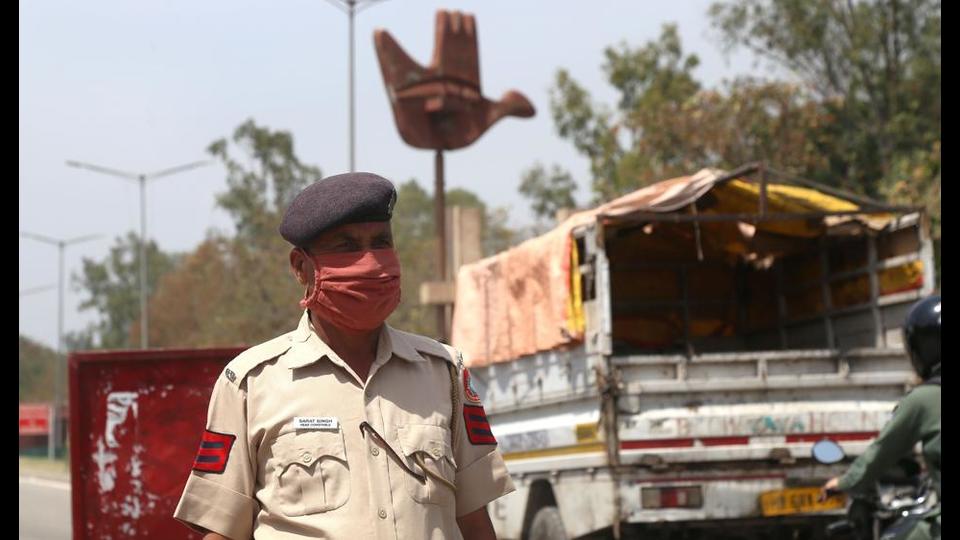
The UT administration may boast high of “less” number of infections, low fatality rate and imposing timely restrictions at the onset of the pandemic in the city, but its counter measures have lacked in terms of department coordination and expected robust response.
The first case confirmed case of Covid-19 was reported on 18 March 2020, when a 23-year-old student, who had returned from the UK was tested positive and was isolated at Government Medical College and Hospital, Sector 32. The chain of infection was spread to her family, friends in Chandigarh and Panchkula.
A total of 23,592 persons have been tested positive in the UT so far, which is almost 2 percent of the total population.
Bapu Dham horror
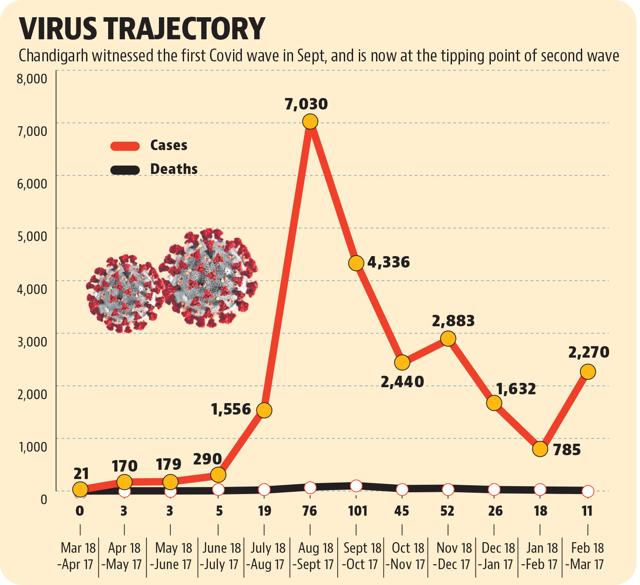
The ebb and flow of the virus spread in the city was fraught with lapses which were initially exposed with the community outbreak in Bapu Dham Colony, Sector 26, last year. Despite a strict approach towards testing, the UT administration had failed to cope up with the rising cases during the peak in September 2020.
“The system is failing to respond effectively even to this day. Patients are being left in the lurch with no one to seek suggestions from in case of home isolation. There are no calls from the health officials and the patient has no idea how to go about it,” said Taruni Gandhi, a city resident who recently contracted the infection.
Delayed detection
“The testing was done so selectively that the asymptomatic persons were not detected in time which led to the massive outbreak in the city and high increase in infection load even in complete lockdown,” a senior health official, who was part of the core team handling the operations in the area, said.
The administration later changed the policy by bringing in on-site sampling centres which brought the increased number of infections to the fore. At one point, a total of 75% infections in the city came from Bapu Dham Colony alone.
A study by Post Graduate Institute of Medical Education and Research had also revealed that a significantly high number of cases in Bapu Dham Colony were due to its dense population coupled with a huge number of asymptomatic infections that was responsible for the late detection and delayed isolation of cases leading to a widespread outbreak.
September surge
As the Covid-19 pandemic surged in Chandigarh in September last year, the UT administration was not able to get in touch with those testing positive within 24 hours of reporting, which further delayed contact tracing. A team of experts was also deputed by the central government in early September to find gaps and assist the local administration in dealing with the pandemic.
The month saw a major surge in infections, with the record being set on September 13 (449 cases), while the highest number of active cases (3,171) was reported on September 16.
The central team observed that initially in the zones where there were a smaller number of cases or were in the nascent phase of the epidemic, the authorities were not able to contact all positive cases in 24 hours, which resulted in delayed testing of their household contacts. Some positive patients even complained that the health department did not contact them, and they didn’t even know who to reach out to in case of any problem.
Vaccine hesitancy
Even though the vaccination drive prioritising health care and frontline workers commenced in mid-January, only 50% have been inoculated so far, hesitancy being a key reason behind their low turnout. The response to vaccination among senior citizens, however, has been promising.
“We need to acknowledge that our infection number has been so low that people may not find it necessary to get vaccinated. But people should come forward for it if they are among the priority groups,” said UT adviser Manoj Parida.


