
 E-Paper



‘Delhi Chalo’ march: Petition filed in HC against sealing of borders, suspension of mobile internet
The petitioner, Uday Partap Singh, sought directions from the court to stay all “obstructive” actions by the administration on farmers' protests.


A petition was filed in the Punjab and Haryana high court on Monday against the sealing of borders and suspension of mobile internet services by the Haryana government in the wake of farmer outfits calling for a protest march to Delhi on February 13.
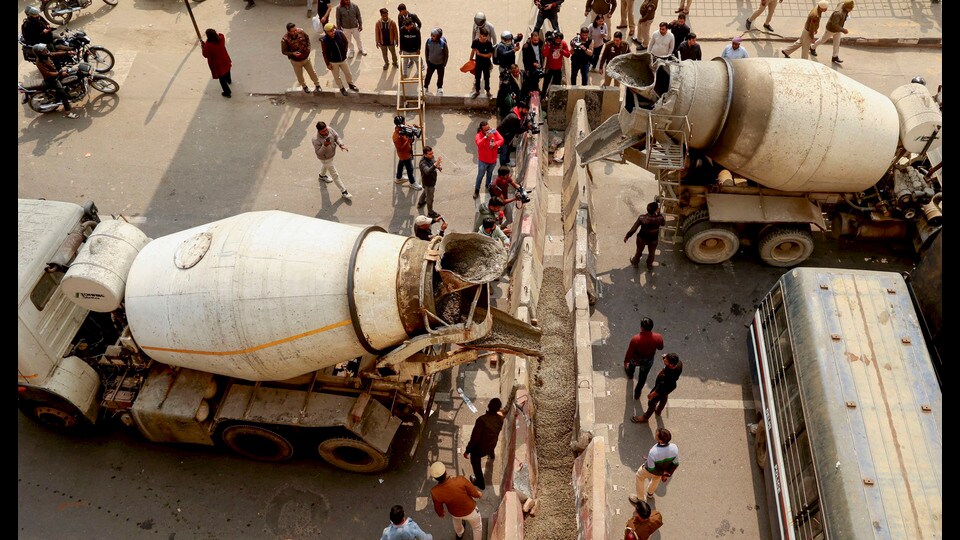
The petitioner, Uday Partap Singh, sought directions from the court to stay all “obstructive” actions by the governments of Haryana and Punjab and the Centre against the farmers’ protest, alleging that they infringe on the fundamental rights and are “unconstitutional”.
The matter is expected to come up for a hearing on Tuesday.
Read more: ‘Delhi Chalo’ march: Why are farmers protesting? Explained in 5 points
The Samyukta Kisan Morcha (Non-Political) and the Kisan Mazdoor Morcha have announced that they would head to Delhi on February 13 to press the Centre to accept several demands, including the enactment of a law to guarantee a minimum support price (MSP) for crops.
In the plea, the petitioner, who is from Haryana’s Panchkula, alleged “unlawful” sealing of the border between Haryana and Punjab, particularly at Shambhu near Ambala, by the Haryana authorities with an “apparent objective of preventing farmers from exercising their constitutional right to assemble and protest peacefully”.
The petitioner contended that the actions of the Haryana authorities, including the suspension of mobile internet services and bulk SMS in Ambala, Kurukshetra, Kaithal, Jind, Hisar, Fatehabad, and Sirsa, further exacerbates the situation, depriving the citizens of their right to information and communication.
Read more: Farmers' protest in Delhi: What's allowed and what's not?
“The road blockade not only inconveniences residents but also hampers the movement of ambulances, school buses, pedestrians, and other vehicles. This obstruction has resulted in increased traffic on alternative routes, causing delays and difficulties for including professionals like advocates, doctors and emergency services who are unable to reach their workplaces and attend promptly,” according to the plea.
The imposition of Section 144 of the Code of Criminal Procedure (CrPC) in Ambala and Kaithal districts, along with the placement of cemented barricades, spike strips, and other obstacles on various roads, demonstrates a concerted effort by the state authorities to “suppress dissent and stifle democratic expression”, the plea alleged. The actions not only infringe upon the fundamental rights guaranteed under Articles 19(1)(a) and 21 of the Constitution of India but also undermine the principles of democracy and the rule of law, said the plea.


