E-Paper



Deteriorating air quality: Delhi okay with exemptions granted to 11 coal-fired power plants in NCR
Of the 11 thermal power plant units, we find that the units at Dadri NCTPP, NTPC, Uttar Pradesh and Mahatma Gandhi TPS, Jhajjar Power, Haryana, are in compliance: SC bench

 Prefer HTon Google


The BJP-led Delhi government requested the Northern Zonal Council (NZC) to drop the issue of exemption granted to 11 thermal power plants within the National Capital Region (NCR) for using coal as fuel from the agenda of the 32nd meeting of Council in Faridabad.
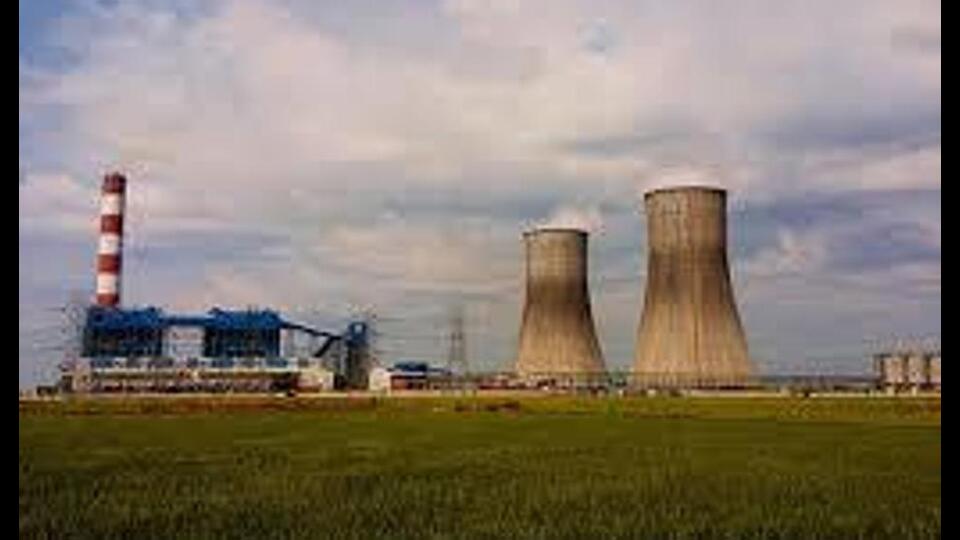
The issue regarding the deteriorating air quality in the national capital was sponsored by the previous AAP government in Delhi and was deliberated in the meeting of the council’s standing committee on October 25, 2024, in Chandigarh.
“There are a total of 11 coal-based thermal power plants within a 300-km radius of Delhi. These are acknowledged to be major contributors of PM10 (particulate matters of diameter of 10 micrometres or less), PM 2.5 (fine particulate matter with a diameter of micrometers or smaller), sulphur dioxide and nitrogen oxides in various studies. The IIT Kanpur report - Comprehensive Study on Air Pollution and Greenhouse Gases in Delhi (2016) have identified these plants as major contributors of PM10, PM2.5, sulphur dioxide and nitrogen oxide. Sulphur dioxide and nitrogen oxides are primarily responsible for the elevated levels of particulate matter in Delhi’s air,’’ reads the noting of the issue sponsored by Delhi government at last year’s standing committee meeting.
However, the present dispensation in a November 13 communication to the NZC said since the Union ministry of environment forest and climate change (MoEFCC) and Commission for Air Quality Management (CAQM) have already taken steps in this regard, they are requesting for the removal of the item from the NZC meeting agenda. The state government said that thermal power plants with operational flue gas desulfurisation (FGD) systems may be allowed to operate and the council may review the functioning of remaining thermal power plants.
On the issue of the 11 thermal power plants located within 300km of Delhi, a Supreme Court bench headed by justice Abhay S Oka had on April 2, 2025, said the court was concerned with the compliance regarding sulphur dioxide emission standards. “There are two issues. The first is whether categorisation of the thermal power plants within the distance of 300km from Delhi can be changed. For that, amendment to Schedule I of the Environment (Protection) Rules, 1986 will be required. The second issue is about the timelines for compliance with the sulphur dioxide emission standards. Out of the 11 thermal power plant units, we find that the units at Dadri NCTPP, NTPC, Uttar Pradesh and Mahatma Gandhi TPS, Jhajjar Power, Haryana, are in compliance. In the case of power plants at Indira Gandhi STPP, NTPC, Haryana and Harduaganj TPS, UPRVUNL, Uttar Pradesh, there is a partial compliance. As regards the power plant at Rajpura TPP, NPLL&T, Punjab, it is mentioned that FGD is installed in both the units, but the system is not operational in these units at present. The question is whether the timelines up to December 31, 2029, as stated in Schedule I can be reduced,’’ the bench had said.
The MoEFCC, however, in an August 12, 2025 communication said according to Central Pollution Control Board (CPCB) reports, all 11 thermal power plants are largely compliant with particulate matter (PM), nitrogen oxide and mercury emission norms.
“The sulphur dioxide emission norms must be met by December 31, 2027, for plants within 10 km of Delhi-NCR or cities with more than 1 million population and sulphur dioxide norms are not applicable to the other categories. CAQM’s approved fuels list allows low-sulphur coal for thermal power plants,’’ the central ministry wrote.
The MoEFCC also said it has not received any proposal from the Delhi government seeking withdrawal of the exemption for coal use in these 11 thermal power plants.
The CAQM had in 2022 approved a list of fuels for various applications in the NCR. According to the list, the CAQM had permitted only clean fuels such as natural gas, biofuels for industrial use. Coal-based industries were directed to adopt clean fuels within the timelines. However, thermal power plants were exempted from this restriction and permitted to use low-sulphur coal.
The noting of the issue sponsored by the Delhi government for 2024 standing committee meeting said the functioning of these coal-based power plants affected Delhi’s ambient air quality and this issue has been repeatedly flagged by the state government before the MoEFCC. “The Union government and CAQM should also review the exemption granted to thermal power plants in the NCR for the use of low-sulphur coal,’’ the noting said
During the standing committee meeting on October 25, 2024, additional chief secretary (ACS), Delhi, had presented an agenda informing that Delhi government has already shut down all coal-based thermal power plants within its jurisdiction. However, 11 such thermal plants continued to operate in neighbouring states, being exempted from the CAQM directive.
Member (technical), CAQM said that direction number 65 of June 23, 2022, permitted the use of coal only in thermal power plants and captive thermal plants. Considering current electricity demand and available generation sources, there is no alternative arrangement. However, stringent emission norms and pollution control mechanisms have been mandated for these plants, which are expected to be complied with by all TPPs in the region by the end of 2024.Thermal power plants and captive power plants are also required by a statutory directive of CAQM to co-fire 5–10% biomass pellets in addition to coal, the CAQM member said.