
 E-Paper



Drying of kinnow trees in Abohar worries growers
Widespread dieback incidents of kinnow orchards in Abohar have left orchardists and farm experts worried about the future of Punjab’s “king fruit” in the horticulture hub of the state

 Prefer HTon Google


BATHINDA : Widespread dieback incidents of kinnow orchards in Abohar have left orchardists and farm experts worried about the future of Punjab’s “king fruit” in the horticulture hub of the state.
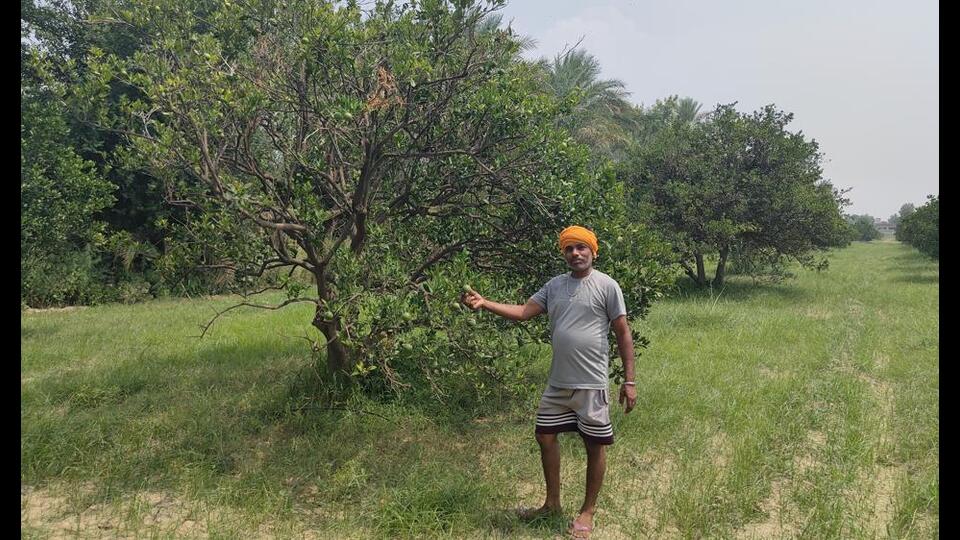
Dieback refers to gradual deterioration of health in trees, sometimes leading to tree death. Dieback is usually caused by a combination of factors, such as disease and pathogens, insect attack and stressful climate conditions.
Upset over trees drying out this time and poor seasons since 2021, several farmers are uprooting the citrus fruit trees and replacing them with paddy, an uncommon trend in the semi-arid region marred with saline groundwater.
Abohar is the largest producer of kinnow in India and the average production of mandarin fruit in the last few decades was 12 lakh tonne.
In 2023, Abohar recorded a production of 13 lakh tonnes of kinnow from an estimated 35,000 hectares, according to the state horticulture department data.
Information gathered from the kinnow belt in Fazilka district said orchardists have lost 20-50% of their fruit-bearing trees this year.
Horticulture experts at Punjab Agricultural University (PAU) deny having any input indicating pest infestation and attribute a significant loss of kinnow trees to the stress caused by high summer temperatures this year and excessive fruit yield in the last season.
A resident of Gidderanwali, Ashok Madan, who has been growing kinnow successfully since 2008, had to uproot his 5-acre orchard in May this year. He said that it was painful to uproot the orchard that was reared for 15 years.
“All of sudden, kinnow tree leaves started drying that led to abrupt dieback of well-grown trees. I had to cut trees to sow cotton. In the last few years, the traditional crops of kinnow and cotton in Abohar have crashed due to poor irrigation support and pest attacks,” said Madan.
Another kinnow grower from Punjawa, Gurpreet Sandhu, said he uprooted kinnow orchard of 4.5 acres after large-scale mortality of trees.
“The enterprising farmer community of Abohar is reeling under severe economic stress. Since 2022, I had to uproot nine acres of kinnow orchards due to the drying of trees. For the first time, I have sown 28P67 variety of non-basmati which is considered to be tolerant to salinity but I am sceptical about the success of experimenting with rice,” rued Sandhu.
Harinder Singh Jurar Khera village batted for a new irrigation policy where kinnow growers of Fazilka get canal water supply at the onset of summers and water stress contributed to mortality in orchards.
“Flowering and fruit setting in kinnow orchards begins in March and April coinciding with the annual closure of canals for maintenance before paddy and cotton sowing. Lack of sufficient water at the initial stage of fruits has been hitting the production for the last four seasons,” said Singh, whose orchards also witnessed large-scale mortality.
A second-generation orchardist from Patti Villa village Nikhil Setia said he has 40 acres of kinnow and about 20% of trees died.
“This scale of kinnow mortality is unusual as malta trees on our 4-acre farm are healthy. Dieback of 5% due to various factors is considered normal in kinnow cultivation but phenomena of large-scale drying out of trees is a matter of concern,” he said.
Anil Kamra, the horticulture scientist at the PAU’s regional fruit research station in Abohar town of Fazilka district, said it is for the first time that the region is reporting the trend where fruit-bearing trees are drying at a big scale.
He said saline groundwater is not good for orchards and the non-availability of canal water during fruit-setting weeks led to water stress on trees that caused high mortality this time. Kamra said field reports say several kinnow growers are switching over to rice cultivation.
“Our inputs say trees older than eight years are the worst hit. The intense heatwave in summer this year played a devastating role. Moreover, in the last season, several orchardists did not focus much on the thinning of trees that led to excess fruiting. In 2023-24, the market had less demand for kinnow and there were few takers for the fruit which led to a delayed harvest affecting the health of trees severely,” said Kamra.


