
 E-Paper



Farmer-entrepreneurs in Punjab who offer green solutions
As stubble fires spike in Punjab, a set of businessmen and farmer-entrepreneurs are scripting a story of a different kind, turning paddy residue into money-spinner. HT brings you some of these change agents who have shunned the practice of setting fields on fire and are making money from waste.


Bathinda farmer makes hay selling stubble to Rajasthan traders
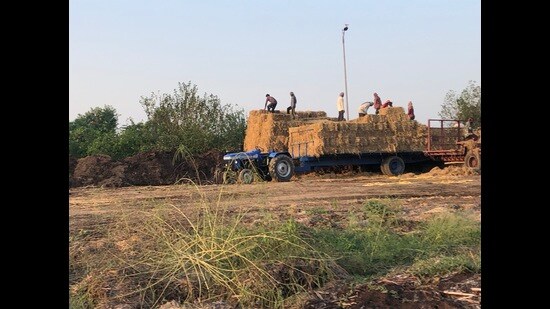
KOTGURU (BATHINDA) For 61-year-old enterprising farmer Darshan Singh, ex-situ management of paddy waste in more than 1,000 acres of land from nearly half a dozen villages turned out to be a golden opportunity.
Darshan proudly recalls that around seven years back he was the first farmer from Sangat block to commercially venture into stubble management going to fields of other farmers to collect residue, making bales and selling them off to industrial units looking for crop waste as fuel.
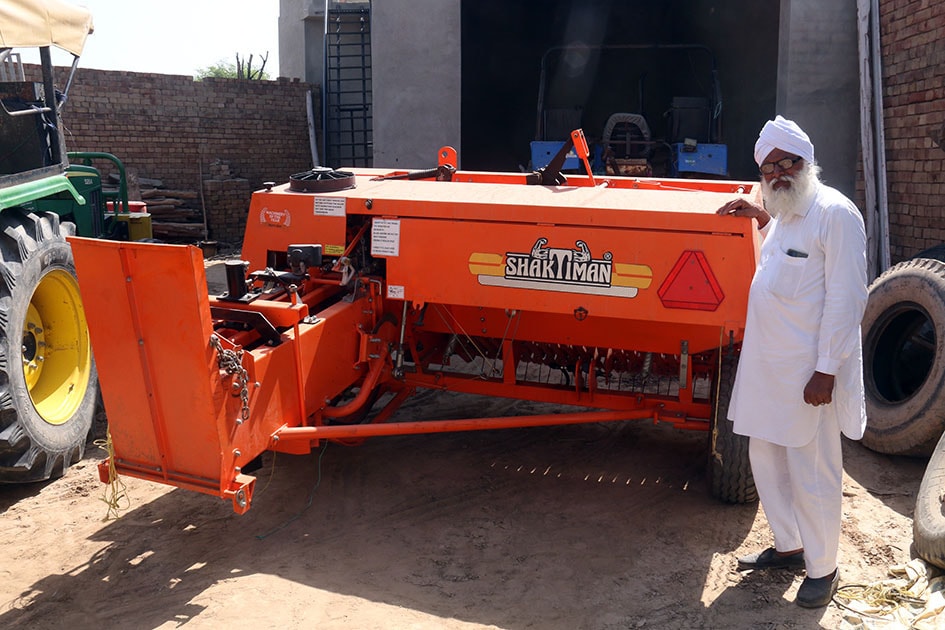
Assisted by two sons and nearly 50 labourers, Darshan has been earning on an average ₹5-8 lakh for the last eight years in around 35-50 days by selling stubble to a private biomass generation plant at Channu in Muktsar.
After earning well for seven years in a row, most of his residue stock was left unsold in 2022 as the biomass plant declined to buy the residue due to high moisture content. He was not disheartened and instead stored paddy stubble on one acre of land taken on lease.
“I stocked about 20,000 quintals of paddy stubble on one-acre land taken on a lease. Last year, I had an offer to sell the residue at the rate of ₹170 per quintal. After almost no buyers for the last almost 10 months, buyers from Rajasthan are paying me up ₹210-230 per quintal for the same stock. Rajasthan farmers are using the stubble to feed their cattle as there is a dearth of livestock feed due to unfriendly weather,” said Darshan.
As paddy harvest is yet to gain momentum in Bathinda, Darshan is all set to supply 30,000 tonnes at the rate of ₹190 per quintal for the first time to a public sector petroleum unit in the district.
To meet the target, he has decided for the first time to go 20 km away from his native place to collect paddy straw from the fields in Naseebpura, Kotshamir and Kotbhagtu villages near Bathinda-Talwandi road. Darshan’s father was a marginal farmer and he was working as a tailor in the village and was assisted by his wife.
“My friend Binder Singh introduced me to Punjab Agricultural University’s activities to improve the farm sector. I started with a 7-kanal of family land and now, I own 18 acres and take additional land on lease,” he added.
“When in 2015, I got into making bales by availing subsidy, fellow villagers mocked me for trying to earn from waste. I did not lose heart, collected 28,000 quintals, and sold them to a biomass unit for handsome returns. Now, there are nearly 10 villagers engaged in stubble management,” he added.
Darshan is grappling with the shortage of workforce to expand his reach. “I need about 50 men to work 24x7 shifts for 30-35 days for complete stubble management. But it is a challenge to find workers. It is one of the reasons that I have limited my capacity to handle about 30,000 quintals,” he said. --Vishal Joshi
Pvt power plant at the centre of ex-situ mgmt in Nakodar
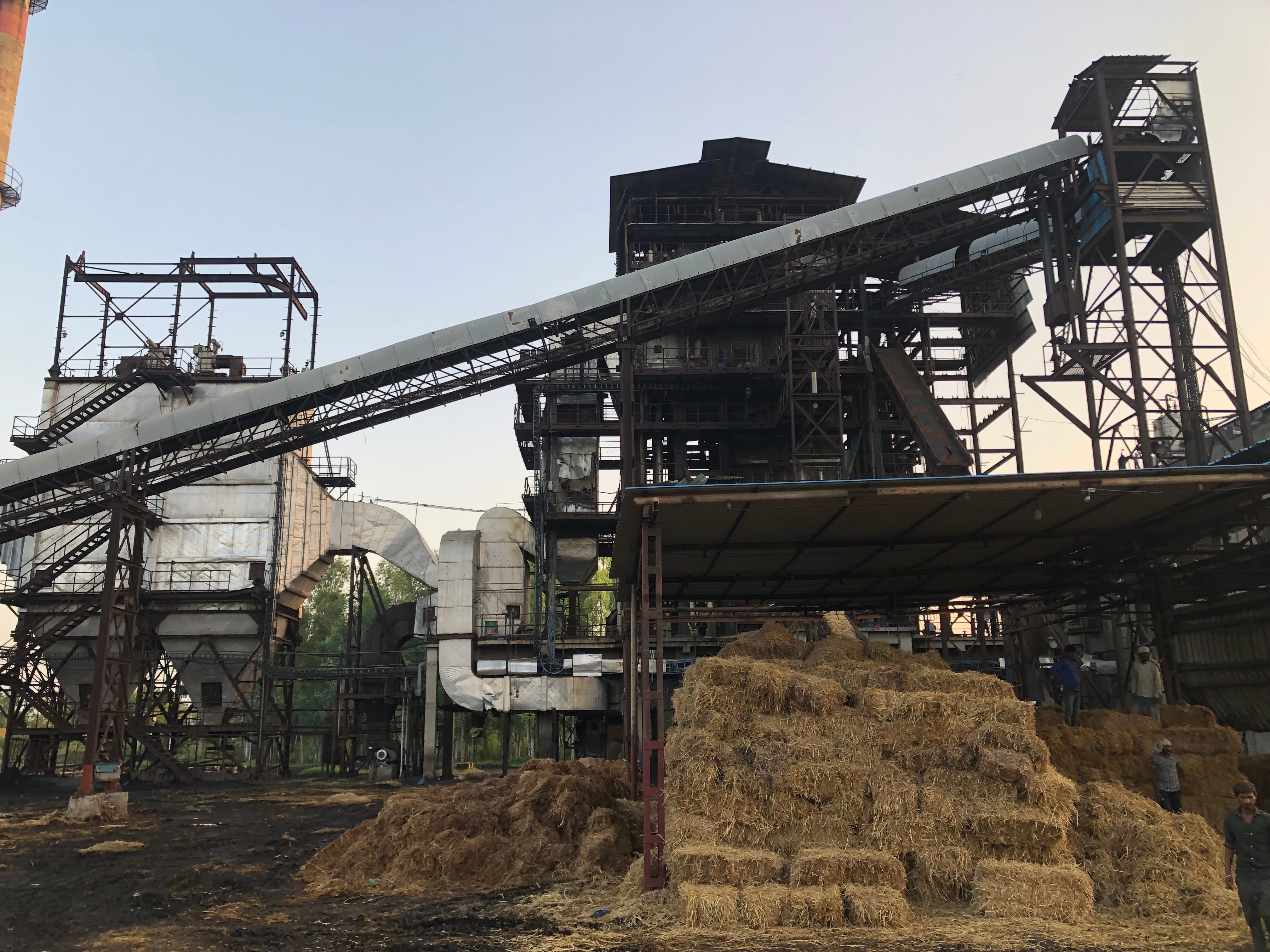
A 6MW private power plant in Jalandhar’s Bir Pind is at the centre of the Nakodar sub-division’s efforts of managing stubble and boosting rural income.
The plant is presently managing 80,000 metric tonnes of paddy stubble with farmers from nearly 40 villages in the Nakodar sub-division of the Jalandhar district associated with the unit. The farmers are getting ₹1,670 per metric tonne ( ₹167 per quintal) of stubble.
Kewal Singh, plant manager, said nearly 4,000 farmers have directly and indirectly associated with them for the past five years and their number is increasing every year. “We press 50 balers and machines and other required machinery into service every season for ex-situ management of paddy stubble in the harvested fields,” Singh said.
He added that lack of awareness among farmers is still a cause of worry as many are reluctant. “Initially, we managed 20,000 metric tonnes of paddy straw with five balers. However, presently, we are managing 80,000 metric tonnes of stubble as we need nearly 250 metric tonnes of stubble to produce 6MW of power daily,” he added.
Since there is a delay in paddy harvesting in Jalandhar district, the plant is procuring stubble bales from Sultanpur Lodhi to run its operations, he said.
There are two other such plants — one operational in Hoshiarpur district and the other in Manuke village of Moga district, which is facing some issues with having a power purchase contract with Punjab State Power Corporation Limited. Both these plants have a capacity of managing 80,000 metric tonnes of paddy stubble each.
Makhan Singh, a farmer from Bir Pind, who has been given a contract to collect stubble, said there should be more awareness among the farmers at the ground level as instead of publicising awareness campaigns in the media, the state government and agriculture department should launch extensive programmes to sensitise farmers about ill-effects of stubble burning.
“Despite being paid for collecting stubble from their fields, there is reluctance among the farmers to sell paddy leftovers,” he said. --Navrajdeep Singh
Postgraduate in agriculture, Gurdaspur farmer shows the way
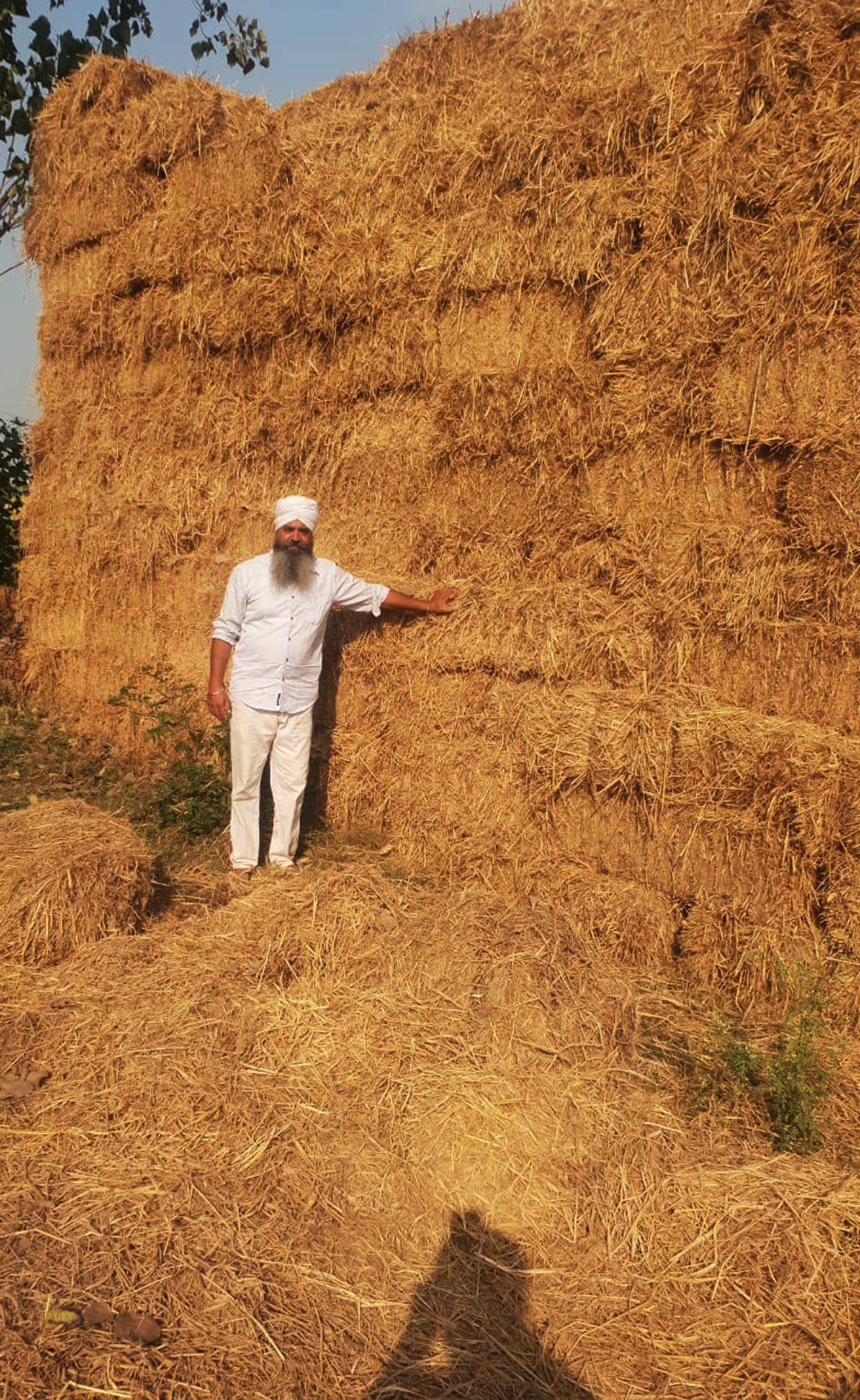
A resident of village Sohal falling Dhariwal block of Gurdaspur district, Attar Singh earned a degree of Master of Science (MSc) in Agriculture Entomology. However, he opted to continue managing 26 acres of his family’s agricultural land.
“I went to Canada for a better life but returned during the Covid-19 outbreak. On returning, I saw that the problem the farmers were facing most was to manage the stubble”, he said.
“After a few years, we tied up with a bio-fuel company which is operated from Mohali. They approached us and asked for the land for establishing the unit. And we provided them the land. They conducted meetings with the farmers and inspired them to avoid burning the stubble which is required by them as biofuel. They asked us to have the bailer machines. I am happy that the company gave me an opportunity to establish a dump for keeping the stubble. Due to the dump, no incident of stubble burning is reported in this area which once remained one of the hotspots of such incidents”.
“Presently, 10 bailer machines are being operated here and I am getting the full support of the farmers. A total of 4,000 metric tonnes of stubble is stored here in this dump. The company further supplies this stubble to their clients as bio-fuel”, he said
Attar appealed to the governments and companies to take such initiatives. “This is a great opportunity for the farmers as well. It has reduced the cost of management of the stubble. We charge only ₹1,000 per acre for lifting the stubble. Besides, it has provided the farmers the opportunity to earn money. The company pays us ₹180 per quintal stubble. We get an average 30-40% margin in the sale of the stubble”. -- Surjit Singh
Three friends’ monetise green solutions
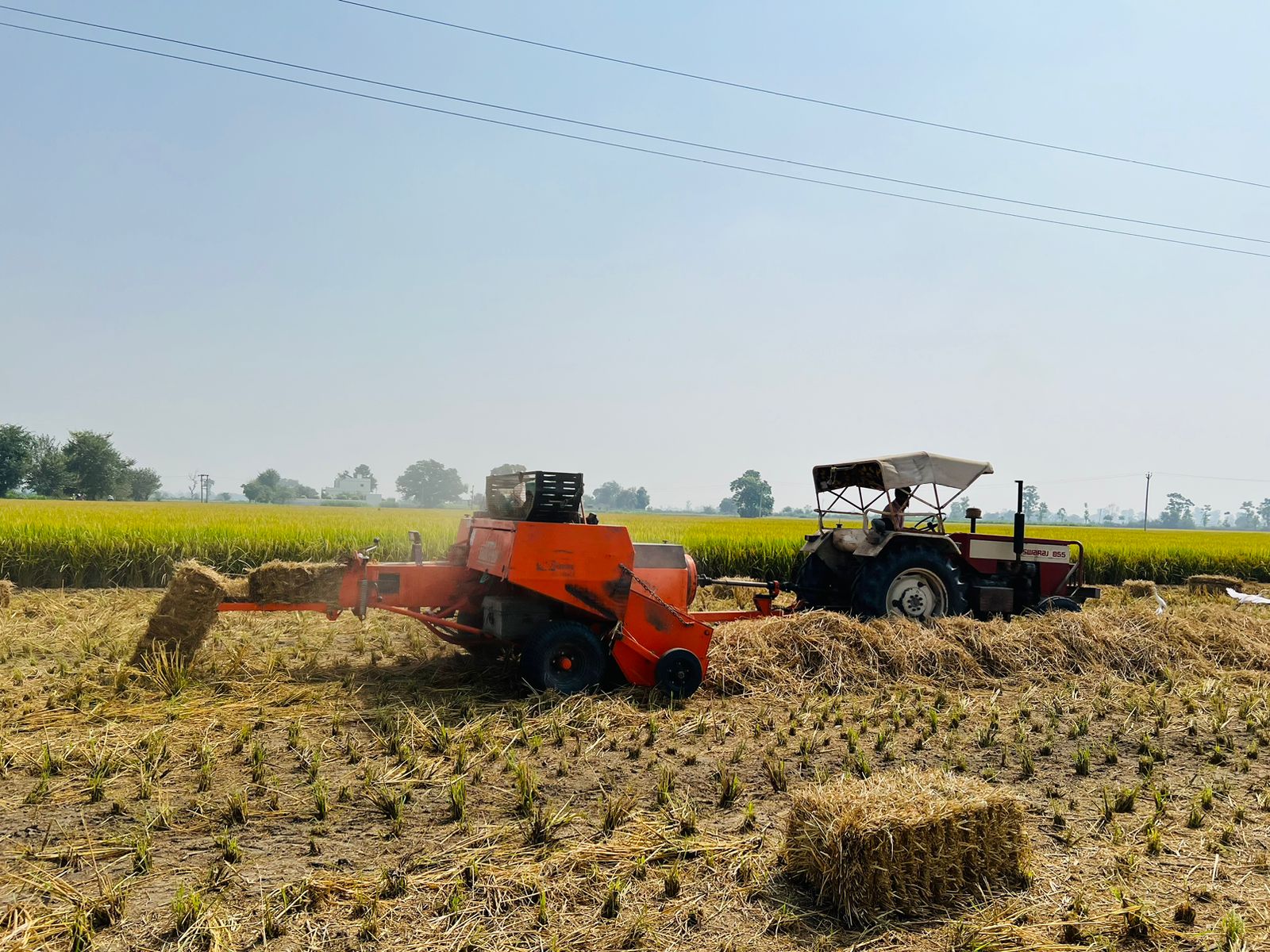
They collect paddy straws from farmers’ fields free of cost and later sell it to markets by making bales. They are earning at least ₹30 lakh per paddy harvesting season of 45 days. One quintal straw of paddy is fetching ₹155 to ₹160 in the market.
They have a total of 5 balers, and 30 tractor-trailers to collect straw, make bales and transport it at the destination.
Harwinder Singh said that like everyone else, they were also worried about the impact of stubble burning on the environment.
“Therefore, we wanted to contribute to a green solution and we also knew that every solution brings business opportunities. Therefore, we have started collecting paddy straw and selling it to industries in 2019,” he added.
His friend Paramveer Singh said, “We had only three tractor-trailers and a baler when we started cleaning fields. Now we are earning ₹6 lakh per baler in the season. As of now, we are working in the Sangrur and nearby areas, but we have plans to expand to other areas and states too.”
Varinder Singh said, “We have collected four lakh quintals of straw of paddy so far and will collect one lakh quintal in this season.” -- Harmandeep Singh


