
 E-Paper



Growers worried as climate woes hit Himachal’s tea production
Tea planters say that the state faced a prolonged dry spell in the winter season, followed by insufficient rainfall from March onwards, compounding the woes of the Himachal tea industry


The unusually hot summer and insufficient rain in Himachal Pradesh’s Kangra valley have left tea growers worried as production has dipped significantly this year.
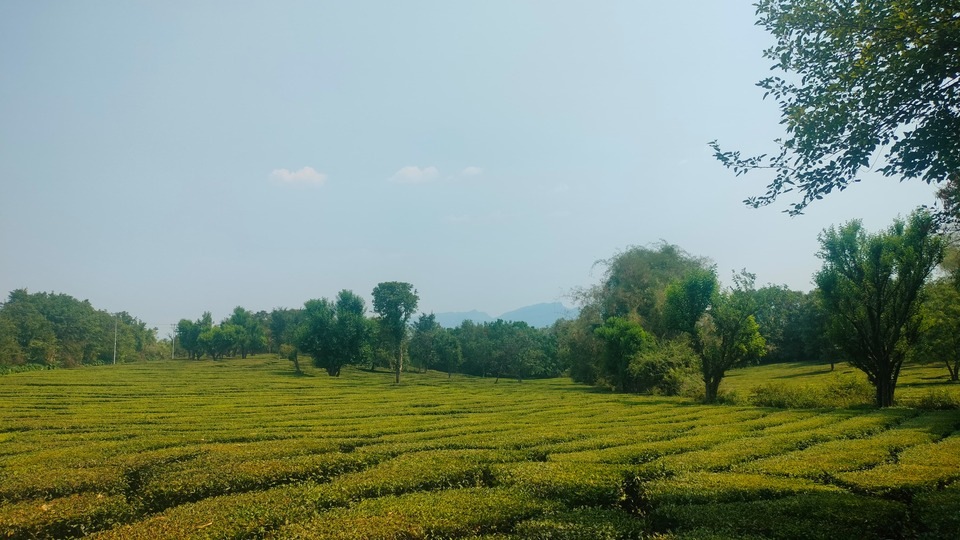
Tea planters say that the state faced a prolonged dry spell in the winter season, followed by insufficient rainfall from March onwards, compounding the woes of the Himachal tea industry. Several other states in the country have also reported drops in tea production this year.
According to figures shared by officials at the Tea Board India in Palampur, only 2,26,714 kg of tea was produced in Himachal Pradesh until May this year, significantly less than the 3,31,787 kg produced in the same period last year. The production until May remains 1,05,073 kg behind last year’s yield.
Owing to insufficient rains and dry weather in June, the production in June is also expected to be lower than previous year. The figures are yet to be compiled. Plucking season starts from April till October in the state unlike other states where plucking is carried out for almost 10 months.
Insufficient rainfall, excessive heat
As per an IMD report, the state received large deficient precipitation (-73%) in May and various districts, including Kangra, received large deficient precipitation. Himachal also saw a 54% rainfall deficit in June. The temperatures have been unusually higher this year.
Tea is primarily grown in Kangra district where the area under tea cultivation is rain-fed with less means of irrigation.
The average auction price which was ₹152.24 per kg in 2023, is now ₹218.92 per kg this year. However, tea board officials said the average auction price has improved but it is not very much supportive compared to the losses faced by the industry.
Kangra tea is known for its unique aroma and traces of fruity flavour. Milder than the Darjeeling tea in terms of flavour, it has more body and liquor. The tea is grown 900-1,400 m above sea level on the slopes of the Dhauladhar mountain range in the western Himalayas. The annual production in recent years hovered at around 9 to 10 lakh kg, but this year the number may go down.
Tea planters worried
The tea planters in Kangra are staring at losses this year as the first flush tea fetches higher prices due to its supreme quality. Kangra Valley’s small tea planters association president Suksham Butail said, “I have not seen such a situation in decades. Even my own production is estimated at only 50% till now compared to previous years. Planters are worried about the situation. Even those who have factories, they are worried too.”
“The spring crop (April, May and June) is more valuable due to its Aroma and fetches higher prices compared to the crop produced in July, August and September. Even if our produce increases in the coming months, it will not be as profitable,” he added.
Meanwhile, Rajiv Sud, owner of Palampur-based Himalayan Brew Tea company, said the impact of weather on tea is severe this year. “There was less rainfall in winter and then in April and May, we had no rainfall. Our tea production is almost 60% down compared to last year. If the situation remains the same, the tea will not survive in the near future,” he said.
“Now expectations are from the Monsoon rainfall, then we may recover, if not then tea business will be hit hard,” he added.
Production dip in other states
Tea Board of India Palampur deputy director Rakesh Kumar said the tea production has witnessed slump all over India, including Assam and West Bengal, because of weather relation conditions. “Himachal witnessed the prolonged dry spell in winters and less rainfall in past few months have affected the tea production. The area under tea cultivation in Himachal is mostly rainfed and tea planters do not have the irrigation facilities here,” he added.
Kumar said the production might increase in the coming months if the weather remains suitable for that but it seems the yearly production will be lesser than the previous year.


