
 E-Paper



Guest column | Lest we forget the bloody legacy of India’s Partition
Perhaps, by the centenary celebrations of India’s independence, people of the subcontinent will realise that we are one people


On August 15, Indians will celebrate 75 years of Independence by hoisting the national flag on their houses as a mark of national unity and patriotism, but we must not forget the 2 million people killed and 10-20 million people displaced in the worst carnage ever seen in the subcontinent.
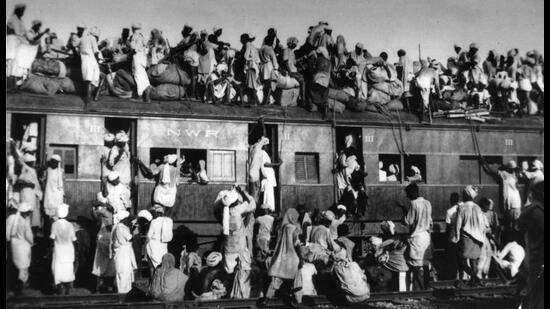
Freedom from the British came at a colossal cost – we killed and got killed. As their last stroke, our colonial rulers insidiously divided us along religious lines and sowed the divisive seeds that would eventually lead to the formation of Pakistan.
By 1940, Muhammad Ali Jinnah, who was then the leader of the All-India Muslim League, had come to believe that Muslims should have their own separate state to avoid marginalisation, and the Muslim League passed the Lahore Resolution demanding a separate nation for “Indian Muslims.”
The two anglicised leaders, Jawaharlal Nehru and Mohamad Ali Jinnah, knew that only one of them was going to be the first Prime Minister of independent India. The dice was loaded against Jinnah. Did Nehru facilitate him? Both were tall leaders and had made a significant contribution to the freedom struggle, but were they actually only vying to become Prime Minister? History is witness to how their actions and decisions led to the Partition.
Madness and mayhem
Then came Cyril John Radcliffe, who was given the charge of dividing India in five weeks. He sat at the Viceregal Lodge in Shimla, the gora sahibs’ hill station of choice. As the British were unable to get a fresh survey done in the scorching June heat, he consulted outdated census records and maps. Radcliffe submitted the Partition map on August 9, which was passed on August 12. As millions fled from their homes and headed towards either India or Pakistan, absolute chaos, violence and mayhem ensued. Death seemed to be stalking its hapless victims as the country burned. Hatred consumed the two communities, leaving a trail of rotting bodies on the roadsides.
India’s hard-won Independence, which was a moment of celebration, was bitter sweet because of the Great Divide, which saw one of the biggest migrations in the world. The wounds continue to fester as the survivors can never forget the summer they lost their home, their way of life, and hopes of returning home.
As fathers killed daughters to safeguard their honour, poetess Amrita Pritam wrote the heart-wrenching dirge “Ajj aakhaan Waris Shah nu.” Reflecting on the absurdity of the overnight change of address for 20 million people, Saadat Hasan Manto penned Toba Tek Singh, which is set in a mental asylum in Lahore, some of whose inmates are to be transferred to India. Was the protagonist Bishan Singh the only inmate who could not fathom why all of a sudden the asylum in Lahore was no longer his home.
A bloody legacy
In our village in Gujranwala where our family had lived for hundreds of years, 46 Sikhs and 23 Hindus lost their lives, and in the Kapurthala village that my family settled in after the Partition, numerous Muslims lost their lives as well. My family fled from Gujranwala, losing many on the way to rape, murder and disease. My father, who was studying at Forman Christian College in Lahore in 1947, lost three of his Hindu friends to the madness of that summer. He never forgot them. He never forgot Lahore either.
Nations also have souls and have the responsibility of remembering the dead. India will remember those who were butchered on either side. Nations have a longer history and a longer life span. They are witness to human triumphs and tragedy. A collective consciousness helps remember these “stories.” It is our moral duty to pass on the real history.
Radcliffe never took the 3,000 pounds promised to him for dividing the country as he felt deeply saddened by the horrific killings. We must mourn the dead as nations only survive when they respect their histories, however painful or tragic they might be.
Seventy-five years is a long time for our ancestral ghosts to be not put to rest. Maybe, by the centenary celebrations, people of the subcontinent will come to realise that we are one people indeed!
sandhawalia3@gmail.com
(The writer is a Chandigarh-based freelance contributor)


